Douglas County Task Force Targets Red Tape to Speed Business Permitting
Douglas County's commercial permitting falls short of the national 4-month greenfield standard, Commissioner Kevin Van Winkle acknowledged at the launch of a new task force aimed at closing that gap.
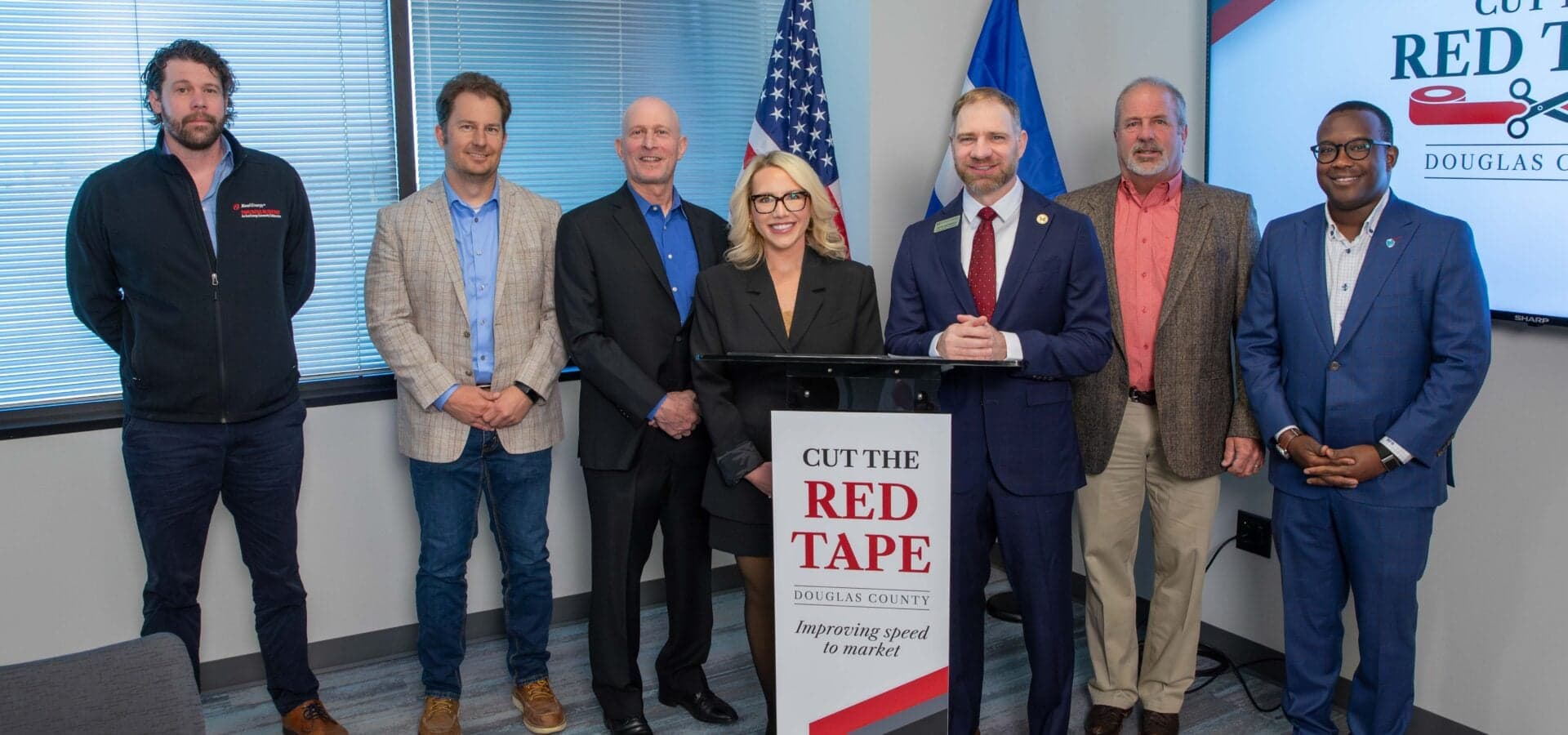
Commissioner Kevin Van Winkle put a number on the problem Thursday: the nationwide standard for permitting a commercial project from a greenfield site through completion is about four months, he told the inaugural session of Douglas County's Red Tape Reduction Task Force, and the county does not currently meet it.
Van Winkle made that admission at the task force's first meeting on April 2, co-convened with the Douglas County Economic Development Corporation. The public-private working group, authorized under a December 2025 Board of Commissioners resolution, brings together representatives from development, utilities, public safety agencies, and construction alongside county staff and elected officials. Its mandate: map every stage of the county's permitting and entitlement process for commercial and industrial projects, surface bottlenecks, and produce a prioritized set of reforms.
Van Winkle identified the main culprits. "Sometimes it might be securing power or water for a project and what that looks like," he said. "Other times, it could just be administrative hurdles that are unnecessary or duplicative to the state's process."
The backdrop is a statewide business climate conversation with a sharp local edge. Palantir's relocation out of Colorado surfaced at the launch as a warning sign that regulatory friction carries real economic cost. EDC CEO Ellie Reynolds, who has made speed-to-market a signature 2026 priority, named the county's target directly: "Our goal for business permitting in Douglas County is to be not only the most competitive place to do business in Colorado, but the leader in the nation."
That goal remains aspirational at this stage. The task force has not yet released a baseline showing where Douglas County's current timelines actually stand, nor published a specific days-to-permit target, a backlog figure, or a fee-transparency standard. Van Winkle's four-month benchmark is the only concrete measure on the table so far, and the county has not said how far short current timelines fall. Those specifics are among the deliverables that working sessions and stakeholder interviews, scheduled over coming months, are supposed to produce.

Murphy Robinson, CEO of SurePass and a private-sector participant at the inaugural session, framed the group's intent. "We're not saying that Douglas County is doing something wrong; we're saying we want to enhance what we're already doing," Robinson said. "We want to make sure we identify any barriers to entry that current businesses have and that those businesses we want to recruit may have."
The work plan calls for recommendations spanning both quick administrative fixes, including standardized checklists, clearer submittal standards, and staff coordination protocols, and structural changes requiring code or policy amendments. County officials committed to public vetting before any changes are adopted.
For contractors carrying financing costs on stalled commercial projects, and for businesses waiting on industrial permits along the I-25 corridor, the stakes are measured in dollars per month, not just calendar time. The task force's credibility will turn on three near-term milestones: the release of a permitting process map with baseline timeline data, the publication of specific performance targets, and the formal presentation of recommendations before the Board of Commissioners, all of which will determine whether Thursday's launch signals genuine reform or an ambitious press release.
Sources:
Know something we missed? Have a correction or additional information?
Submit a Tip