Lone Tree leaders decry state overreach in zoning, land-use decisions
Lone Tree says state housing laws could pull parking, zoning and density decisions away from RidgeGate, where nearly 5,000 people already live.
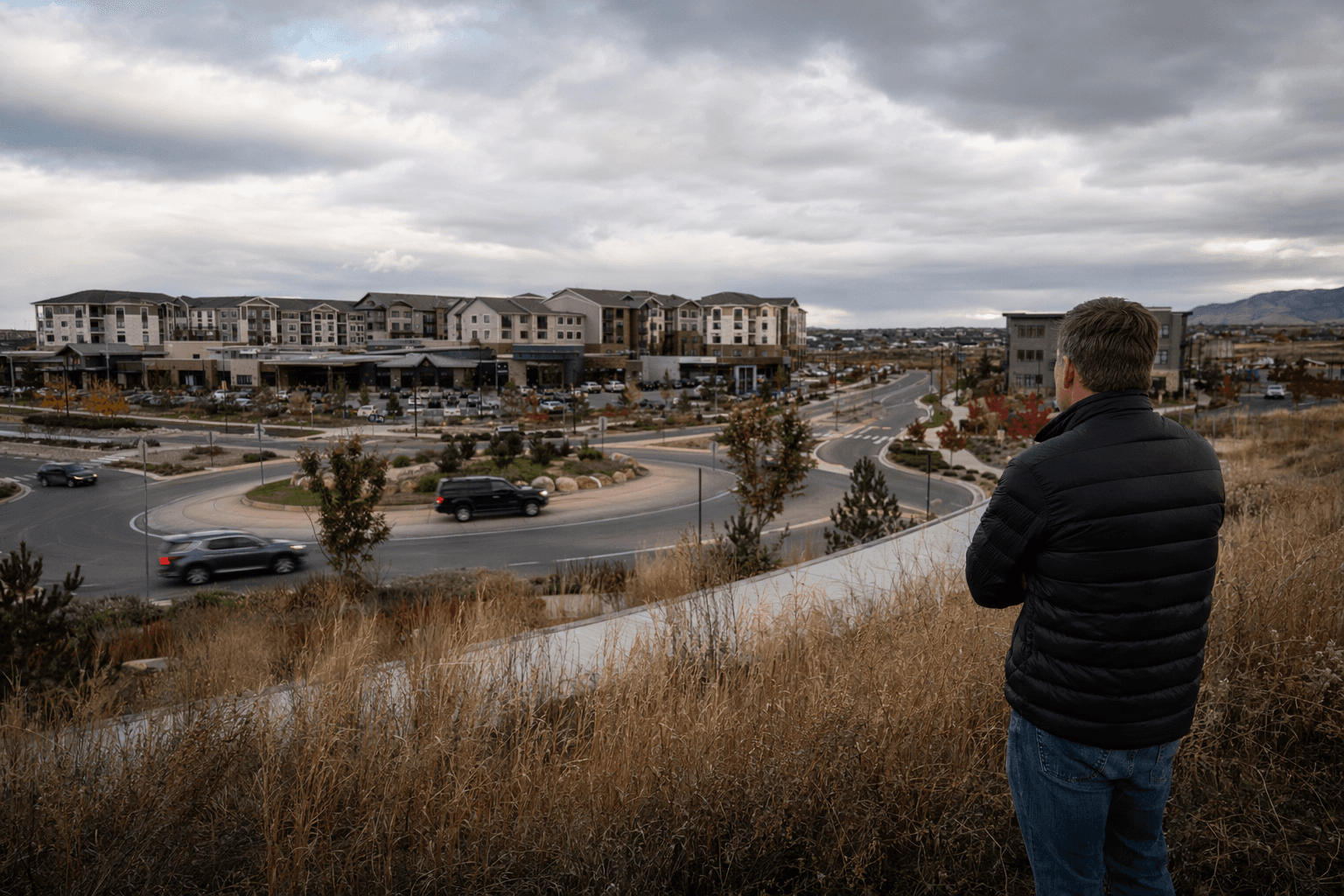
State housing laws could decide how much control Lone Tree keeps over RidgeGate, where future apartments, parking lots and traffic patterns may no longer be set only by city hall. The city says recent state action has narrowed local authority in zoning, occupancy limits and land use, raising the stakes for one of Douglas County’s most active growth corridors.
Lone Tree voters approved the city’s Home Rule Charter on May 5, 1998, giving local leaders a long-standing argument that community growth should be decided close to home. City officials now say that authority is being squeezed by laws passed at the state level, especially as development pressure intensifies south of Lincoln Avenue and on both sides of I-25.

The biggest flashpoint involves two 2024 laws, HB24-1304 and HB24-1313. One law restricts local minimum parking requirements for certain multifamily and adaptive-reuse housing projects in applicable transit service areas, with state guidance saying local governments may not enforce those parking mandates after June 30, 2025. The other law, aimed at housing in transit-oriented communities, requires communities to meet a housing opportunity goal and designate transit centers with enough zoning capacity to support it.
That matters in Lone Tree because RidgeGate spans about 3,500 acres in the city’s southern growth area and already is home to nearly 5,000 residents. As that district fills in, the city is trying to balance redevelopment, housing mix, open space and traffic impacts tied to the nearby highway network. If the state’s interpretation of its new housing rules stands, some local decisions about density, building types and parking could shift from city planners to state standards.

The conflict reaches beyond Lone Tree. Douglas County’s population climbed from 357,978 in the 2020 Census to an estimated 399,396 in 2025, underscoring how fast the region is changing and why land-use decisions now carry tax-base and infrastructure consequences. Several Front Range home-rule cities filed suit in May 2025 challenging the state’s 2024 land-use laws, arguing they erode local control over zoning and parking. Lone Tree’s criticism fits squarely into that larger fight over who controls growth in Colorado’s most pressured suburban corridors.
This article was produced by Prism’s automated news system from verified source data, official records, and press releases, then run through automated quality and moderation checks before publishing. The system is built and supervised by the people who set the standards it runs under. Read our full AI policy.
Did this article answer your question?