Lone Tree Symphony Orchestra grows into city cultural cornerstone
What began as a group of local musicians now fills the Lone Tree Arts Center, giving Douglas County families a close-to-home symphony with real neighborhood roots.

A civic institution built from local need
The Lone Tree Symphony Orchestra has become more than a concert group in northern Douglas County. In a city better known for retail corridors and new development, the orchestra now serves as a visible cultural anchor, drawing capacity audiences and giving residents a place to hear live symphonic music without leaving the area.
That local role matters in Lone Tree, a home-rule municipality in northern Douglas County with a population of 14,253 at the 2020 census. The city’s own community spotlight frames the orchestra as a signature institution because it connects neighborhood identity with professional-caliber performance, and because it gives families, students, and longtime residents an accessible way to take part in the arts close to home.
From a handful of concerts to a city-stage presence
The orchestra was founded in September 2000 by local musicians who wanted a first-class community orchestra serving Lone Tree and South Metro Denver. The orchestra’s history identifies Joan Nelson as the original founder, saying she saw the need for more fine arts programming in the northern Douglas County area.
Its early years were modest but purposeful. The ensemble rehearsed and performed at Cornerstone Baptist Church, then presented three concerts in its inaugural season. The organization says those first eleven seasons were performed at Cornerstone Church before the move to the Lone Tree Arts Center in 2011, a shift that marked the orchestra’s growth from a community project into a citywide cultural fixture.
That move also tracked with Lone Tree’s broader investment in the arts. The Lone Tree Arts Center opened in August 2011 after voters approved a bond in 2008, giving the orchestra a dedicated home just as its audience base had grown. The center’s Main Stage seats 500, the Event Hall seats 200, and the outdoor amphitheater seats 350, a scale that reflects how central live performance has become to the city’s public life.
Why the orchestra draws so many people back
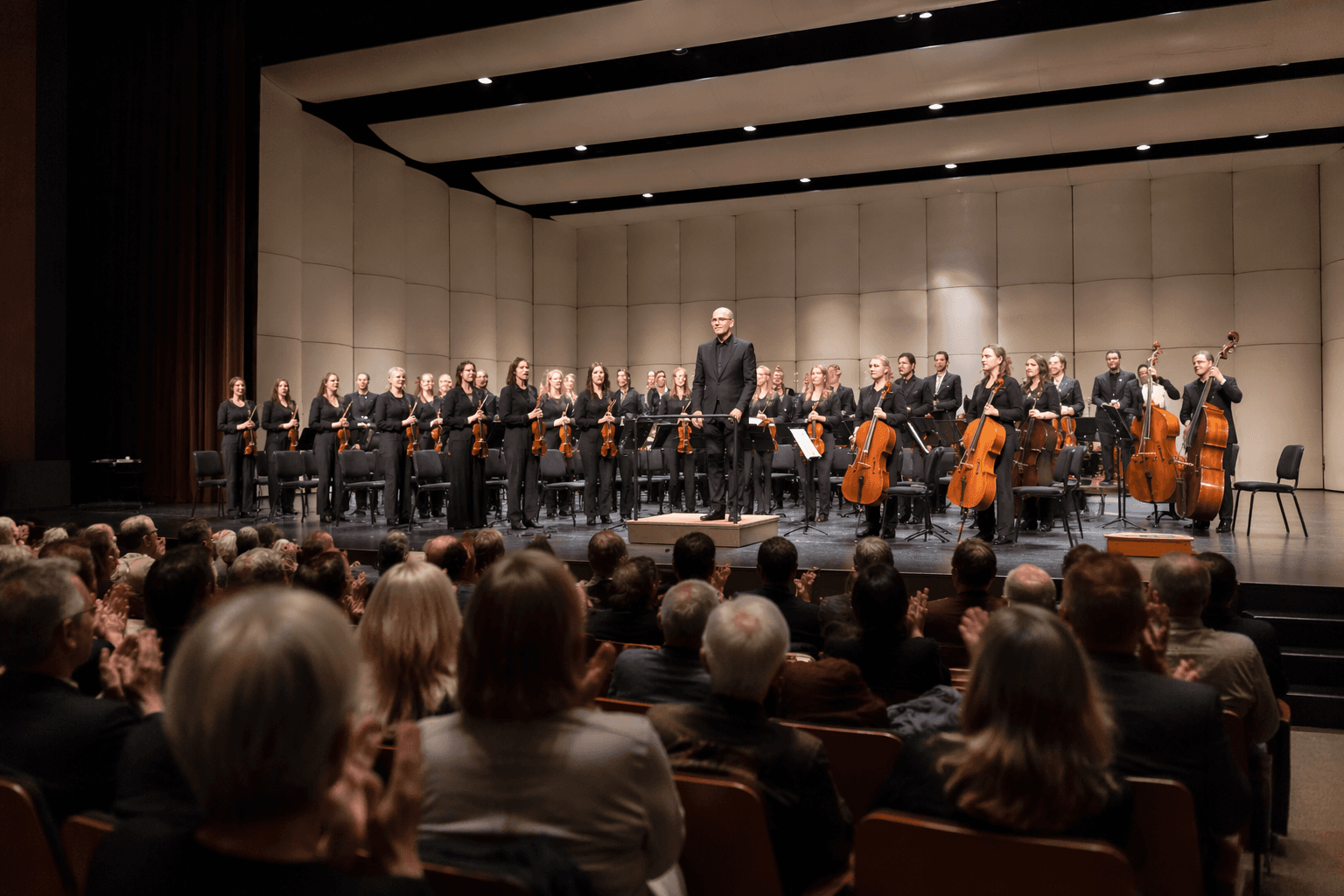
The orchestra’s appeal comes partly from scale and partly from familiarity. The City of Lone Tree describes it as a vibrant ensemble of more than 80 performers, and those musicians come from a wide mix of professions and backgrounds across the region. That combination gives the orchestra a distinctly local character, since audience members may recognize neighbors, teachers, coworkers, or friends on stage.
That neighborhood connection is not a side note, it is part of the draw. The orchestra’s president and a patron are both quoted in the city profile to underscore the emotional value of the group, which is described as a place where neighbors create something beautiful together. In a city of concentrated growth and changing demographics, that kind of shared civic experience helps explain why the orchestra has moved from being an amenity to being part of Lone Tree’s identity.
The orchestra also fills a practical need. Affordable ticket prices keep live music within reach for families and students who might not otherwise attend a symphony concert. For Douglas County residents looking for cultural programming without the time and expense of driving into Denver, the orchestra offers a convenient option with real artistic depth.
What the orchestra plays, and how it keeps the season fresh
Under founding Music Director Jacinda Bouton, the orchestra rehearses every Thursday and programs a broad repertoire that includes orchestral masterworks, audience favorites, and new compositions. Bouton has been identified by the orchestra as its principal conductor and music director since its premier in 2000, a continuity that has helped shape the ensemble’s identity over more than two decades.
Her broader conducting record reinforces that reputation. Denver Concert Band materials say Bouton has led that ensemble as music director since 1997, placing her among the region’s most established conducting figures. For the Lone Tree Symphony Orchestra, that long-running leadership has meant more than consistency. It has given the group a clear artistic voice while still keeping its programming broad enough to meet a community audience where it is.
The orchestra’s seasonal structure also shows how much demand has grown. The city profile says the orchestra now performs five concerts each season at the Lone Tree Arts Center. The arts center’s own series page says the LTSO was founded in September 2000 and offers a subscription package for four performances, which together point to a regular, ongoing presence rather than a one-off cultural event.
A stronger push into new music
The orchestra is also investing in the future of symphonic music, not just preserving the past. Its composition competition offers a $5,000 prize, a season-opening performance of the winning work, and an additional $5,000 award tied to a second commissioned work and artist-in-residence component. That structure gives the orchestra a way to bring new voices into the season while keeping the audience experience central.
This matters in a community orchestra because it expands the ensemble’s civic role. The organization says it has introduced thousands of South Metro residents to classical music, and the composition competition helps keep that mission current by making room for original work instead of relying only on standard repertoire. For a local institution built from volunteer energy, steady rehearsal, and public support, that is a notable step toward long-term artistic relevance.
Part of a wider Douglas County arts landscape
The orchestra’s rise also fits into a broader cultural ecosystem in Douglas County. The county cultural council reviews applications for Scientific & Cultural Facilities District funding, a reminder that arts access in the region depends on both public investment and coordinated local institutions. Within that landscape, the Lone Tree Symphony Orchestra stands out because it has become a dependable civic asset rather than a niche program.
The Lone Tree Arts Center’s own mission helps explain why that partnership works. The center says it prioritizes accessibility and community engagement, and the orchestra’s history fits that mandate almost exactly. What started in a church with three concerts has grown into a major part of the city’s cultural identity, one that brings neighbors together, keeps live music accessible, and gives Douglas County families a reason to stay close to home for a symphony experience.
This article was produced by Prism’s automated news system from verified source data, official records, and press releases, then run through automated quality and moderation checks before publishing. The system is built and supervised by the people who set the standards it runs under. Read our full AI policy.
Did this article answer your question?