Outlets at Castle Rock anchors Douglas County's retail and visitor appeal
The Outlets at Castle Rock pulls highway traffic, tourist spending and local shoppers into Douglas County’s biggest retail draw. Its edge now depends on staying relevant in a fast-growing market.
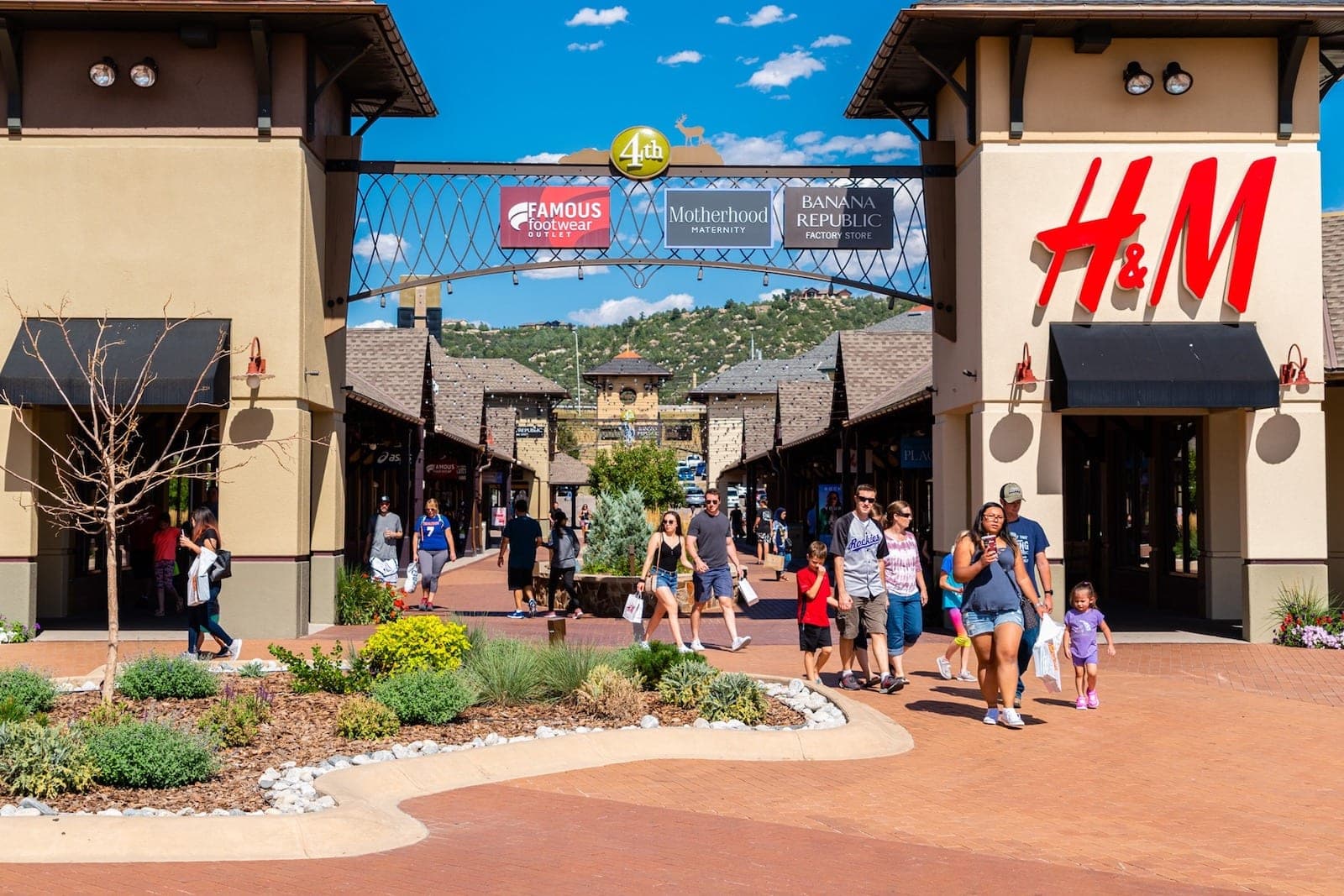
The Outlets at Castle Rock sits where Douglas County’s growth meets Interstate 25, pulling drivers off Exits 184 and 185 and into the county’s most visible retail stop. Colorado’s tourism office describes it as the state’s largest outlet center and the No. 4 tourist destination in Colorado, a rare mix for a shopping complex. In Castle Rock, that makes the property more than a mall: it is part of the town’s visitor economy, its traffic pattern and its identity as Douglas County’s county seat.
A retail anchor built for regional traffic
The center’s location between the Denver metro area and the Colorado Springs region gives it a built-in customer base that extends beyond Castle Rock’s town limits. The mall’s own description says it has more than 100 brand-name stores and discounts of up to 70% off retail, and that it has been voted Colorado’s Best Outlet Shopping since 2015. Craig Realty Group lists the property at 478,000 square feet of gross lease area with 95-plus stores, which helps explain why it functions as a regional stop rather than a small neighborhood shopping center.
That scale matters because the Outlets do more than serve people who already live nearby. Travelers moving up and down I-25 can treat the center as a planned stop, while local households use it as part of a larger errand or weekend outing. The combination of interstate access, outlet pricing and a large tenant mix gives Castle Rock a retail draw that captures spending from across the Front Range.
Why Castle Rock can support a center this large
The Outlets fit into a town that markets itself as both historic and fast-growing. Visit Castle Rock describes the community as home to an historic downtown, 6,000 acres of open space, 50 developed parks and 87 miles of trails, while another town page puts the totals at about 6,900 acres of open space, 60 developed parks and nearly 130 miles of trails. The town spans 33 square miles, sits at 6,202 feet in the East Plum Creek Valley and lies at the base of the Rocky Mountains.
That mix helps the retail story. A visitor can spend part of the day outdoors, move to the Outlets for national brands and outlet pricing, and still be close to downtown restaurants, local services and neighborhood attractions. The Outlets do not replace Castle Rock’s historic core; they sit beside it as a different kind of destination, one built around volume, convenience and interstate traffic rather than Main Street character.
The site itself is designed for lingering, not just quick transactions. Colorado’s tourism office describes it as open-air, pedestrian-friendly and pet-friendly, and the mountain setting gives it a different feel from the enclosed malls that defined earlier retail eras. Shoppers can also pick up a free Elite Savings Passbook at Customer Service for extra discounts, a small detail that reinforces the center’s value-driven positioning.
A center with staying power
The property has been part of Castle Rock for decades. A Denver Public Library digital collection record notes a $20 million outlet center opening in Castle Rock in 1992, and Denver Life Magazine says the Outlets at Castle Rock opened that same year and are owned by Craig Realty Group. That long run gives the center an unusually deep local footprint: it has been around long enough to become part of how residents navigate the town and how travelers read the I-25 corridor.
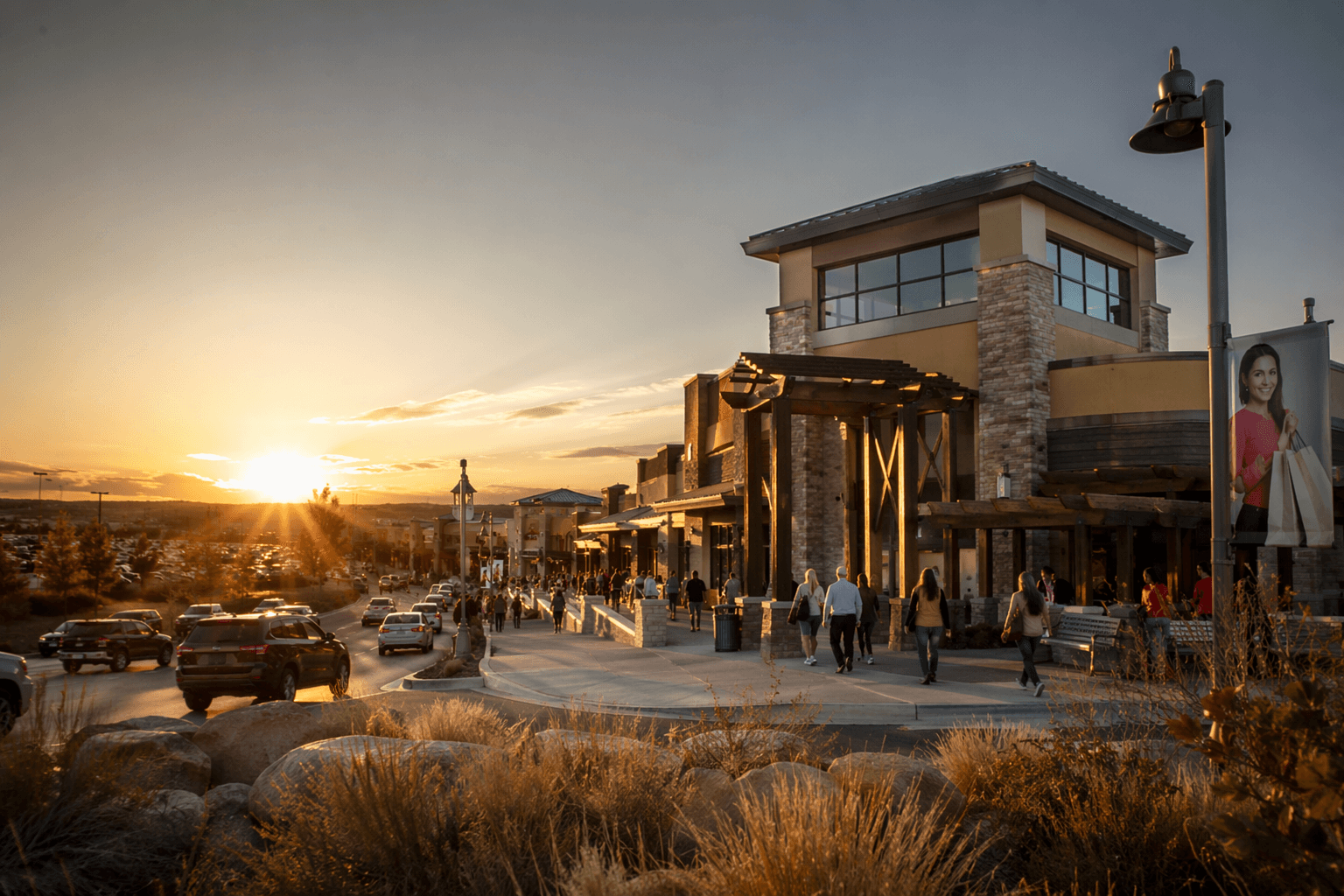
History also helps explain why the center still matters in the present tense. It was built before Castle Rock’s current growth wave, yet it has remained one of the clearest markers of the town’s commercial evolution. The Outlets are not a legacy property sitting still; they are a retail asset that has adapted as Castle Rock has added residents, parks, housing and tourism branding around it.
Growth around the center is changing the stakes
Douglas County’s growth profile gives the Outlets an expanding customer base, but it also raises the bar for what the center has to offer. A 2025 Castle Rock Economic Development Corporation annual report says Douglas County had the third-fastest pace of growth in Colorado in 2024 and added the second-highest number of people in the state. The same report says Castle Rock makes up 21% of the county population, and the town’s residential-entitlements page estimates the population at roughly 88,309 at the end of the first quarter of 2026.
For a retail center on a major interstate corridor, that matters in two ways. First, the local market keeps getting bigger. Second, the competition for shopper attention grows as more retail, dining and service options spread across the south metro area and along the I-25 corridor. The Outlets’ advantage is not just size, but the way it combines highway access with a tourism label and a long-established brand that travelers already recognize.
Colorado’s tourism office places the Outlets in a broader outlet-shopping landscape that includes Silverthorne and Colorado Mills. That broader context is useful because it shows Castle Rock’s center is part of a statewide competition for outlet spending, not a standalone attraction. Its edge comes from being the one that sits directly on the main north-south highway between the state’s largest metro and Colorado Springs.
What the Outlets mean for Castle Rock now
The Outlets at Castle Rock work because they sit at the intersection of three forces: interstate traffic, steady population growth and a town that packages itself as both outdoor-friendly and visitor-friendly. The center’s size, with 478,000 square feet and 95-plus stores, gives it the inventory to draw shoppers from a wide area. Its open-air format and location near Castle Rock’s historic downtown give it the kind of setting that keeps it tied to the town rather than isolated from it.
In Douglas County, that combination has made the Outlets one of the clearest examples of how retail, tourism and growth can reinforce one another. The test ahead is whether that formula keeps working as the county keeps adding residents and the retail market along I-25 keeps getting busier.
This article was produced by Prism’s automated news system from verified source data, official records, and press releases, then run through automated quality and moderation checks before publishing. The system is built and supervised by the people who set the standards it runs under. Read our full AI policy.
Did this article answer your question?