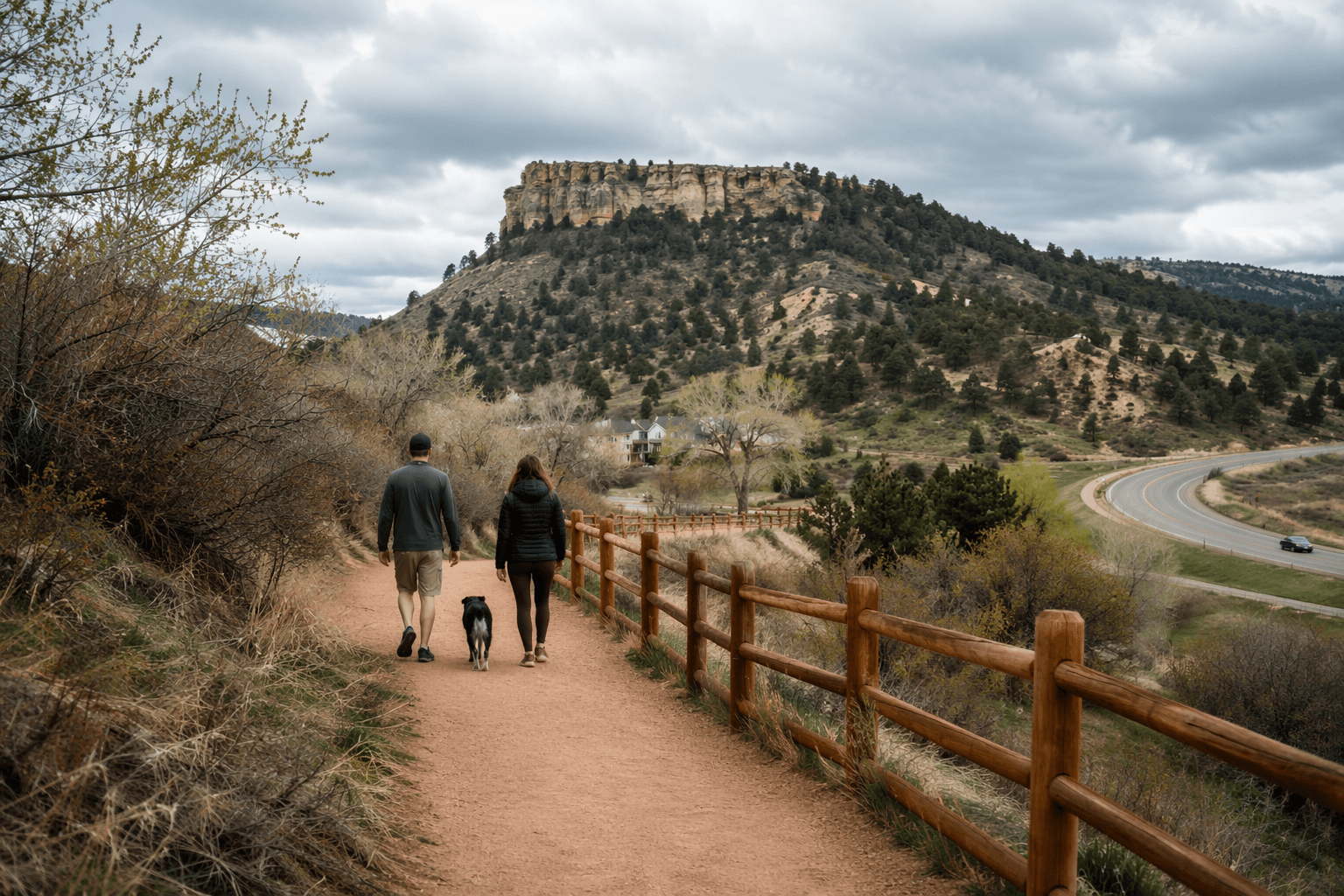
Winter Family Trails Guide for Douglas County Communities
This guide highlights five family-friendly winter trails across Douglas County, Philip S. Miller Park, Rueter-Hess Reservoir, Daniels Park / Dawson Butte, Salisbury Equestrian Park, and South Platte River Trail segments, and offers practical safety tips and local resource contacts. You will learn trail features, seasonal rules to watch for, accessibility considerations, and public-health-minded advice to plan safe, equitable outdoor outings this winter.
1. Philip S. Miller Park (Castle Rock)
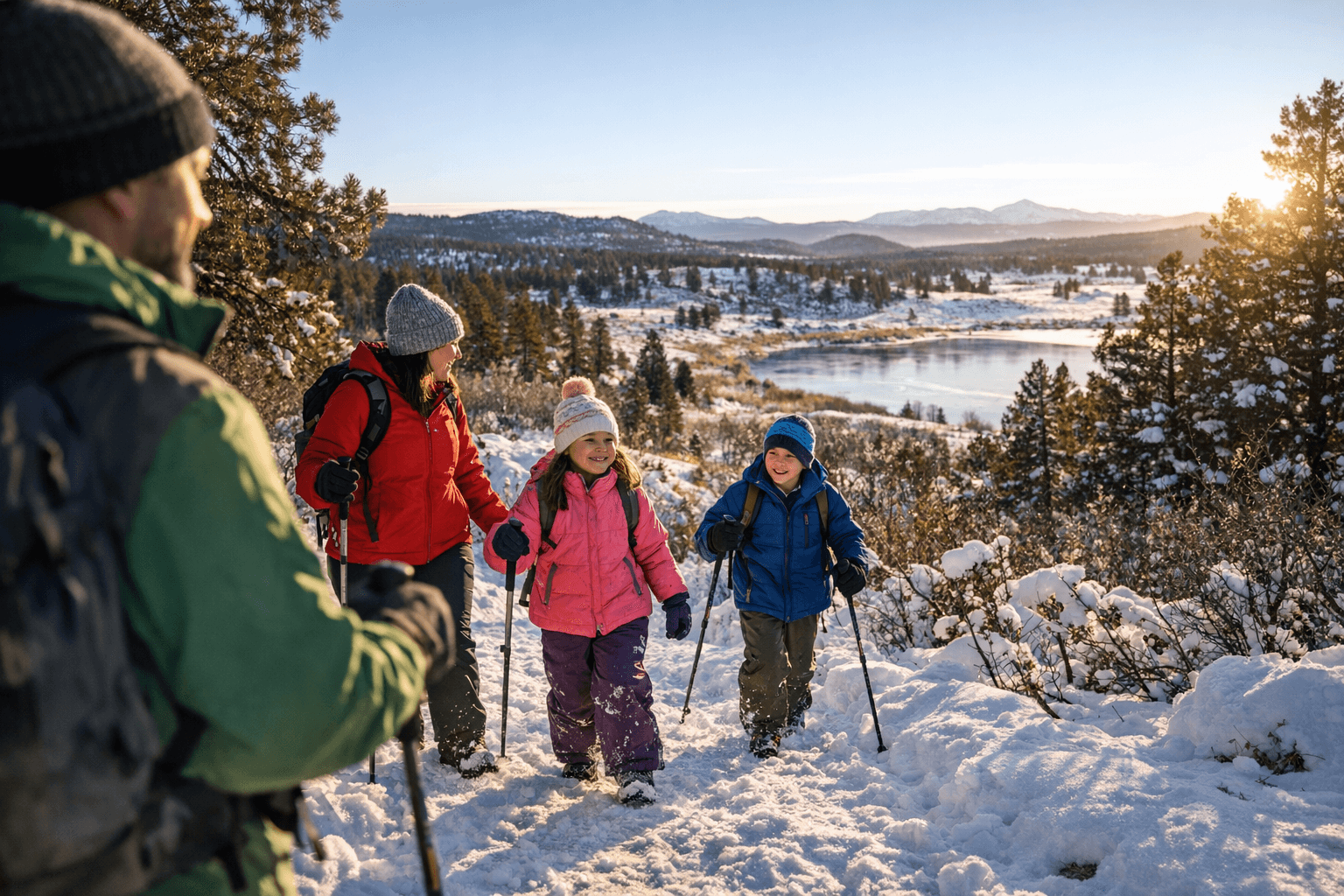
Philip S. Miller Park offers paved and groomed trails, scenic overlooks, and accessible features that make it one of the most versatile winter options in the county. The paved routes and maintained pathways are practical for short winter walks with strollers or family members who need firmer footing; they also make the park more accessible for people using mobility devices. The park’s sledding hills are popular on snowy days, but crowds and short daylight hours mean you should plan earlier visits; local public-health considerations include supervising children on slopes and limiting time in extreme cold to reduce hypothermia risk. As a high-visibility community park, it supports equitable recreation if transit access and parking are available; check Castle Rock parks pages for parking updates and maintenance notices before you go.
2. Rueter-Hess Reservoir (Parker)
Rueter-Hess Reservoir provides a gentle shoreline loop ideal for calm winter walks and birdwatching, with long views across the water that feel expansive on crisp days. Be aware of seasonal rules: water access, launch points, and some shore segments can be subject to closures or reservation requirements for busy weekends, check Town of Parker parks pages before planning an outing. The largely flat, looped path is suitable for families and older adults, but icy patches or frozen mud can create slipping hazards, so plan footwear accordingly. From a community standpoint, weekend reservation systems can improve crowd management but may also create access barriers for people without internet or flexible schedules; consider local equity when authorities set reservation policies.
3. Daniels Park / Dawson Butte (southern Highlands Ranch area)
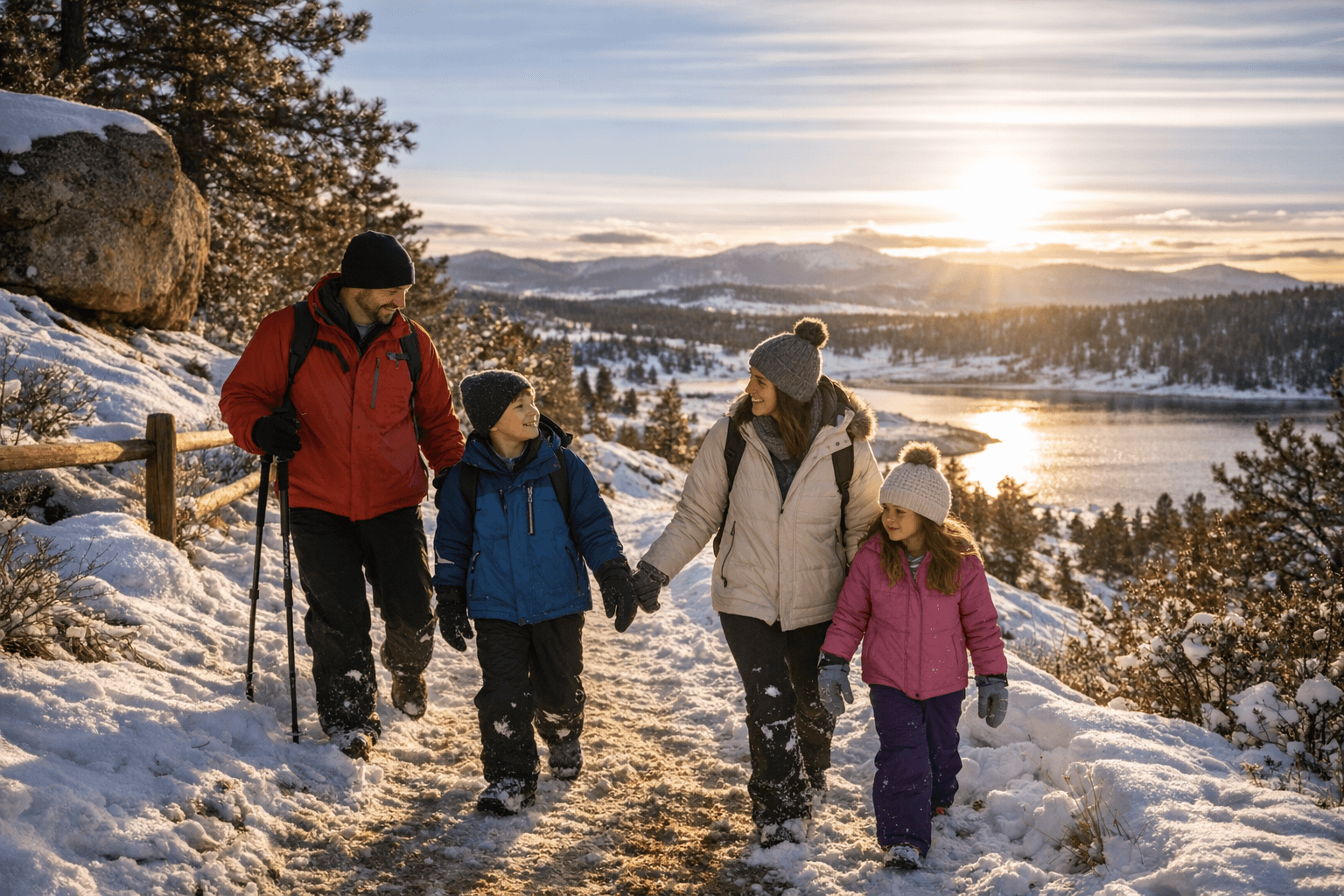
Daniels Park and Dawson Butte offer open-space trails with panoramic views of the Palmer Divide that reward winter hikes with broad scenery and often blustery conditions. Trails here are more exposed than valley paths; dress in insulating layers and wind-resistant outerwear, and be prepared for rapidly changing temperatures and gusts that increase heat loss. These open spaces are excellent for moderate family hikes and for teaching children about winter ecology, but the relative remoteness means less immediate access to emergency services; carry a charged phone and share your route with someone before you leave. Advocating for clear signage, maintained access points, and winter trail grooming can improve safety and equity for families who rely on public open spaces for healthy activity.
4. Salisbury Equestrian Park (Parker area)
Salisbury Equestrian Park features multiuse pathways that accommodate walkers and equestrians and are a solid choice when fields are not waterlogged from thaw-freeze cycles. Winter conditions can leave sections muddy or icy; wait for drier days or use routes designed for stable footing to avoid trampling wet ground and creating erosion that harms long-term trail quality. The park’s multiuse nature invites shared stewardship, respect for leash rules and horse etiquette reduces conflict and improves safety for all users. From a health equity lens, maintaining year-round pathways here expands free recreation options for families who may lack access to private fitness resources.
5. South Platte River Trail segments (Lone Tree/Castle Rock connections)
The South Platte River Trail provides mostly flat, easy segments ideal for family walks, dog-friendly outings, and accessible short hikes connecting Lone Tree and Castle Rock areas. These riverside stretches are typically level, which helps reduce fall risk compared with steep trails; still, watch for icy boardwalks or muddy banks in thaw cycles. Observe leash rules to protect wildlife and ensure safety for all users; dog-related injuries are preventable with simple precautions and respectful behavior. The river corridor connects neighborhoods and supports active transportation, preserving safe winter access is a public-health priority that promotes daily physical activity without requiring a vehicle.
- Bring microspikes if trails are icy; they dramatically improve traction on packed snow or ice and reduce fall-related injuries.
- Dress in layers and use windproof outerwear; this allows you to regulate temperature and avoid both overheating and cold stress.
- Carry water, hydration matters in cold weather because dry air and activity increase fluid loss even when you don’t feel thirsty.
- Start hikes earlier in the day to maximize daylight and reduce the chance of being on trails after dark; shorter winter days increase exposure risks.
- Check local open-space and park webpages for seasonal closures, posted fire restrictions, and reservation requirements; compliance keeps access safe for everyone.
6. Practical winter safety and planning tips
Applying these practical steps reduces acute injury and supports chronic-health benefits from regular outdoor activity. For vulnerable populations, community programs that lend gear (traction devices, insulated layers) can address disparities in winter trail access.
7. Local resources and community supports
Douglas County Open Space & Parks, the Town of Parker parks pages, the City of Castle Rock parks & recreation, Highlands Ranch community association pages, and county trail maps are primary resources for current trail status, maps, and rules. Use these portals to confirm parking, reservation policies (especially at Rueter-Hess), and any posted advisories before you head out; up-to-date info can prevent wasted trips and unsafe conditions. Community organizations and local parks departments also often run volunteer stewardship programs that help keep trails safe and welcoming, participating can strengthen neighborhood ties and improve equitable access. From a policy perspective, continued funding and targeted outreach to low-income and transit-dependent residents can expand safe winter access across Douglas County.
Closing note on public health and equity Winter trails are a vital local resource for physical activity, mental well-being, and community connection, but equitable access requires attention to transportation, cost barriers, signage, and accessible infrastructure. When you plan outings, prioritize safety, check local resources, and consider how policy and community action can remove barriers so everyone in Douglas County can benefit from outdoor winter recreation.
This article was produced by Prism’s automated news system from verified source data, official records, and press releases, then run through automated quality and moderation checks before publishing. The system is built and supervised by the people who set the standards it runs under. Read our full AI policy.
Did this article answer your question?