Advocates urge Lawrence, state officials to improve access after limb loss
From downtown sidewalks to prosthetic coverage, Lawrence advocates say limb loss turns ordinary trips into obstacles and want city and state leaders to act.
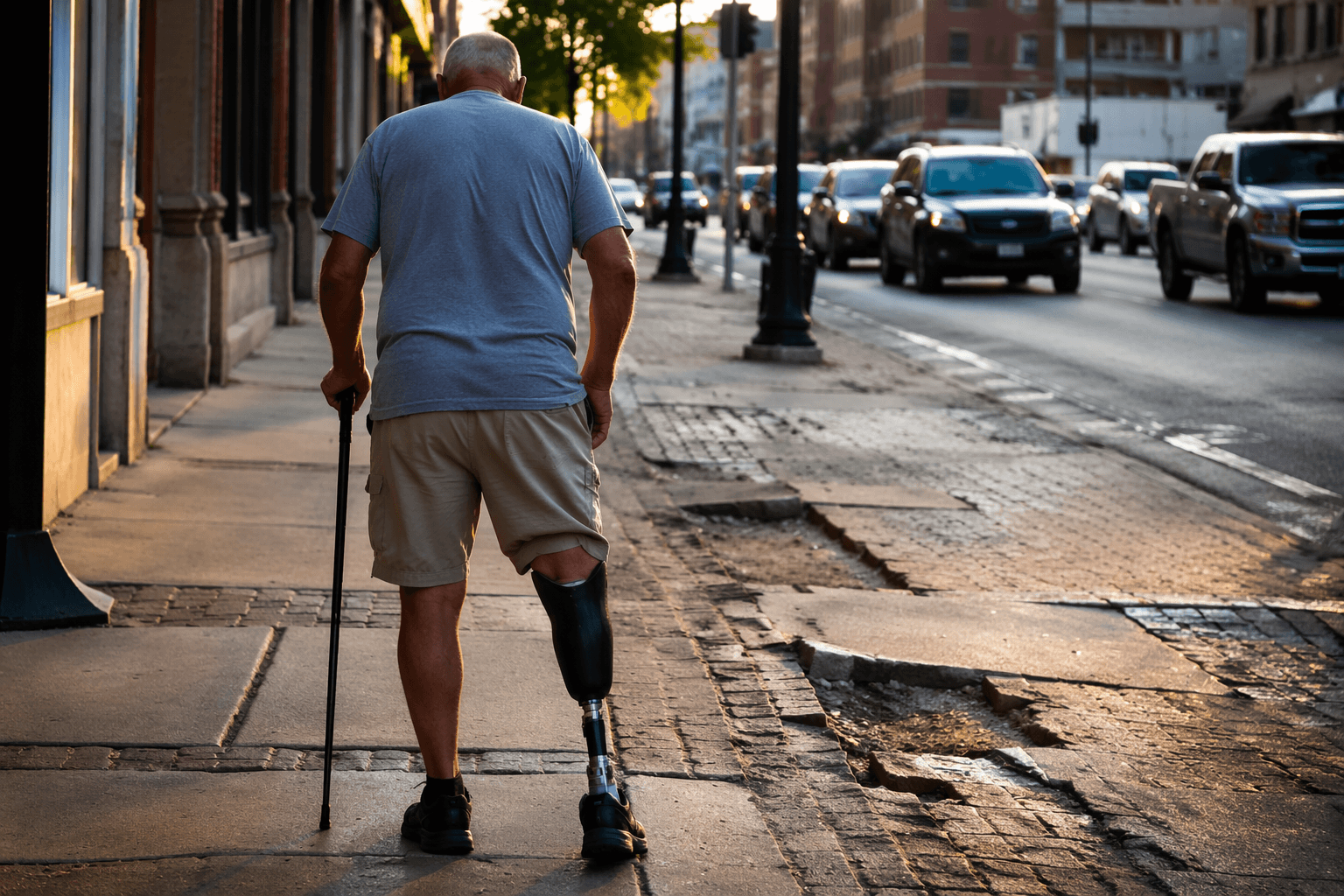
Walking through downtown Lawrence can mean moving across several different surfaces before anyone reaches a restaurant, and advocates with limb loss say that is exactly the kind of daily barrier local and state officials need to confront.
Liz Lyon and Susie Whalen joined other advocates at City Hall, 6 E. 6th Street, for the April 7 Lawrence City Commission meeting, where Mayor Brad Finkeldei proclaimed April 2026 as National Limb Loss and Limb Difference Awareness Month. Gov. Laura Kelly also signed a proclamation, but the people pushing the issue said recognition alone does not change whether someone can get through a doorway, reach a curb ramp or afford the prosthetic care needed to stay mobile.
Lyon said losing her leg changed the way she saw access. Her point was simple: many people do not understand the realities of limb loss until they experience it themselves or know someone who does. That gap matters in a city that promotes itself as walkable and active, because the ability to move through public space is what determines whether someone can get to dinner, get to work or feel welcome in the same places everyone else uses.
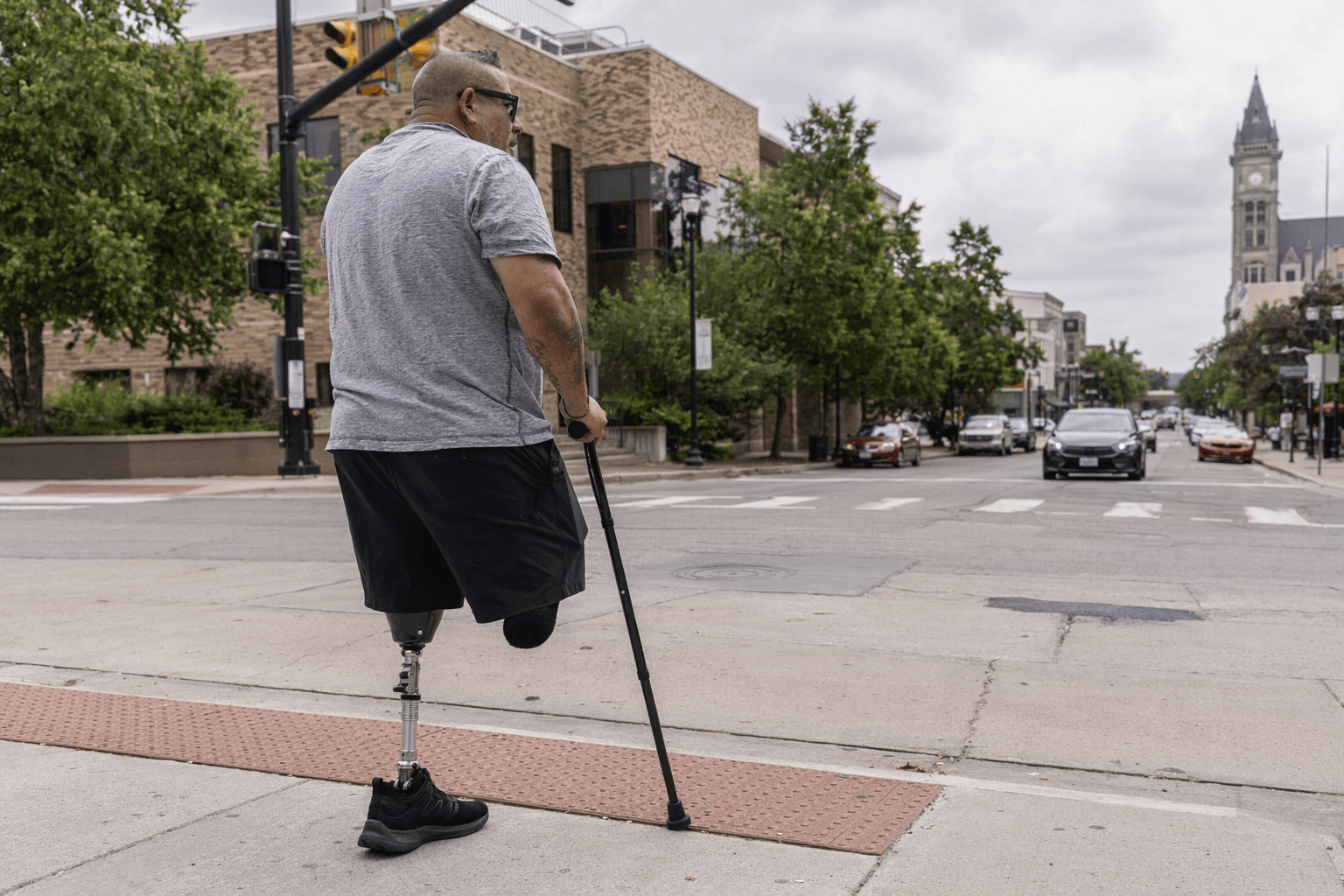
Whalen pointed to the design of everyday routes as proof that accessibility problems are built into routine life. She described the challenge of traveling across multiple surfaces just to reach a restaurant downtown, and she said a ramp built to meet city code had to wind through her yard and ended up much longer than expected. In practice, that means local code, construction choices and street design can make the difference between an ordinary errand and a difficult, exhausting trip.
The push in Lawrence is tied to a broader policy fight in Topeka. Advocates want stronger prosthetic coverage through HB 2566, the Every Body Can Move Act, which would require insurance to cover prosthetic and orthotic devices. The Kansas Legislature adjourned the bill without advancing it this session, leaving the coverage gap in place.
The appeal comes as the Amputee Coalition marks the 40th anniversary of its work and notes that about 5.6 million people in the United States live with limb loss or limb difference. Lawrence has already adopted an ADA Right-of-Way Transition Plan, and commissioners approved a 20-year, $103 million version on July 16, 2024 to bring sidewalks and curb ramps into compliance. The city also says it offers cost-partnering for sidewalk repairs and reconstruction so property owners can help bring routes up to ADA standards.
For advocates, the measure of progress is not a proclamation on paper. It is whether a person with a limb difference can cross downtown, use public space and move through Lawrence without having access break down at the curb.
This article was produced by Prism’s automated news system from verified source data, official records, and press releases, then run through automated quality and moderation checks before publishing. The system is built and supervised by the people who set the standards it runs under. Read our full AI policy.
Did this article answer your question?