Baker University campus preserves Baldwin City’s frontier history
Baker’s Baldwin City campus turns Kansas’ first four-year university into a half-day walk past Old Castle, Blood’s Grocery and an arboretum rooted in 1874.
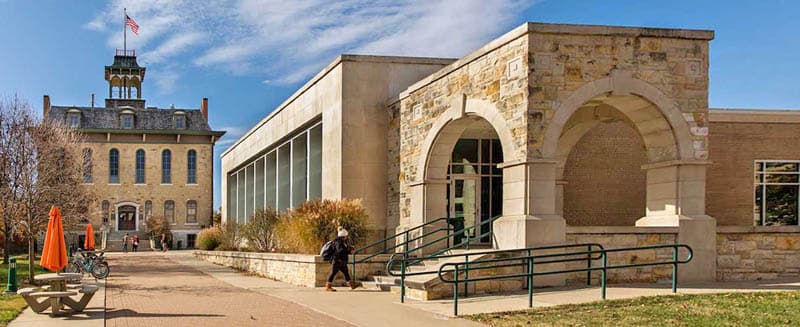
Baker University is the first four-year university in Kansas, and that distinction gives Baldwin City a campus walk with real payoff: a low-cost, walkable route through frontier-era buildings, a museum collection tied to early state history, and a downtown edge that pulls visitors toward local businesses. Baker was chartered on February 12, 1858, opened its doors that November, and has turned the oldest part of campus into a preserved landscape that still reads like the town’s origin story.
Start with the campus core
Baker’s Baldwin City campus is not just old by college standards. The university says three buildings there are listed on the National Register of Historic Places, and its student handbook describes the campus as a place where some of Kansas’ most historic buildings are concentrated in one setting. Old Castle Museum is the anchor: it was built in 1858, and Baker says it was the only academic structure on campus until 1871.
That timeline matters because it explains the feel of the place. Instead of a modern quad that was filled in all at once, the campus developed in layers, with the oldest building standing through the years when Baker was still fighting through drought and the Civil War. The first Baker class did not graduate until 1866, which makes the surviving campus core a direct link to the university’s earliest years.
Old Castle Museum gives the walk its strongest local context
Old Castle Museum began as the College Building, and Baker says it was the first and only college building in the state. Today it preserves artifacts from early Kansas, Methodist, Baker University and Baldwin City history, which makes it the best single stop for understanding how the university and town developed together.
The museum also ties Baldwin City to a larger Kansas migration story through Blood’s Grocery. The building once stood in Palmyra, a stop on the Santa Fe Trail, before it was moved to its current site at 511 Fifth Street in 1976. That move gives the museum a second layer of frontier history: it is not only preserving campus memory, but also a building connected to one of the state’s most traveled routes.
Rena Fuerbringer, the museum director, helps maintain that collection and its public role. Baker describes the museum and archives as a way to preserve, interpret and share the related histories of Baker University and Baldwin City for the surrounding community and visitors, which is exactly why the site works so well as a weekend stop rather than a passive relic.
Look for Parmenter Hall and the National Register buildings
The other historic structures on campus are part of what makes the route worth the time. Parmenter Hall is the second-oldest historic building on campus, and it sits within the group of buildings Baker says are on the National Register of Historic Places. For a self-guided walk, that means the interest is not confined to one museum stop; the whole historic core tells a story about how the university grew from one academic building into a campus with preserved landmarks.
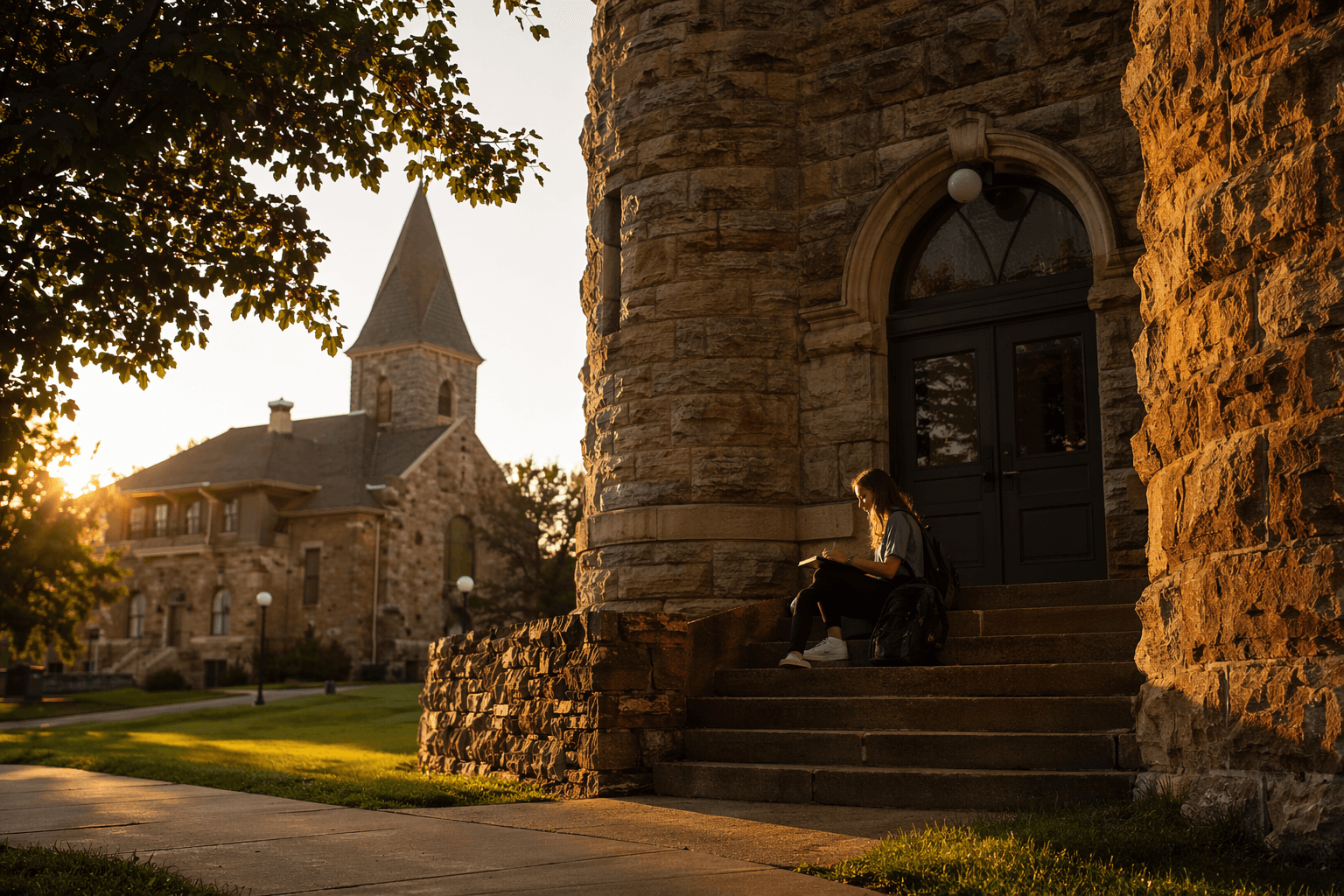
A simple route through this part of campus works well because the landmarks are close together and easy to photograph without a car. Old Castle Museum supplies the oldest anchor, Parmenter Hall shows the next phase of expansion, and the surrounding historic buildings reinforce the sense that Baker preserved rather than replaced its earliest footprint.
Follow the trees into the Ivan L. Boyd Arboretum
The walk should not stop with brick and limestone. Baker’s Ivan L. Boyd Arboretum gives the campus a living history layer that is just as old as the buildings. The arboretum’s roots go back to 1874, when students, faculty, staff and Baldwin locals planted catalpas and maples on what had been prairie. Baker formally dedicated the arboretum on October 15, 1978.
The collection now includes more than 100 tree species and 400 specimens, and Baker says some of the original trees still stand. An older Baker news item described the arboretum as having about 450 trees on the main campus and 109 species, which shows how long the tree collection has been central to the campus identity. In 2011, Baker became the first university in Kansas to earn Tree Campus Higher Education recognition, adding a modern environmental distinction to a site rooted in the 19th century.
That makes the arboretum a useful part of a Baldwin City outing, not just a scenic detour. It gives visitors a reason to keep walking after the historic buildings and broadens the experience from institutional history into a landscape that has been shaped by generations of planting and care.
Build the Baldwin City outing around the walk
A half-day is enough time to do this well. Start at Old Castle Museum, move through the historic core to see how Baker’s earliest buildings sit together, then continue to the arboretum for the campus’s living timeline. From there, head toward Fifth Street and downtown Baldwin City, where the walk naturally feeds nearby shops and restaurants.
That local spillover is part of the value. Blood’s Grocery sits at 511 Fifth Street, and the same streetscape that carries visitors to the museum and campus landmarks also puts them within reach of the town’s business corridor. A campus history walk is not only a lesson in how Baker helped shape Baldwin City; it is a practical way to spend a Saturday that keeps people on foot and in town.
For Douglas County readers, the appeal is straightforward. Baker University offers a compact route with named landmarks, documented dates and a campus story that begins in 1858 and still shows itself in the buildings, trees and downtown connections around it.
This article was produced by Prism’s automated news system from verified source data, official records, and press releases, then run through automated quality and moderation checks before publishing. The system is built and supervised by the people who set the standards it runs under. Read our full AI policy.
Did this article answer your question?