Douglas County commissioners to hear peer support, behavioral health updates
Douglas County’s peer network has trained 22 fellows and sent 501 people through social detox. Commissioners will hear how those programs are measured and what they cost.
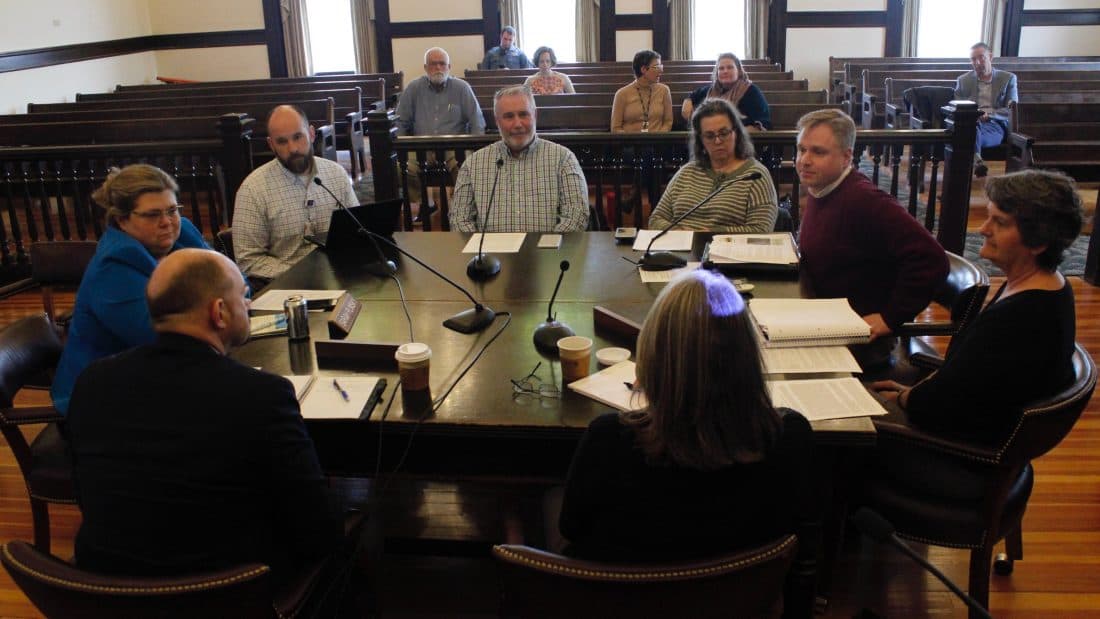
Douglas County commissioners were set to hear Wednesday how peer support and behavioral health programs are changing the county’s response to crisis, from the LMH Health Emergency Department to the Lawrence Community Shelter and Woody Park. The public meeting was open to residents, and public comment was scheduled to be taken on each regular agenda item as it came up.
At the center of the discussion was the county’s Peer Fellows Program, launched in 2019 to expand peer support for residents in behavioral health crises while also building a local pipeline of peer specialists. Fellows are trained in active listening, mental health first aid, trauma management and crisis de-escalation, then work 16 hours a week for one year at host organizations. The county says 22 people have completed at least one year of service since the program began.
Those fellows have been placed in settings that bring the county’s behavioral health system directly into daily life, including LMH Health’s Emergency Department, DCCCA, Heartland RADAC, Aetna Better Health of Kansas, the Lawrence Community Shelter, Woody Park and the Lawrence Public Library. The placements matter because they put trained peers in the places where residents are most likely to show up in distress, whether that is a hospital emergency room, a shelter or a public library.
Commissioners also were expected to hear from ALIVE Inc., a Douglas County nonprofit that provides one-on-one peer support, support groups, mental and behavioral health advocacy, education and programming for people facing mental health and substance use challenges. Its community programming includes Wellness Wednesdays events, another layer of low-barrier support for residents who may not be connected to formal treatment.

The broader county strategy has included a mobile crisis team, the Treatment and Recovery Center campus and post-crisis support services. Douglas County’s behavioral health report says those pieces are meant to form an integrated system of care that moves from crisis and illness toward recovery and prevention.
The county’s social detox work offers one of the clearest measures of scale and outcome. Douglas County began a peer-led social detox program in 2018 with DCCCA, LMH Health and Heartland Community Health Center. Between 2018 and 2021, 501 people entered the program, and completion rates ranged from 68% to 73%.
The county has also tried to put money behind lived experience. On September 13, 2023, Douglas County approved a compensation policy that pays people with lived experience of homelessness or housing insecurity for short-term engagements and service on boards or committees. The policy pays $25 per event for short-term engagements, $50 per meeting for board or committee service, with an annual cap of $599 per person. For commissioners, the test now is whether these programs can keep reaching more residents, holding down crisis demand and producing measurable results.
This article was produced by Prism’s automated news system from verified source data, official records, and press releases, then run through automated quality and moderation checks before publishing. The system is built and supervised by the people who set the standards it runs under. Read our full AI policy.
Know something we missed? Have a correction or additional information?
Submit a Tip