Douglas County town hall to focus on youth mental health, substance misuse
Douglas County leaders will hear from parents, educators and students at the Healthy Futures Town Hall at Lawrence Public Library. The focus is how youth mental health and substance misuse are changing, and what local prevention should do next.

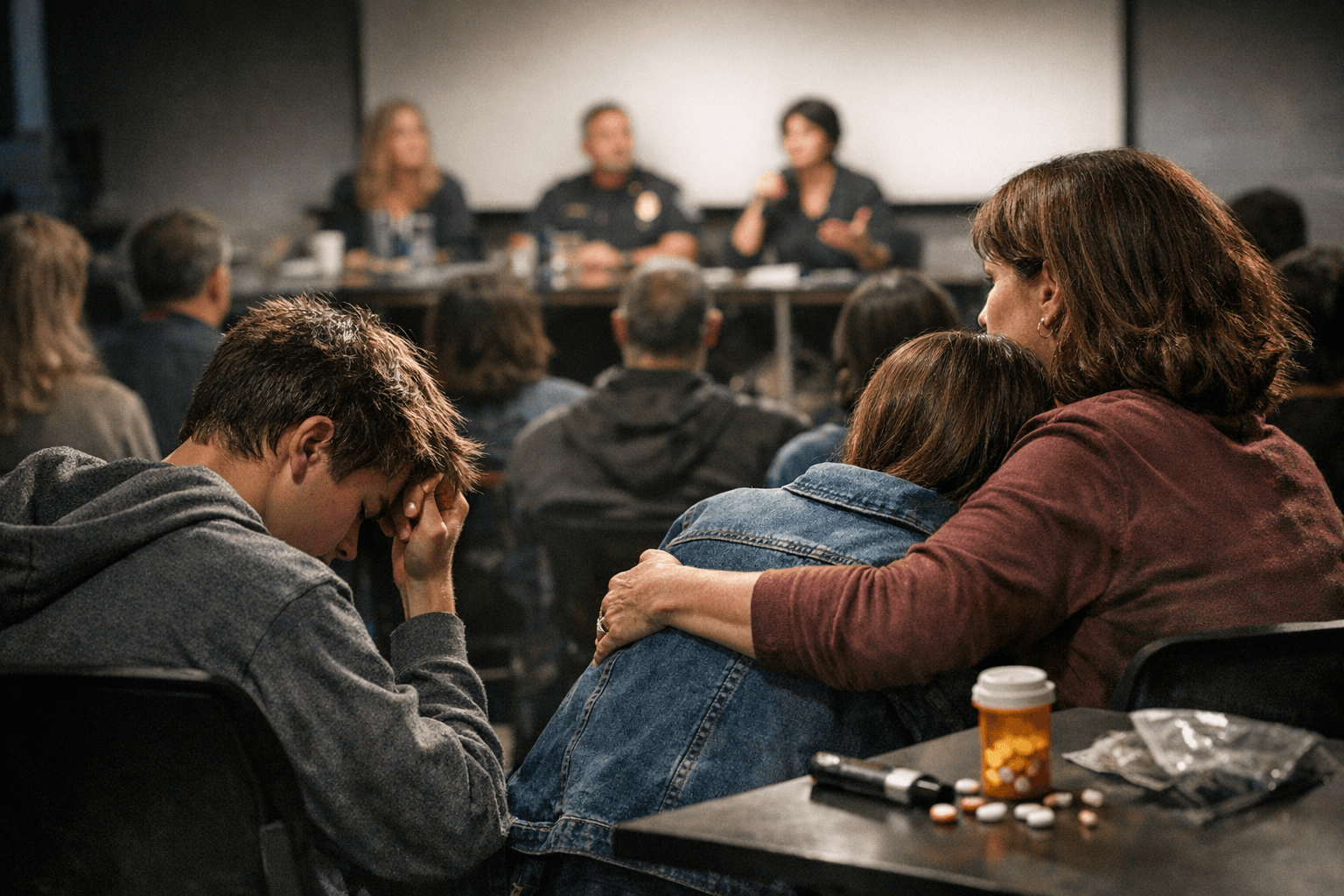
Douglas County families will get a chance to speak directly about the pressures facing young people, from substance misuse to mental health concerns, at the Healthy Futures Town Hall on Monday, May 4, from 6 p.m. to 7 p.m. at Lawrence Public Library, 707 Vermont St. Engage Douglas County is framing the gathering as a community-led discussion for students, educators, experts and parents, with the goal of identifying warning signs, protective factors and gaps in the county’s response.
The event comes as local leaders and prevention advocates try to update their approach to youth risk. Engage Douglas County, which formed in January 2019 in response to the Douglas County Community Health Plan, says its mission is to mobilize and empower the county to reduce substance misuse and promote mental health, especially among youth. The coalition says the town hall is meant to surface concerns and guide prevention work, not just present information.
That work has become more complicated as risks shift. Engage Douglas County notes that today’s dangers do not always look like old-fashioned street-corner drug use. They can show up through smartphones, vape devices disguised as ordinary objects and social media feeds that normalize risky behavior before a teenager fully recognizes the danger. That makes the town hall more than a discussion about one night in Lawrence; it is also a test of how well Douglas County can adapt its prevention strategies to the way students actually live.
The coalition’s youth pipeline already reaches Baldwin, Eudora, Lawrence and Perry Lecompton middle and high schools through its YEP! program. YEP! trains young people in substance misuse prevention, suicide prevention, teen dating violence prevention, mental health promotion and leadership. Those school-based chapters point to one of the clearest service gaps in the county: prevention has to start early, stay visible in schools and connect families to help before a crisis escalates.
County government is also working on behavioral health through prevention, integration and access, and Douglas County Commissioners are scheduled to review progress and challenges in the behavioral health system under the 2024-2029 Community Health Improvement Plan. That review will include suicide prevention and crisis-system coordination, two areas that often determine whether struggling youth can get help fast enough.

State data helps explain why the county is treating the issue as urgent. The Kansas Department of Health and Environment says the Kansas Youth Risk Behavior Survey tracks health behaviors tied to leading causes of problems among youth. KDHE also says nearly nine out of 10 current smokers start by age 18, 4.6 percent of Kansas high school students still smoke, and more than 60,000 Kansans under 18 are projected to die prematurely from smoking. Engage Douglas County’s resource pages direct families to My Life, My Quit and the 988 Suicide & Crisis Lifeline, part of a broader effort to connect local concern with immediate help.
This article was produced by Prism’s automated news system from verified source data, official records, and press releases, then run through automated quality and moderation checks before publishing. The system is built and supervised by the people who set the standards it runs under. Read our full AI policy.
Did this article answer your question?