Haskell breaks ground on new greenhouse complex, expands Douglas County land stewardship
Haskell’s new greenhouse complex will triple growing space, add a learning center and hoop tunnel, and put 80 acres of Douglas County land into student stewardship work.

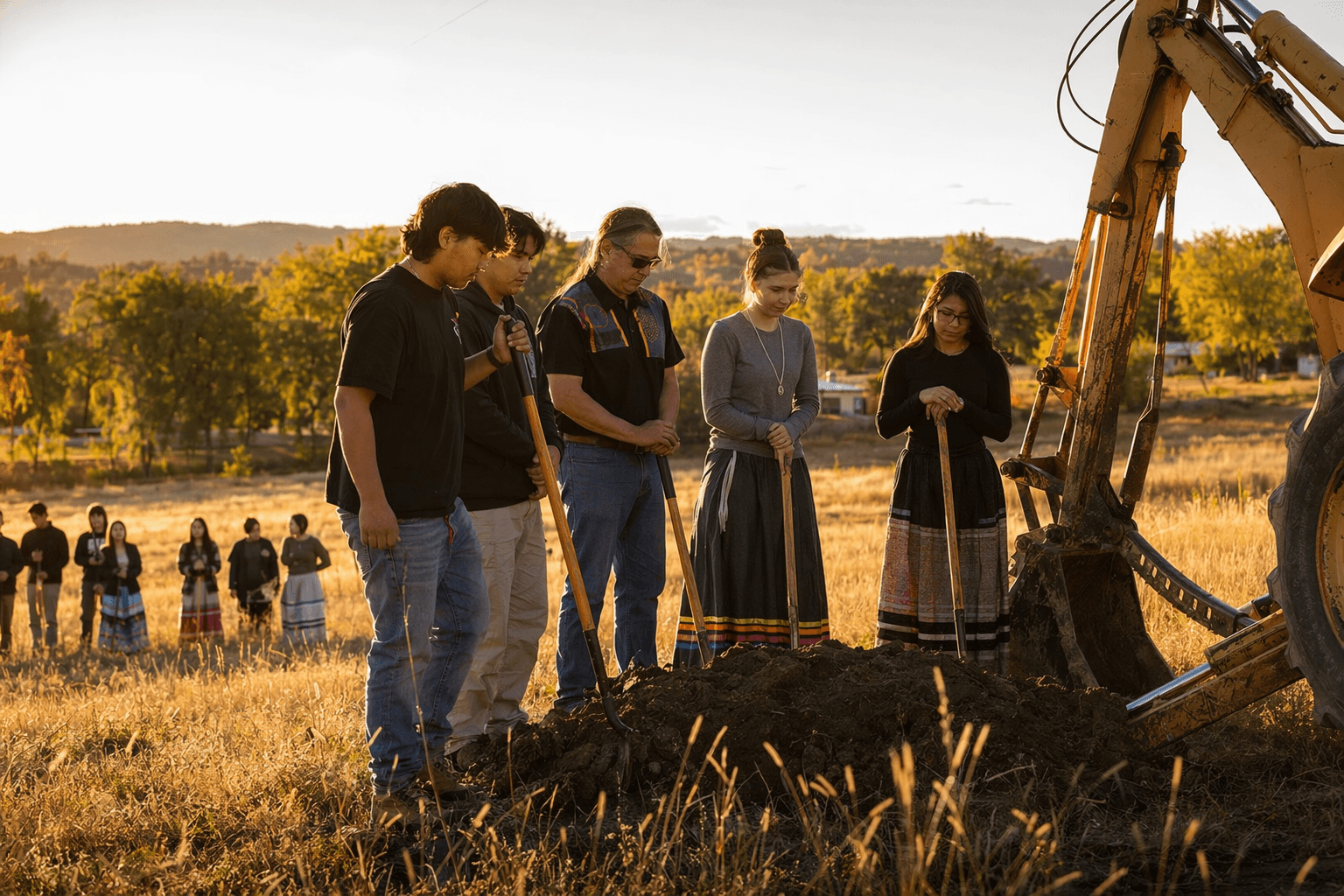
A new greenhouse complex at Haskell Indian Nations University is poised to give students far more room to study food sovereignty, prairie restoration and regenerative agriculture on campus and beyond. The project, broken ground Friday at the Lawrence campus, is designed to deepen Haskell’s land stewardship work while expanding what Native students can learn, grow and teach in Douglas County.
The Greenhouse Educational Complex will include a greenhouse, a learning center and a hoop tunnel. Haskell instructors, students, Board of Regents members and grant leaders gathered for the ceremony, which marked both a construction milestone and a broader push to connect classroom learning with hands-on work in the soil. The new facility will be roughly triple the size of the current Eric Allen Greenhouse, a change that leaders say will ease the pressure on an overcrowded program and open the door to more ambitious projects.
That growth could be matched by more land. Haskell leaders discussed the pending donation of 80 acres in western Douglas County, where Mackie Moore said multiple unique ecosystems could support prairie restoration, agricultural farming and regenerative agriculture. The acreage would also create room for partnerships with Kansas State University and the University of Kansas, extending Haskell’s research and learning network at a time when students are increasingly asking for training that connects science, land management and community needs.
Courtney King, Haskell’s greenhouse program and land stewardship manager, said the project is about reconnecting Indigenous people with culturally significant plant species and giving students practical skills they can bring back to their own tribal communities. That approach reflects the university’s broader mission as a tribally centered institution founded in 1884. Haskell says it serves about 1,000 students per semester, and its College of Natural and Social Sciences oversees environmental sciences, Indigenous and American Indian studies, and math.
The greenhouse effort is also tied to Haskell’s USDA NIFA extension work, which is aimed at building student leadership capacity to address Indigenous community needs. Haskell’s greenhouse and wetlands teams have already been active in restoration work, including a wetlands restoration day in June 2025 that drew more than two dozen volunteers to remove invasive species and support native plants. With the new complex, that work is likely to become a bigger part of how Haskell teaches, researches and stewards land in Lawrence and western Douglas County.
This article was produced by Prism’s automated news system from verified source data, official records, and press releases, then run through automated quality and moderation checks before publishing. The system is built and supervised by the people who set the standards it runs under. Read our full AI policy.
Did this article answer your question?