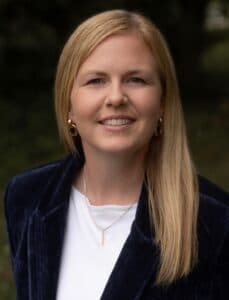
KU doctoral candidate Annalise Guthrie wins prestigious dissertation fellowship
KU doctoral candidate Annalise Guthrie landed a $30,000 fellowship as one of 10 recipients nationwide, putting Native science representation in sharp focus.
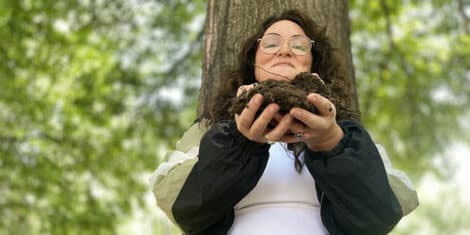
Annalise Guthrie, a University of Kansas doctoral candidate in ecology and evolutionary biology, has won the Elouise Cobell Dissertation Writing-Year Fellowship, a $30,000 award that gives her 12 months of dedicated support as she finishes her dissertation in Lawrence.
Guthrie is one of 10 fellowship recipients nationwide this year, a distinction that carries weight far beyond her own graduate career. Federal science data show the pipeline remains narrow for American Indian and Alaska Native scholars: only 97 people in that group received doctorates in 2020, according to National Science Foundation data drawn from the Survey of Earned Doctorates, which has tracked U.S. doctoral education annually since 1957.
Her academic path runs from a farm in Missouri near Kansas City to Haskell Indian Nations University, where she earned a bachelor’s degree in environmental science in 2020, and then to KU, where she is now studying under Sharon Billings. KU also lists Guthrie as a National Science Foundation Graduate Research Fellow and a member of AISES, the Advancing Indigenous Science and Engineering Society. Her earlier KU presentation work included research on land-use effects on soil-water nutrients in the Kansas prairie precipitation gradient.
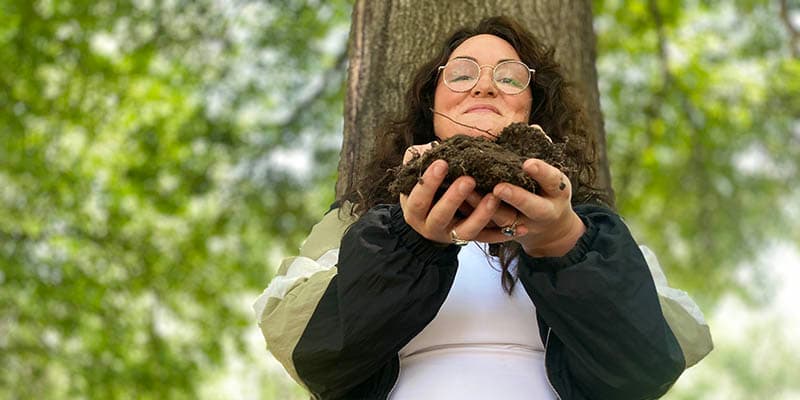
Guthrie is an enrolled citizen of the Cherokee Nation, and that identity has shaped both her science and her view of stewardship. Her research focuses on deep soil structure and on how land use and climate change affect soil health, productivity and carbon storage, linking work in ecology to questions that matter for farming, land management and long-term environmental resilience in Kansas and beyond.
The fellowship gives KU a chance to show whether it can do more than celebrate a standout student. Guthrie’s goals include supporting tribal communities and helping inspire more Native scholars, which makes her award a test of the university’s broader commitment to building a stronger pipeline for Indigenous students in science. A 2021 KU profile also placed her in the university’s HERS Institute pipeline, where she learned research proposal writing and project design, a reminder that success at this level is usually built over years, not months.
This article was produced by Prism’s automated news system from verified source data, official records, and press releases, then run through automated quality and moderation checks before publishing. The system is built and supervised by the people who set the standards it runs under. Read our full AI policy.
Did this article answer your question?