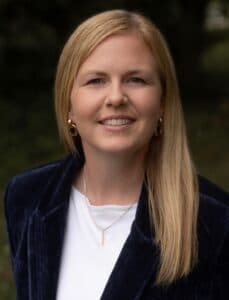
KU microbiology student wins fellowship for research and service
Lauren Reimer’s KU fellowship spotlights research aimed at blocking bacterial biofilms, a problem that helps infections persist and resist treatment.
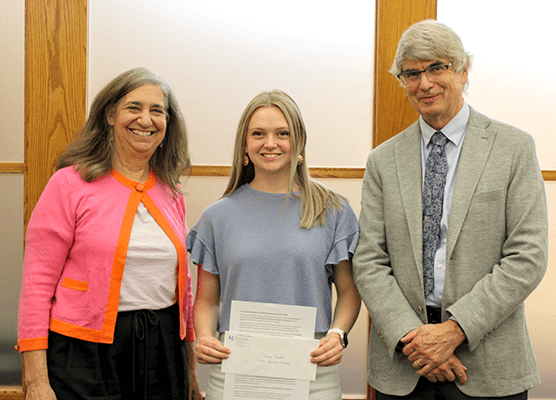
A University of Kansas microbiology graduate whose work targets stubborn bacterial biofilms has earned a fellowship that will help carry her into medical school. Lauren Reimer, of Carrollton, Missouri, won the James Blackiston Memorial Graduate Fellowship from the KU chapter of Phi Kappa Phi and became the chapter’s nominee for a national Phi Kappa Phi fellowship.
The award is worth $1,500 and is meant to support a student’s first year of graduate study. For Douglas County readers, the bigger story is the problem Reimer has been working on: biofilm formation, a major challenge in microbiology and medicine because it helps bacteria resist treatment and can allow infections to linger.

KU leaders praised Reimer’s persistence as she kept refining lab methods until she identified bacterial isolates capable of inhibiting biofilm formation. That kind of work matters well beyond the lab bench. Biofilms can complicate the treatment of infections seen in hospitals, clinics and long-term care settings, making research on how to stop them relevant to patient care across the region, including at LMH Health, which describes itself as the premiere health care provider for residents of Douglas County.
Reimer finished her KU degree with a 4.0 GPA while also serving as a peer tutor in STEM disciplines, working as a medical scribe and volunteering extensively at LMH Health. She also shadowed physicians to build a deeper understanding of patient care, a path that points directly toward the next step in her training: she will attend the KU School of Medicine to pursue an M.D.
Her campus life reached beyond science. Reimer was involved with the American Medical Women’s Association, a college Bible study and the KU Treble Choir, showing a student experience that blended academics, service and community. That mix fits the broader KU profile for students in microbiology, where Molecular Biosciences research spans immunology, bacterial pathogenesis and genetics, virology and fungal secondary metabolites.
The Blackiston Fellowship itself carries KU history. It honors James Blackiston, a graduate student in linguistics and instructor in the Intensive English Center, now the Applied English Center. KU says Blackiston played a key role in forming and activating the chapter in 1975. Recipients are automatically nominated for additional Phi Kappa Phi fellowship opportunities, and KU says national fellowships range from $5,000 to $15,000.

Reimer follows recent KU recipients Rita Pham in 2025 and Aylar Atadurdyyeva in 2024. For KU, the fellowship again highlights a student whose research promise is matched by service, clinical exposure and a clear line from campus science to local health needs.
This article was produced by Prism’s automated news system from verified source data, official records, and press releases, then run through automated quality and moderation checks before publishing. The system is built and supervised by the people who set the standards it runs under. Read our full AI policy.
Did this article answer your question?