KU proposes 5% tuition hike as state cuts squeeze budget
An in-state KU student would pay about $640 more a year under a 5% hike, as the Lawrence campus faces a projected $22.3 million deficit and flat enrollment.

A typical in-state KU student would pay about $640 more a year in tuition and required fees if the university’s 5% increase is approved, adding roughly $320 per semester before housing and meal costs. The proposal lands as the University of Kansas says its Lawrence campus faces a projected $22.3 million deficit in fiscal year 2026 unless it makes immediate adjustments, a gap that has sharpened the pressure on students and families who already face one of the state’s highest college price tags.
KU leaders presented the plan to the Kansas Board of Regents on Wednesday, but final action was not expected until next month. The increase would be the largest in dollar terms and the second-largest by percentage among the state’s major campuses, underscoring how sharply Lawrence is feeling the squeeze. KU says tuition is reviewed every year by university leadership and approved by the regents, and this year’s request comes after the university proposed a 2.9% tuition and fee increase for 2025-26 and, before that, asked for a 5% average increase for 2024-25.
The new hike is meant in part to offset cuts from the state. The Kansas Legislature reduced general operating support for the Lawrence campus by about $4.2 million and removed another $1.2 million that had funded student advising and student success programs. KU also says the budget is being hit by disruptions to federal funding, rising facilities costs and a projected nationwide decline in college enrollment. Even with the higher price, KU says fall 2025 enrollment was 31,169 students systemwide, including 24,376 on the Lawrence campus, and the university is not counting on enrollment growth to spread the cost.
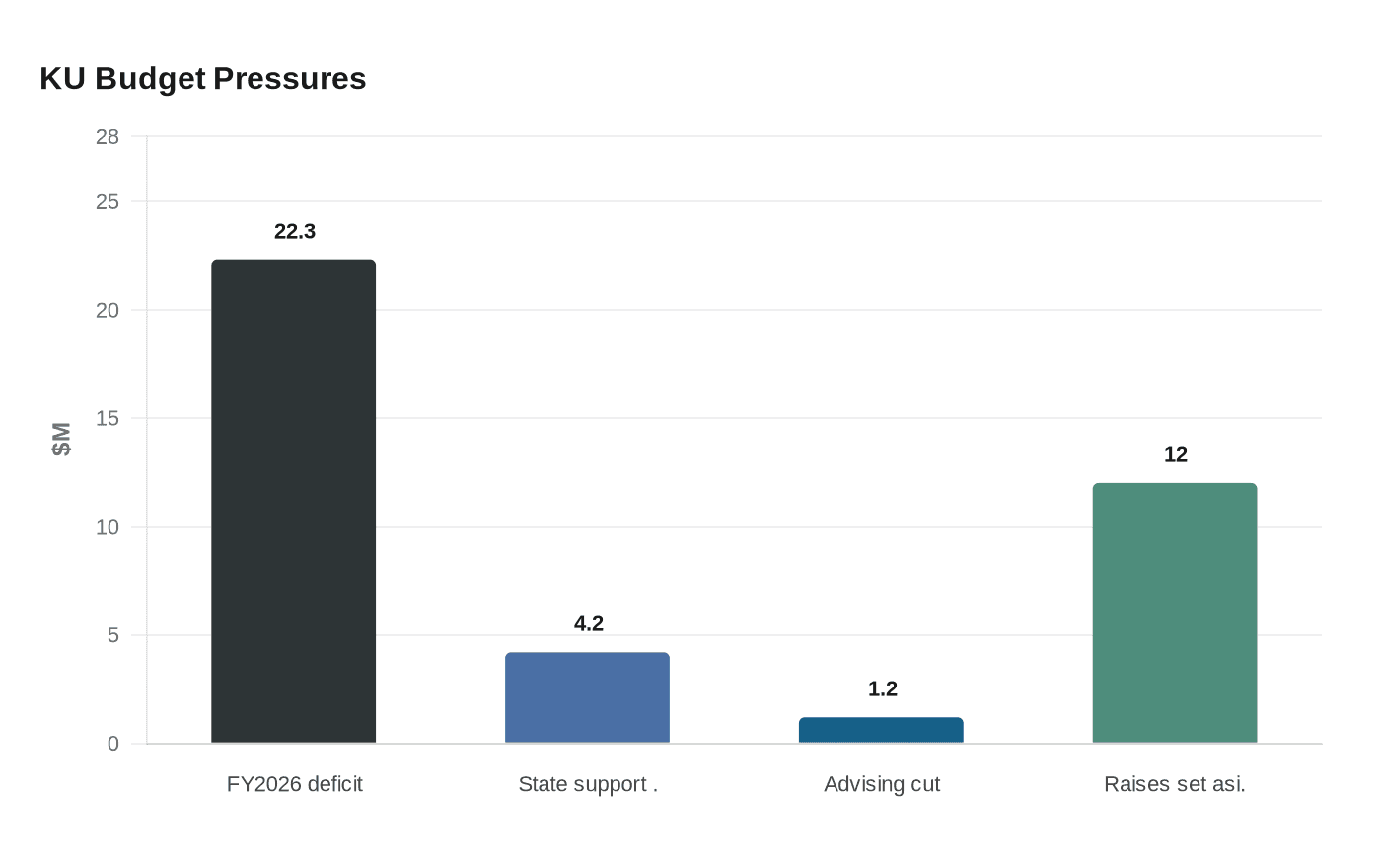
Payroll remains another major pressure point. State funding supports only a 1% increase for university employees, which KU says is not enough to stay competitive in the labor market. The university plans to set aside about $12 million for raises and promotions and to move away from across-the-board raises toward merit increases. Chancellor Douglas Girod has said KU is on solid financial ground but needs to act now to avoid a larger imbalance later, and the shift comes as the first collective bargaining agreement between KU and the United Academics of KU was ratified and recognized by the regents on April 20, 2026.
For Kansas residents, KU’s estimated annual cost for 2025-26 already ranges from $21,589 to $32,857 depending on housing and food choices. Against that backdrop, another tuition increase adds real pressure for Lawrence families and for a university trying to balance salaries, services and a budget that no longer has room for delay.
This article was produced by Prism’s automated news system from verified source data, official records, and press releases, then run through automated quality and moderation checks before publishing. The system is built and supervised by the people who set the standards it runs under. Read our full AI policy.
Did this article answer your question?