Lawrence data centers could bring major power, water, zoning impacts
Lawrence's code already allows data centers in industrial zones, setting up a fast path for AI-scale projects with big power and water stakes.
Lawrence data centers could bring major power, water, zoning impacts
The next big Lawrence development fight may not look like a subdivision or a new storefront. It may look like a windowless, high-security building tied to the AI economy, promising tax base and investment while quietly reshaping power demand, water use and long-range utility planning.
What Lawrence already allows
Lawrence is not starting from scratch if a developer comes knocking. Under the city’s Land Development Code, data centers are a permitted use in industrial zoning districts, which means they are allowed by right if they meet the district standards. In other zoning districts, a project would need a special use permit and a vote from the City Commission.
That distinction matters because it sets the city’s next conversation: not whether data centers can exist at all, but where they belong and under what rules. Lawrence also does not currently have use-specific standards for data centers, so staff would likely evaluate a proposal under the same general permitting framework used for other industrial projects, such as distribution centers, even though the impacts can be very different.
The timing is notable. Lawrence began a comprehensive update of its land development code in August 2022, and the last major revision dates to 2006. That means the city’s code was built long before today’s hyperscale AI demand turned data centers into a national land-use issue.
Why the impacts reach beyond the parcel
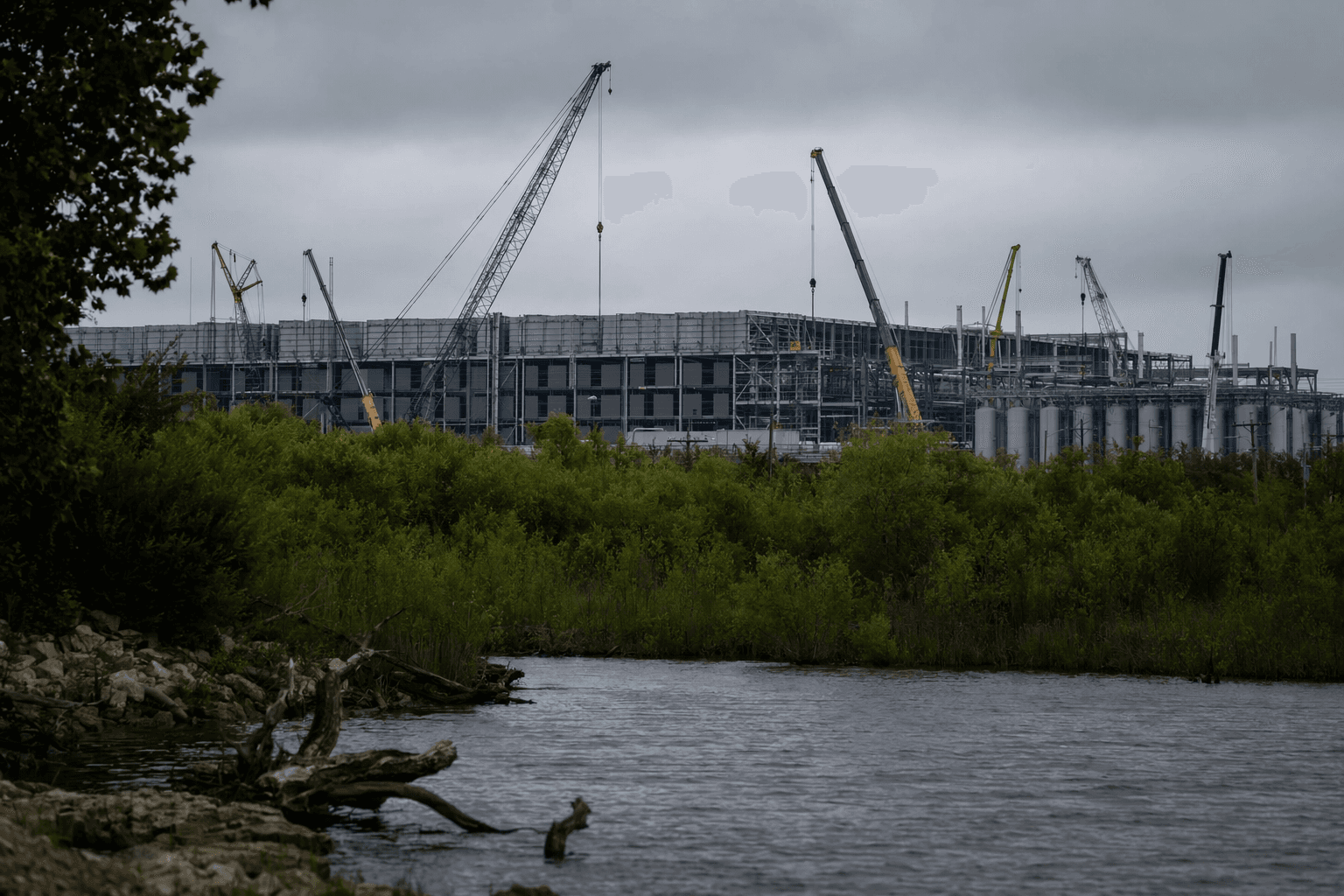
Data centers are often discussed as technical buildings, but their effects spill into daily life fast. They can require enormous electricity supplies, steady water access, extensive site infrastructure and long-term planning for noise, backup systems and utility connections. For neighbors, the first signs may not be the servers inside the building. They may be new utility work, heavier construction traffic, road wear, or other industrial development clustering nearby.
That is why this is more than a zoning filing. A data center can bring jobs and investment, but it can also lock in a very different kind of land use for decades. In a place like Lawrence, the question is not just whether the city can host one of these projects, but whether the community is prepared for the demands that come with it before the building ever opens.
Douglas County has already begun drawing its own lines
County leaders have been wrestling with these questions for nearly two years. On July 31, 2024, Douglas County commissioners voted to begin a text amendment process that would treat battery energy storage systems, data centers and digital asset retrieval facilities as conditional uses in certain zoning districts. County planner Karl Bauer said the county had received an inquiry in May 2024 from an energy-storage company interested in locating in Douglas County.
At the time, planning staff framed the work as the start of a broader community conversation about whether these uses should be permitted with standards or banned outright in some places. That debate still matters because county rules and city rules do not operate the same way. A de facto pause on data centers and crypto mines has taken shape at the county level while broader rules are under review, which makes Lawrence’s existing code look like the easier path for a developer seeking a local foothold.
That split matters for Douglas County residents because development pressure may shift toward the incorporated city first, especially where industrial zoning already exists.
State incentives and utility rules now shape the market
Kansas has also changed the economics around these projects. Senate Bill 98, enacted in 2025, created a 20-year state and local sales tax exemption for qualified data centers. The Kansas Department of Commerce says the program is designed to attract large-scale, permanent facilities, and the Kansas Department of Revenue says qualified purchases made on or after July 1, 2025, can qualify. To use the exemption, a firm must commit at least $250 million in investment and create and maintain at least 20 new jobs within two calendar years after operations begin.
Utility planning has shifted too. On Nov. 6, 2025, the Kansas Corporation Commission approved a Large Load Power Service rate plan for customers requiring more than 75 megawatts of peak power consumption. The tariff includes minimum contract and collateral requirements meant to protect other ratepayers, a sign that Kansas regulators are already preparing for very large electric loads.
Evergy has said it anticipated load growth from existing customers and from potential data center projects, another signal that this is no longer a theoretical planning exercise. The utility grid, not just the zoning map, is now part of the land-use story.
Nearby projects show how big the stakes can get
The scale of nearby proposals helps explain why local governments are moving carefully. In April 2026, the Journal-World reported that a proposed data center near rural Tonganoxie, called Project Bluestem, could require up to 1.2 gigawatts of power if it proceeds as planned. The same reporting said a digital infrastructure campus near De Soto would eventually include four data center buildings and could begin construction in May if approvals are completed.
Those projects matter to Lawrence because they show how quickly one land use can turn into an infrastructure issue spanning counties, utilities and state policy. Evergy would supply power to both, and the Kansas tax exemption and new large-load tariff are already shaping how projects of that size get financed and regulated.
What Lawrence residents would notice first
If a project lands in an industrial district, Lawrence could see it move forward without a special commission vote, as long as it fits the district standards. If it is proposed elsewhere, it would face a special use permit and a public vote, which would push the debate into a more visible political arena.
What people are likely to notice first is not the data storage itself, but the infrastructure surrounding it. That could mean utility upgrades, water planning, heavier truck traffic during construction and a change in the kind of development that wants to be next door. In a city where the code was last substantially revised in 2006, the arrival of AI-era industrial projects could force Lawrence to answer a new kind of planning question: not whether to welcome growth, but how to absorb energy-intensive development without letting it quietly redefine the neighborhood around it.
Know something we missed? Have a correction or additional information?
Submit a Tip