Lawrence hosts annual electronics recycling event at Douglas County Fairgrounds
More than 900 vehicles came through the Douglas County Fairgrounds drop-off as Lawrence collected 72,480 pounds of electronics for recycling.

Residents turned old electronics and appliances over at the Douglas County Fairgrounds as Lawrence and Douglas County held their annual e-waste collection event, a one-day drop-off that has become a major local outlet for items too bulky or too risky to keep at home. City officials say the event has drawn heavy demand, with one recent year bringing in more than 900 vehicles and more than 72,480 pounds of electronics.
The scale points to how much equipment households stockpile before finding a place to send it. Lawrence says devices that still work are better suited for donation or reuse, since keeping them in service extends the life of the product and keeps it out of the waste stream longer. For residents sorting through closets, garages and storage rooms, that means the first stop should be a second life for anything that still powers on.
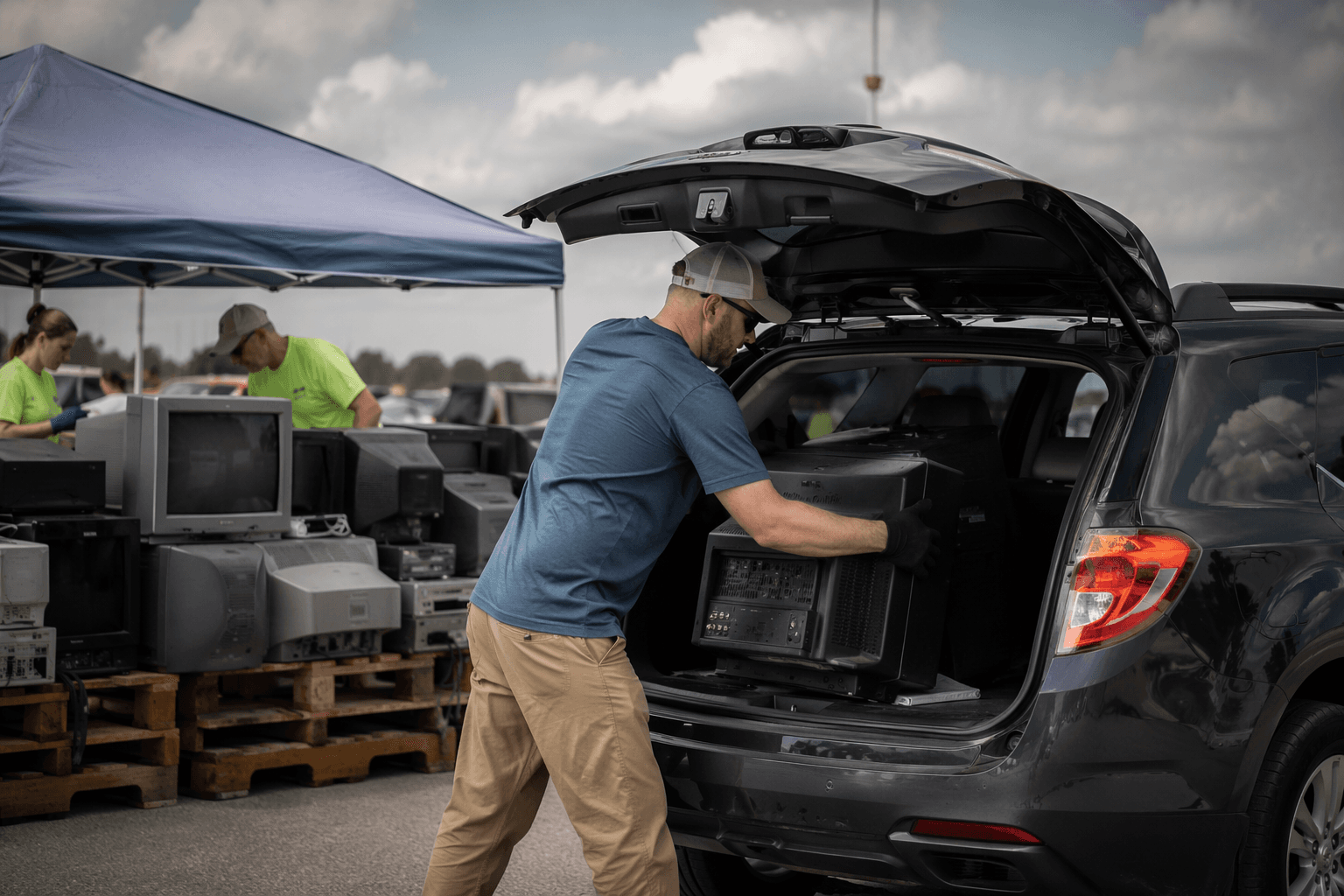
The recycling day also fits into a broader disposal system run through the city and county. Lawrence’s separate Household Hazardous Waste Collection Facility accepts hazardous waste from Douglas County households by appointment throughout the year, giving residents a different channel for materials that should not go into curbside trash or a casual cleanup pile. The electronics event and the hazardous waste program together give the county a structured way to keep problem items moving to the right place instead of sitting around until they become a fire, safety or clutter issue.
Lawrence-Douglas County Sustainability has paired with Teknix Solutions on the electronic waste drop-off effort, reinforcing a public service that gives households a free, local answer for outdated gear. For families clearing out old offices, replacing home electronics or making room after a move, the fairgrounds event offered a single stop for responsible disposal, while working devices remained candidates for reuse rather than recycling.
This article was produced by Prism’s automated news system from verified source data, official records, and press releases, then run through automated quality and moderation checks before publishing. The system is built and supervised by the people who set the standards it runs under. Read our full AI policy.
Did this article answer your question?