Lawrence Public Library traces roots to city’s 1854 founding
Lawrence Public Library began with about 60 volumes in 1854 and still anchors Douglas County through local history, genealogy, and a partnership with Watkins Museum.
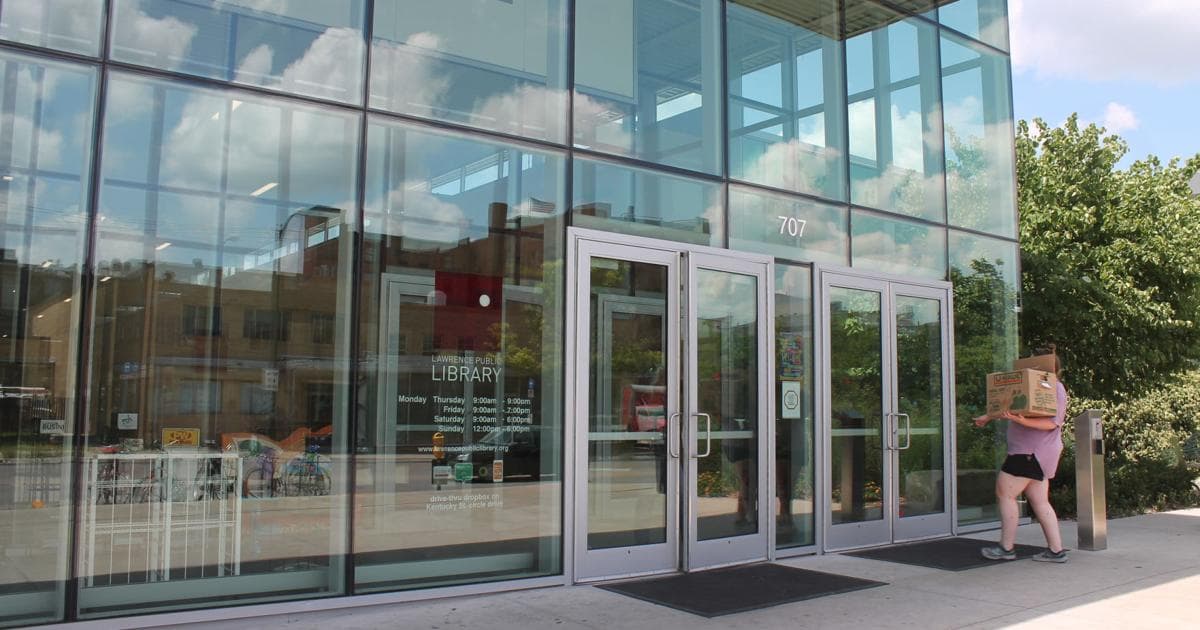
Lawrence Public Library has been woven into the city since Lawrence itself was taking shape in 1854. The first library and literary association began that year, when the town was still part of the Kansas Territory and the struggle over popular sovereignty was defining the Bleeding Kansas era. What started as a modest civic experiment has become one of Douglas County’s most useful public institutions in a city of 81,604, where access to books, records, and memory still matters every day.
A library that started with the town itself
The earliest version of the library did not begin with a grand building or a formal system. Joseph S. Boughton bought roughly 60 volumes and rented a room above a store, creating a small but durable foothold for public reading in young Lawrence. That detail matters because it shows how local institutions often begin in practical, improvised spaces, long before they become familiar landmarks on the city map.
Lawrence’s founding in 1854 gives the library’s origin extra weight. The city emerged in the Kansas Territory during one of the most politically charged periods in the state’s history, and the library grew alongside the civic institutions that helped define the community. That makes the library less a later amenity than part of the city’s original civic architecture, built from the same impulse to organize, educate, and preserve.
What the library preserves now
The library’s local-history work is centered today in the Helen Osma Local History Room on the lower level of the building. There, the collection holds materials relating to the history of Lawrence and Douglas County, along with resources for genealogical research. For residents tracing family names, neighborhood changes, school histories, or county records, the room turns the library into a working archive rather than a passive repository.
Its genealogy and local-history resources also extend well beyond the shelves. The library provides access to the 1950 U.S. Census images, including population schedules, enumeration district maps, and enumeration district descriptions. It also offers Ancestry Library resources, making the library a practical research stop for people trying to piece together family histories, migration patterns, and household records that connect present-day Douglas County to earlier generations.
That combination of physical space and digital access is part of why the library remains useful in a city that has changed dramatically since 1854. The original library effort was built around a few dozen books and a rented room; today, the institution serves a much larger community with tools that help people find records, verify family lines, and understand how Lawrence and Douglas County developed over time.
A partnership that keeps local history public
The library’s history work is not isolated. Digital Douglas County History is a partnership between Lawrence Public Library and the Watkins Museum of History, linking two institutions that have each served as custodians of local memory. The museum itself is part of a longer county history: the Douglas County Historical Society was established in 1933, and since 1975 the society has operated the Watkins Community Museum of History.
The museum’s home adds another layer of place to the story. It is housed in the 1888 Watkins Land Mortgage and Investment Company building, a structure that ties the region’s historical record to an actual surviving piece of 19th-century Lawrence. Together, the library and museum create a public pathway into Douglas County’s past, from old photographs and documents to institutional records that would otherwise be scattered or hidden away.
That partnership is not just symbolic. A 2017 Lawrence Journal-World story noted that the library and Watkins Museum rolled out an online history portal featuring historical postcards, showing how the project has moved local history into a format residents can use from home. The digital portal matters because it broadens access beyond researchers who can make it downtown in person, and it gives the wider community a way to see Lawrence as it looked in earlier eras.
Why the library still matters in daily life
The library’s historical role is inseparable from its present one. It still lends books, but it also gives Douglas County residents a place to research family histories, explore archival materials, and connect the city’s territorial origins to its modern identity. For newcomers trying to understand Lawrence, the library offers a direct line to the city’s earliest civic roots. For longtime residents, it preserves the records and images that make local memory legible.
Without the Helen Osma Local History Room, the genealogy resources, and the Digital Douglas County History partnership, the community would lose more than a convenient research stop. It would lose a place where Lawrence’s beginnings in 1854 remain visible, where the county’s records are publicly reachable, and where a city of more than 81,000 still has access to the story of how it became itself. In Douglas County, that makes the library less a relic of the past than a working part of the civic present.
This article was produced by Prism’s automated news system from verified source data, official records, and press releases, then run through automated quality and moderation checks before publishing. The system is built and supervised by the people who set the standards it runs under. Read our full AI policy.
Did this article answer your question?