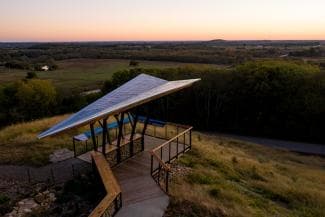
Prairie Park Nature Center offers wetlands, prairie and trails in Lawrence
Prairie Park pairs free, easy walks with wetlands, prairie and a five-acre lake on Lawrence’s east side. It also runs classes and school programs year-round.
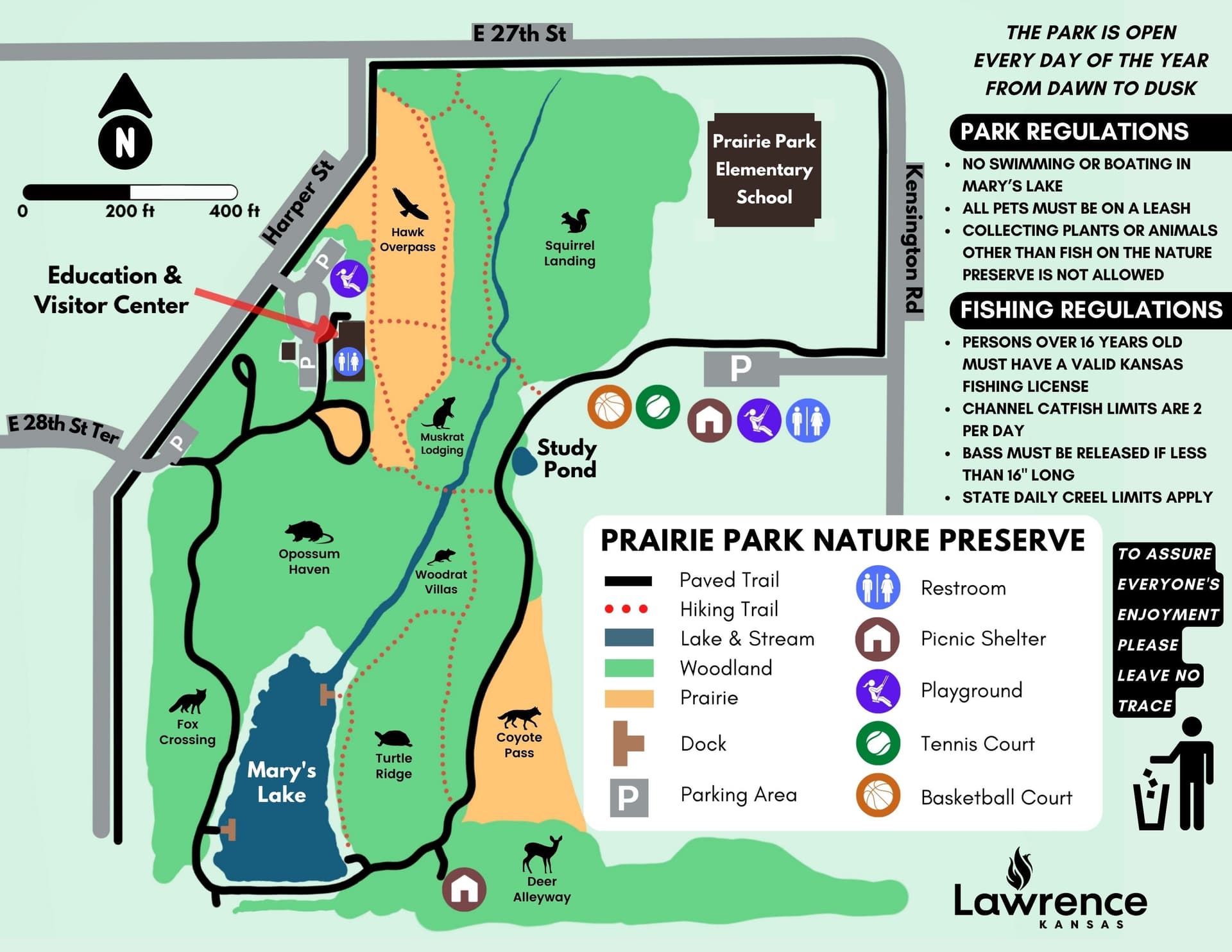
Prairie Park Nature Center is one of Lawrence’s most practical places to see Douglas County’s landscape without leaving town. The 100-acre preserve on the east side of Lawrence combines wetlands, woodlands, prairie and a five-acre lake with free admission, so it works as both a quick neighborhood outing and a hands-on outdoor classroom.
What Prairie Park is for
Lawrence Parks and Recreation identifies Prairie Park Nature Center as a nature preserve, and that purpose matters as much as the trail system itself. The Prairie Park Post describes the mission plainly: to promote preservation of the natural world through hands-on environmental and conservation education. That makes the site useful for families, walkers, birders and teachers who want a place where a short visit can still show several parts of Douglas County’s natural history.
The preserve’s habitat mix is the main reason it stands out. Wetlands, woodlands and prairie sit close together here, so a single walk can move from open grassland to wetter low ground to tree cover without leaving city limits. For children, that variety turns a simple walk into a lesson in what changes in the landscape and why those changes matter for wildlife.
Trails, lake and what you actually see
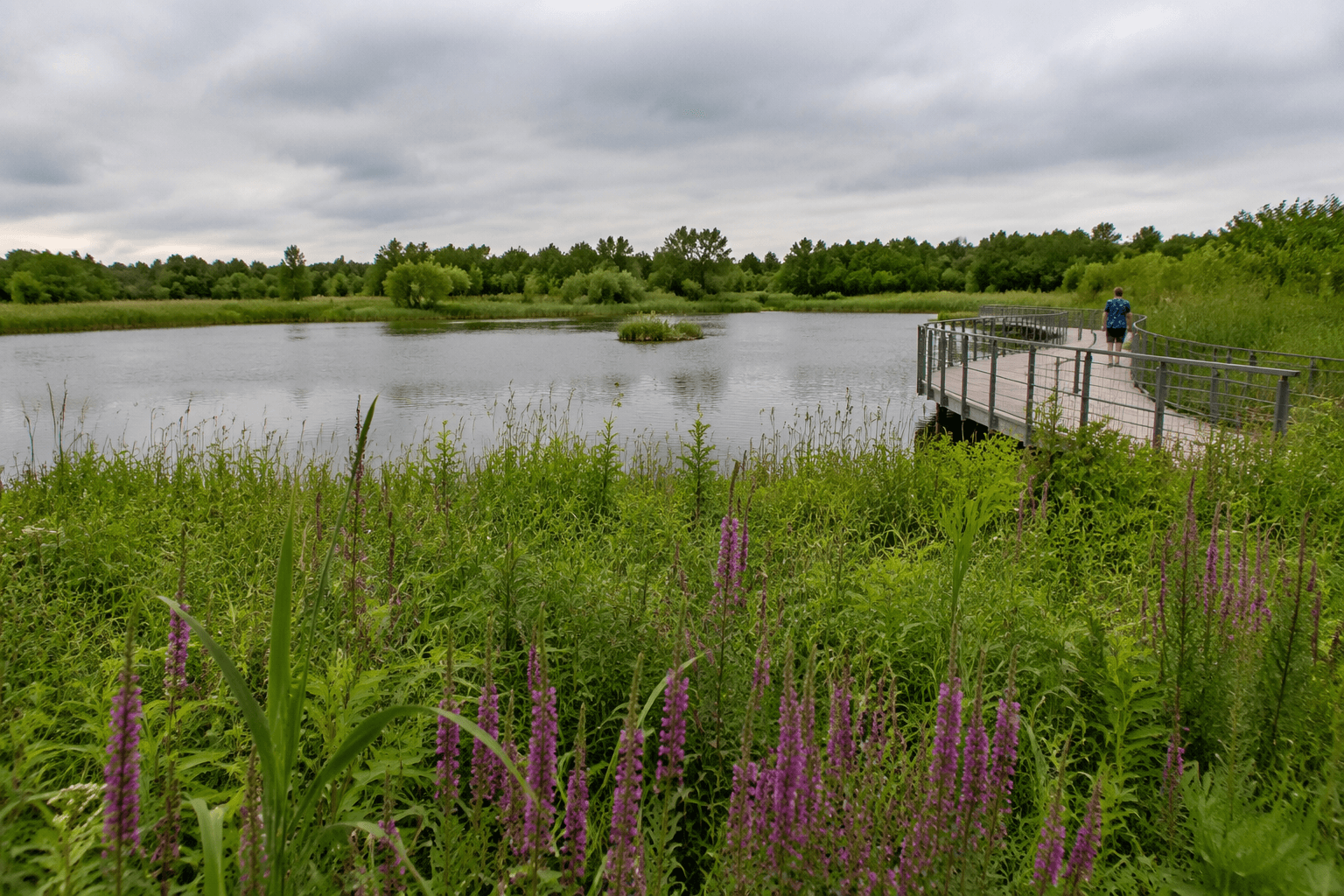
Prairie Park’s trail system is built for use, not just viewing from a distance. Kansas I-70 Association notes the preserve includes a five-acre lake, while a Kansas travel listing adds a prairie, lake, study pond and both paved and rough trails. The same listing says the paved trail is handicapped accessible, which makes the site useful for strollers, mobility aids and anyone who wants a smoother route.
That mix gives visitors real options. The paved trail works for a short, low-effort loop, while the rougher paths are better when you want a more natural feel and closer views of plants and birds. Because the preserve includes several habitat types in one place, it can also be a strong repeat destination, since wetlands and prairie look different after rain, in summer heat and during seasonal migration.
Hours, access and where to go
Admission is free, which lowers the barrier for quick visits and repeated trips. The Prairie Park Post’s summer 2024 newsletter listed the nature center as open Tuesday through Saturday from 9 a.m. to 5 p.m., and a Kansas travel listing gives the same weekday hours plus Sunday from 1 to 4 p.m., with trails open during daylight hours. Those posted hours are useful for planning, but the trail daylight rule is the simplest guide if you are making a casual stop outdoors.
One travel directory places the site at 2730 S.W. Harper Street, Lawrence, KS 66046. That puts Prairie Park squarely on the east side of Lawrence, close enough to serve as a neighborhood green space while still offering enough acreage to feel like a real preserve. The same directory describes Prairie Park as a 71-acre park, while Lawrence Parks and Recreation identifies the preserve at 100 acres, so the city figure is the stronger number to use when thinking about the site’s full footprint.
Why teachers and families keep using it
Prairie Park is more than a place to walk around. A city programs page shows that Prairie Park Nature Center offers classes, events and a reserve-a-program option for schools, which gives teachers a built-in way to use the site for environmental lessons. That program structure is important in a city park because it turns the preserve into a working classroom, not just a field trip destination.
For families, that means the site can serve different needs at different times. Younger children can focus on spotting birds, frogs, insects and shoreline plants around the lake and study pond, while older students can talk through habitat differences and the role of conservation. The preserve’s hands-on approach also fits well with Douglas County’s broader interest in local environmental education, since the place itself becomes the lesson.
A site with a future, not just a past
Prairie Park has also been part of active public investment. In August 2024, the City of Lawrence said the Prairie Park Nature Center and surrounding park preserve received an Open Space grant from the Douglas County Heritage Conservation Council. The city said the grant-supported update would expand the preserve’s footprint and nature-focused programming, which points to a site that is still growing in use and capacity.
That newer investment follows an earlier community discussion. In October 2022, the city held a community conversation about Prairie Park Nature Center and gave residents another chance to share online feedback about making it sustainable into the future. That kind of public attention matters because it shows the preserve is treated as a long-term civic asset, not just a patch of green space with trails.
How to use a visit well
A short stop at Prairie Park can be as simple as a walk on the paved path and a look across the water, but the site rewards slower visits. The combination of prairie, wetlands and woods makes it easy to compare habitats in one outing, and the free admission means there is little cost to returning in different seasons. If you are planning for a school group, the reserve-a-program option gives the site a built-in education angle that can be tailored to age and subject.
- Go for the paved trail if you want accessible footing and an easier loop.
- Use the rough trails if you want a more natural walk and closer habitat variety.
- Bring binoculars or a camera if you want to focus on birds and wetland wildlife.
- Check posted hours before heading out, especially if you want the nature center itself rather than just the daylight trails.
Prairie Park Nature Center stands out because it gives Lawrence something rare: a city preserve that is useful for daily recreation, formal teaching and a quick look at Douglas County’s prairie landscape, all in one place.
This article was produced by Prism’s automated news system from verified source data, official records, and press releases, then run through automated quality and moderation checks before publishing. The system is built and supervised by the people who set the standards it runs under. Read our full AI policy.
Did this article answer your question?