Watkins Museum beadwork demo shares Potawatomi culture and history
Tara Mitchell turned a free Watkins Museum demo into a lesson in Potawatomi language, family teaching and survival. The beadwork program was part of the museum’s America 250 series.
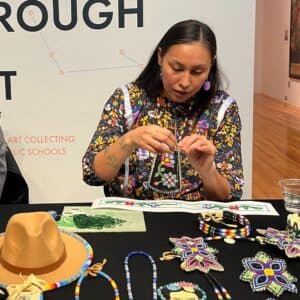
Tara Mitchell brought beadwork, Potawatomi language and family memory into the Watkins Museum of History on Friday, turning a free demonstration into more than a craft lesson. The program, called babisyakatek, a Potawatomi phrase Mitchell said means it is beaded, was built around a tradition she carries both as a professional beadwork artist and as the deputy tribal historic preservation officer for the Prairie Band Potawatomi Nation.
The museum presented the demonstration as part of its America 250 series, with support from the Federation of State Humanities Councils and the Smithsonian Center for Folklife and Cultural Heritage. Mitchell had been approached by Humanities Kansas earlier this year as part of a broader state effort to highlight folklife, bringing the program to Lawrence as a public window into a practice that remains active, not archival.
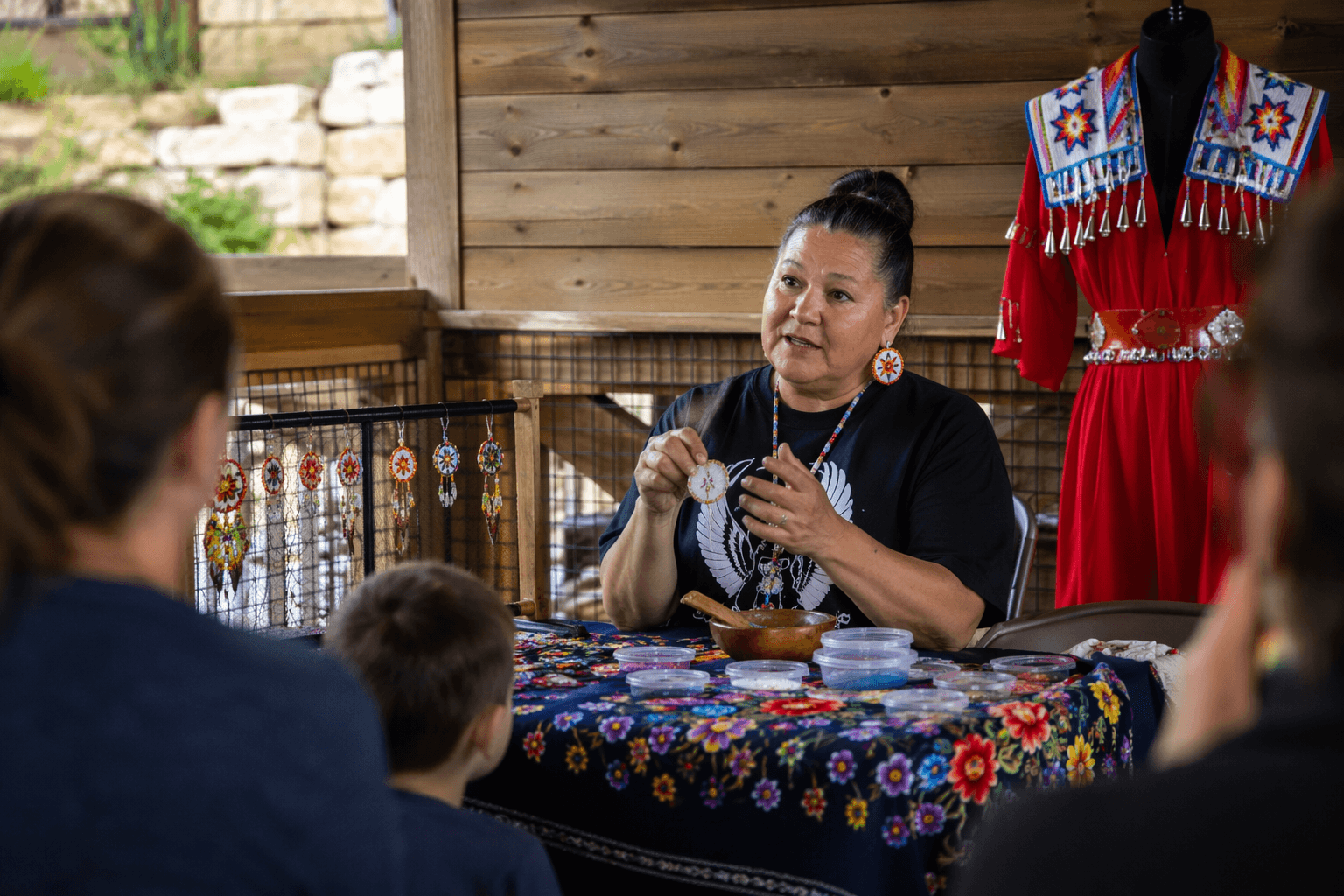
Mitchell said she learned the tradition from her mother, a detail that sits at the center of the demonstration’s meaning. The beadwork was not presented as a solo artistic skill, but as a form of knowledge passed from one generation to the next, with a direct line between home teaching and public cultural expression.
That line matters because Mitchell also talked about how Native traditions survived efforts by the U.S. government to erase Indigenous life, including boarding schools that separated Native children from their language and customs. In that context, each bead and design carries more than decoration. It reflects persistence, continuity and a cultural practice that has endured despite efforts to break it.
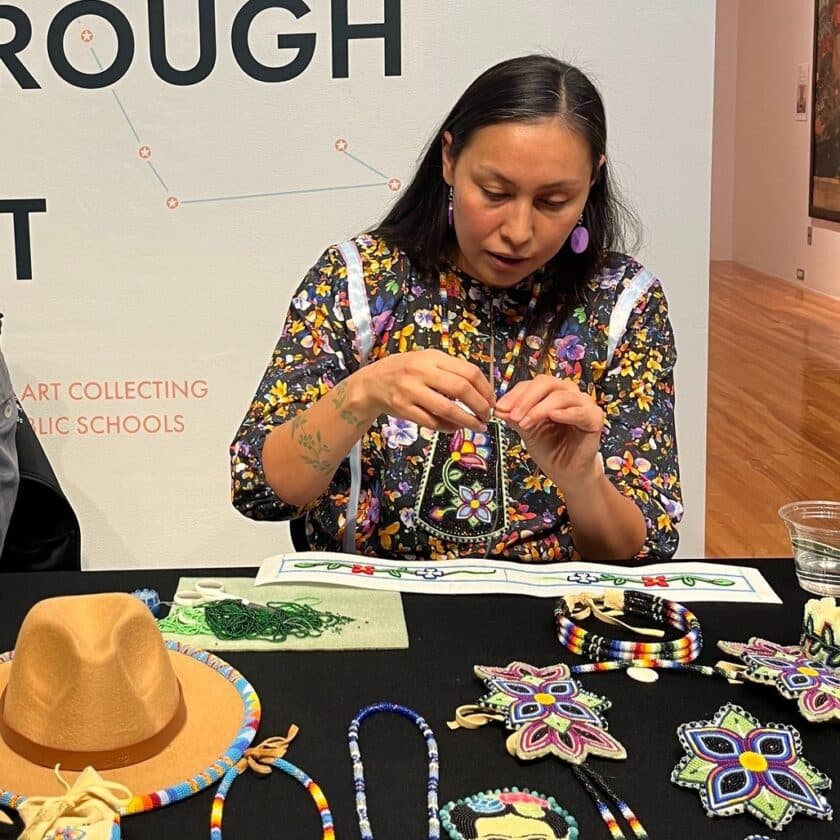
Mitchell said her goal was to foster understanding, appreciation and respect for Potawatomi culture across communities. At Watkins, the demonstration gave Lawrence residents a chance to see Indigenous history not as something sealed behind glass, but as a living practice being taught, shared and carried forward in a downtown museum setting.
This article was produced by Prism’s automated news system from verified source data, official records, and press releases, then run through automated quality and moderation checks before publishing. The system is built and supervised by the people who set the standards it runs under. Read our full AI policy.
Did this article answer your question?