Dubois County Museum preserves 36,000 artifacts, tells county history
Dubois County’s history comes into focus in one Jasper stop, where 36,000 artifacts, 14 murals and a 17-room Main Street trace the county from settlement to industry.
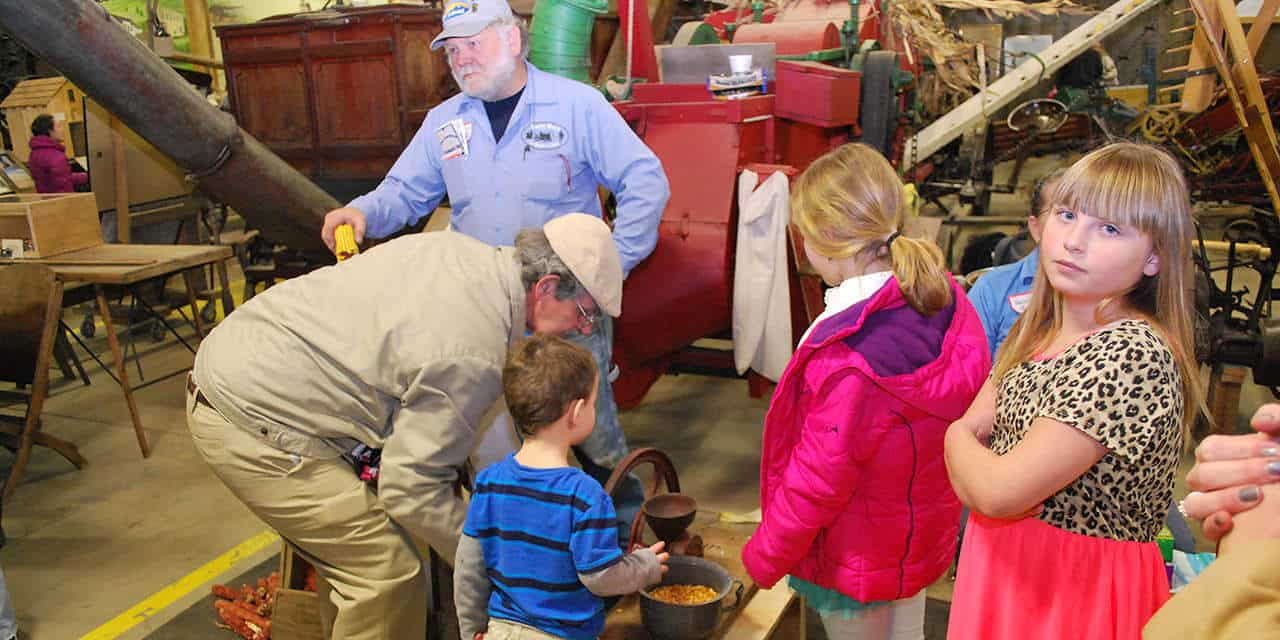
Dubois County Museum gives residents, newcomers and visitors a single place to read the county’s story in physical form. In Jasper, the museum turns local memory into a walk through settlement, farming, faith, trade, military service and manufacturing, with enough scale to make the county’s history feel immediate rather than abstract.
What makes it especially useful is that it does not treat Dubois County as a single-town story. The museum is built to connect Jasper with Huntingburg, Ferdinand and the smaller communities between them, showing how immigration, agriculture and small-town identity shaped the county as a whole. That makes one visit less like a tour of objects and more like a practical introduction to how Dubois County came to look and feel the way it does today.
Start with the scale of the collection
The museum identifies itself as the largest county museum in Indiana, and the numbers explain why it can carry that claim with confidence. It holds more than 36,000 artifacts, spreads across over 50,000 square feet of exhibits and draws annual visitation that exceeds 12,000 people. Those figures matter because they signal that this is not a narrow specialty museum or a single-room archive. It is a large, county-wide record built from objects, rooms and reconstructions that together cover a broad sweep of local life.
The collection is also organized to help different kinds of visitors find an entry point. Family historians can look for names, occupations and settlement patterns. Longtime residents can trace the industries and customs that shaped their own neighborhoods. Newcomers can use the museum as a map for understanding the county before they start driving its roads or visiting its towns.
Begin with the county’s earliest layers
The first stop that best frames the rest of the museum is Exhibit Room I, which focuses on early history, immigration, religion, sports, veterans and early manufacturing. That mix is important because it shows Dubois County as a place formed by movement of people, work and community institutions rather than by one single industry or one founding event.
This room is where the county’s immigrant roots come into view. The notes point to German and Scots-Irish settlement patterns as part of the story, and the room’s themes make it clear that migration and faith both helped define local identity. Early manufacturing and veterans’ history also sit alongside those themes, showing that the county’s development was never only rural or only agricultural. It was shaped by families, churches, shops, service and the first layers of industry.
An audio tour is available for Exhibit Room I, which gives the room a useful layer of interpretation for anyone who wants more context than labels alone can provide. The museum also says additional audio tours are planned, a sign that the experience is meant to keep expanding without losing its county-history focus.

Move next to the working landscape
Exhibit Room II shifts the focus to the tools and routines that built daily life in Dubois County. Here the emphasis is on farm and pioneer machinery, crafts and trades, specialty shops and other pioneer-era activities. That room fills in the economic side of the county’s story, showing how people worked the land, repaired equipment, made goods and built local commerce before modern retail and industrial systems took shape.
This section is especially valuable because it connects older agriculture to later patterns of local industry. Visitors can see how farming, skilled labor and shopkeeping were not separate worlds but overlapping parts of a county economy. The room also helps explain why trade skills, small workshops and practical craft traditions remained important in a place where communities depended on each other for both goods and services.
Walk Main Street to see the county in miniature
One of the museum’s most distinctive features is its 17-room Main Street, designed to evoke the 1890s. It is one of the clearest ways to understand how small-town life worked in Dubois County, because it compresses the rhythms of a late-19th-century commercial street into one walkable sequence.
That setting helps visitors picture the kinds of businesses, social interactions and public spaces that once anchored county life. Instead of presenting local history as a list of dates, the Main Street exhibit gives it a streetscape: shops, public-facing spaces and the everyday commerce that connected farm families, town merchants and traveling residents. It is one of the best exhibits for seeing how Jasper and the surrounding county developed as a network of communities with shared habits and shared needs.
Look for the 1850 log house to understand the rural roots
Another important stop is the two-pen log house built in 1850. It offers a direct look at the earliest rural settlement era in the county, before Main Street commerce and larger institutions shaped daily life. The log house makes the county’s first generations easier to picture because it shows the scale, materials and practical demands of frontier-era living.
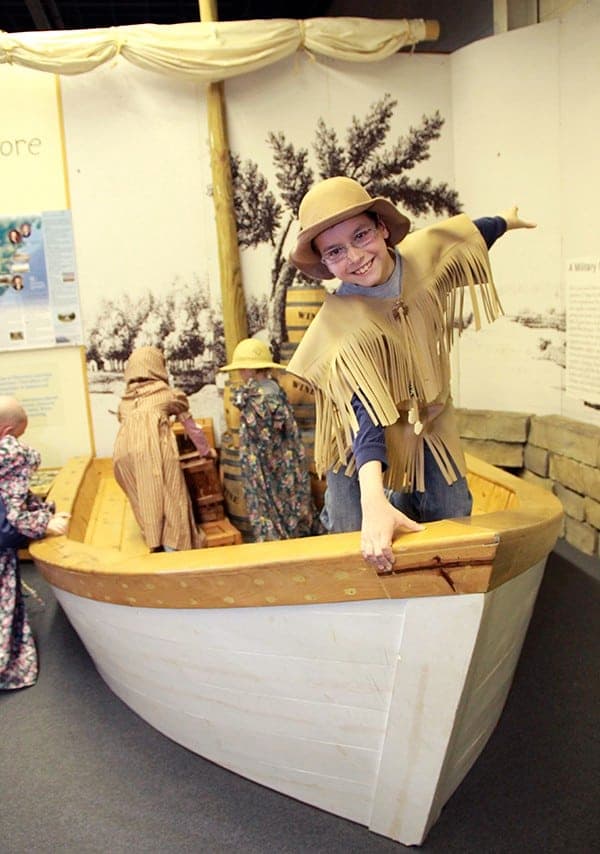
Placed alongside the museum’s other exhibits, the log house fills in the transition from isolated homesteads to organized towns and local institutions. It is one of the clearest reminders that Dubois County’s present-day identity rests on an older rural foundation, one that still matters even as Jasper and the county’s towns have grown more connected and more modern.
Use the murals as a county-wide guide
The museum’s fourteen community murals are another defining feature, and they help tie the whole visit together. Each mural visualizes early history in a different part of the county, turning the museum into a county map made of stories and images. That approach matters because it keeps the focus on local place, not just on isolated artifacts.
Together, the murals reinforce a core lesson of the museum: Dubois County was built in many small places at once. The county’s identity comes through not only in Jasper, but also in the settlements, farms and neighborhoods that fed into its growth. For anyone trying to understand how the county still works socially and culturally, the murals are a useful way to connect the past to the present landscape.
Make the visit practical, not just nostalgic
A good first visit does not require trying to absorb everything at once. The most useful route is to start with Exhibit Room I, continue through Exhibit Room II, then move to the 17-room Main Street and finish at the 1850 log house and the community murals. That sequence moves from broad county history to the work, commerce and domestic life that shaped it.
- residents who want a clearer picture of how the county’s communities fit together
- newcomers who need a quick but serious introduction to Dubois County
- genealogy researchers tracing family, church or settlement roots
- visitors who want the county’s industries, immigration history and small-town character explained in one place
The museum is a strong stop for:
Dubois County Museum does something many local institutions only promise: it makes the county legible. By pairing 36,000 artifacts with room-by-room stories, it preserves not just objects but the structure of Dubois County’s identity, from the first settlements to the Main Street world that still echoes through Jasper today.
This article was produced by Prism’s automated news system from verified source data, official records, and press releases, then run through automated quality and moderation checks before publishing. The system is built and supervised by the people who set the standards it runs under. Read our full AI policy.
Did this article answer your question?