Five Historic and Cultural Stops Worth Visiting in Dubois County
Dubois County's towns of Jasper, Huntingburg, Ferdinand, and Holland hold more history per square mile than most Indiana counties twice their size.
Dubois County sits in southwestern Indiana with a cultural identity shaped by German Catholic immigration, dense forest industry, and small-town civic pride that has outlasted generations of economic change. The towns of Jasper, Huntingburg, Ferdinand, and Holland each carry distinct architectural and historical fingerprints worth slowing down to read. Whether you moved here recently or have driven past these landmarks your whole life without stopping, five destinations offer a compact but genuinely rich introduction to what this county is made of.
Monastery Immaculate Conception, Ferdinand
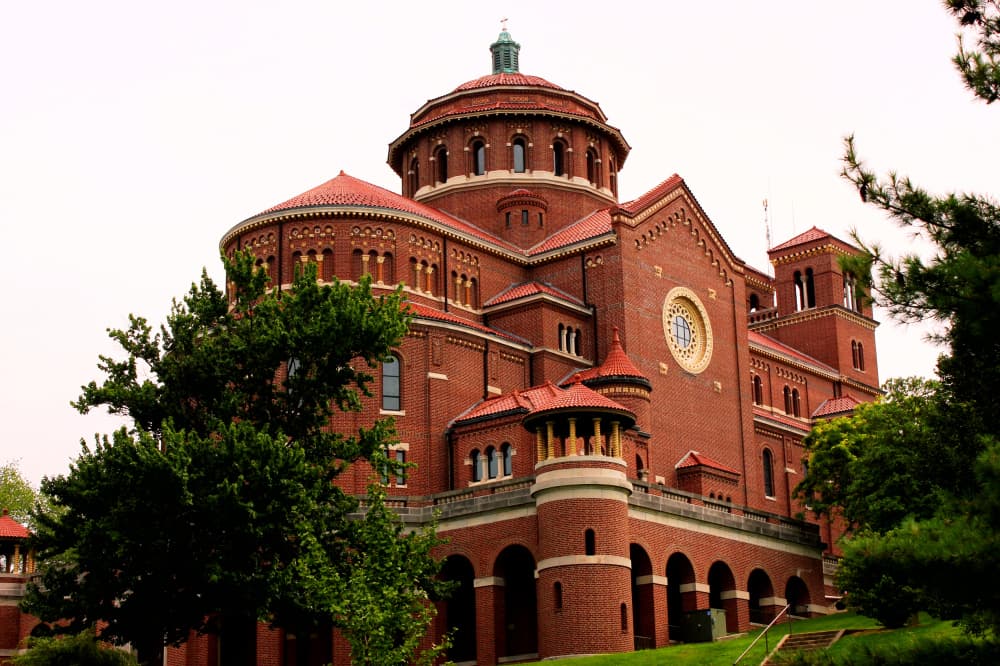
Perched on a hill above the town of Ferdinand, the Monastery Immaculate Conception is one of the most visually striking structures in all of Indiana. The Benedictine sisters who built it arrived in Ferdinand in 1867, and the domed brick church that crowns the complex has become an architectural landmark recognizable across the region. The monastery grounds are open to visitors and include a gift shop, gardens, and guided tour options that trace the sisters' history of education and community service throughout Dubois County. Few single sites in the county connect faith, architecture, and local social history as concisely as this hilltop campus.
Huntingburg League Stadium
Baseball history runs deep in Huntingburg, and League Stadium is the physical proof. Built in 1894 and renovated over the decades, the stadium gained national attention when it served as a filming location for the 1992 film "A League of Their Own" and its 1993 prequel. Seating roughly 2,500 fans, it remains an active venue for the Dubois County Bombers of the Prospect League, meaning you can watch live baseball in a ballpark that predates the automobile. The combination of genuine historical age and pop culture recognition makes it one of the most shareable stops in the county.
Jasper Strassenfest Grounds and Downtown Jasper
Jasper functions as the county seat and commercial center, but its downtown corridor and the annual Strassenfest celebration reveal a community that takes its German heritage seriously year-round, not just during festival season. The Strassenfest, held each summer along the riverfront, draws tens of thousands of visitors with traditional food, music, and dance rooted in the German Catholic traditions that settlers brought to this region in the mid-1800s. Walking the downtown streets outside festival season still rewards visitors: the architecture along the main corridor reflects decades of civic investment, and the proximity to the Patoka River gives Jasper a physical setting that distinguishes it from comparable county seats across southern Indiana.
St. Joseph Catholic Church, Jasper
Standing prominently in downtown Jasper, St. Joseph Catholic Church is one of the most architecturally significant religious buildings in southwestern Indiana. The current Romanesque Revival structure, completed in 1880 and expanded in subsequent decades, reflects the ambition of a German immigrant congregation determined to build something permanent and grand. The interior features detailed woodwork, stained glass, and a scale that surprises first-time visitors unfamiliar with the depth of Catholic institutional investment in this part of the state. For anyone tracing the arc of German settlement across Dubois County, St. Joseph is an essential stop that puts stone, mortar, and craftsmanship behind what the history books describe.
Holland's Small-Town Streetscape
Holland, the smallest of the four towns highlighted in this guide, offers something the larger municipalities cannot: an almost unaltered small-town commercial streetscape that has resisted the homogenizing pressure of chain development. The town's compact downtown retains buildings from the late nineteenth and early twentieth centuries that give a ground-level sense of what rural Indiana commerce looked like before the interstate highway system reorganized the region's economic geography. Visiting Holland requires deliberately getting off the main routes, which is precisely the point. The effort produces a quieter, more contemplative encounter with Dubois County's past than the more trafficked sites allow, and it rewards the kind of slow travel that lets architecture and streetscape tell their own stories without interpretive signage doing all the work.
Taken together, these five stops map a county whose identity was built deliberately, by immigrants who constructed churches before they built comfortable homes, by civic leaders who preserved a baseball stadium when economics alone would have argued for demolition, and by communities that have maintained their distinctiveness even as the broader region has grown more homogeneous. Dubois County's history is not stored in a single museum; it is spread across four towns and best understood by moving between them.
This article was produced by Prism’s automated news system from verified source data, official records, and press releases, then run through automated quality and moderation checks before publishing. The system is built and supervised by the people who set the standards it runs under. Read our full AI policy.
Did this article answer your question?