Patoka Valley amateur radio club prepares for Field Day exercise
The Patoka Valley Amateur Radio Club will join a North American drill built for storms and outages, testing Dubois County’s backup communications June 27-28.
When storms knock out cell service or overload local networks, Dubois County could still need a working radio operator on the other end. The Patoka Valley Amateur Radio Club will take part in Field Day on June 27 and June 28, using the annual exercise to test emergency-ready communications in conditions that resemble a real outage.
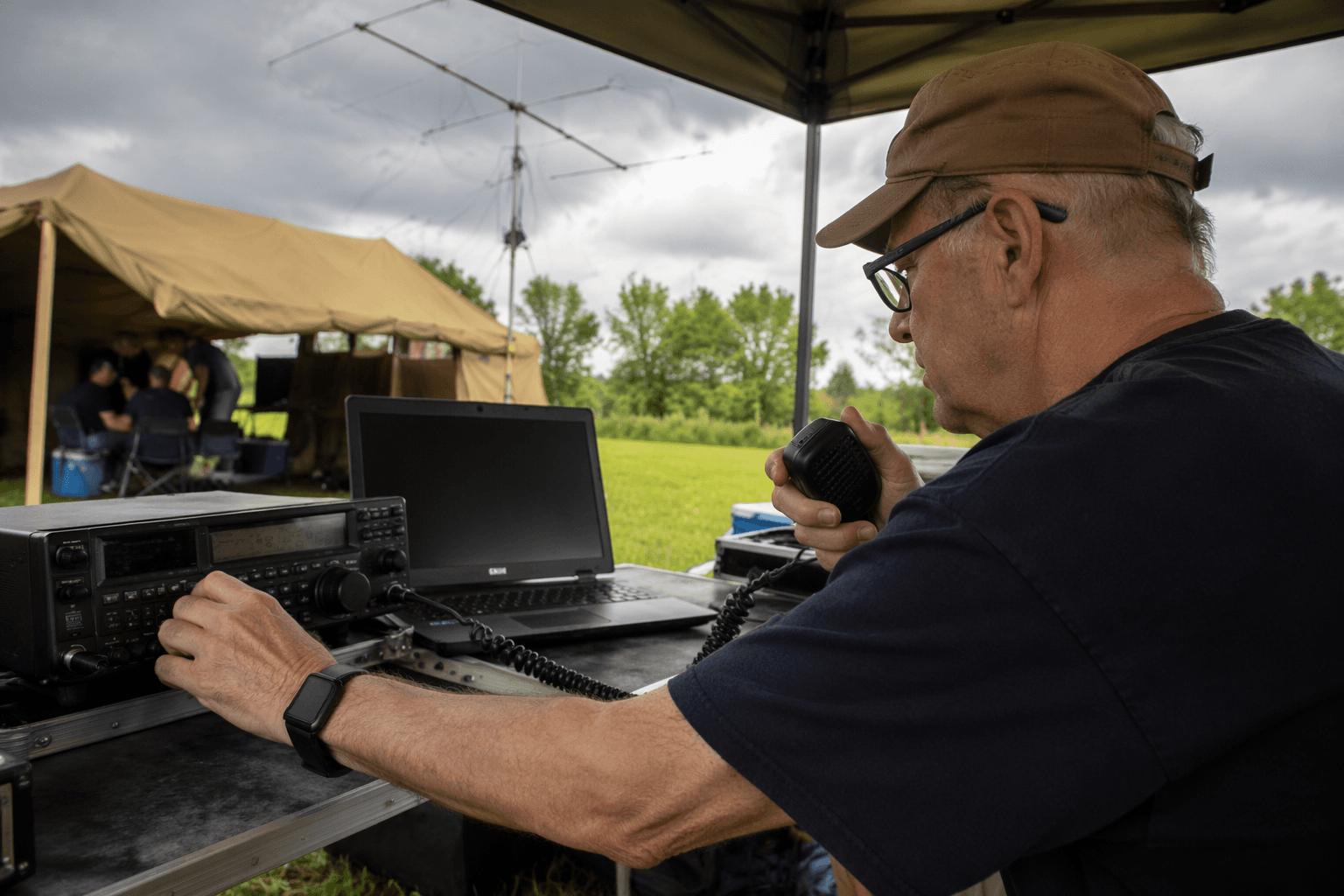
Field Day will run from 2 p.m. Saturday, June 27, to 2 p.m. Sunday, June 28, as amateur operators across the United States and Canada set up temporary stations and often run them on generators, batteries or solar power. The American Radio Relay League says the goal is to work as many stations as possible while learning to operate in abnormal, less-than-optimal conditions. For Dubois County, that makes the event more than a demonstration of radio skill. It is a rehearsal for the kind of backup communications that can matter during severe weather, power failures or other emergencies.
The ARRL describes Field Day as ham radio’s open house and says more than 31,000 operators participate across North America. Its 2025 results reported 31,919 participants and 1.2 million contacts, underscoring the scale of the exercise. The 2026 theme, “Amateur Radio: A National Resource,” puts the public-service role of the hobby front and center.
In Dubois County, the Patoka Valley Amateur Radio Club says it serves the amateur radio community in Dubois and surrounding Indiana counties. Mike Vogler, KA9GDW, is listed as president, and the club’s Dubois County repeater is 147.195 MHz on FM/C4FM. The club has also presented its monthly meetings at the Jasper Public Library, giving it a visible base in Jasper while connecting local operators to a broader emergency-communications network.
ARRL says the Amateur Radio Emergency Service supports public-service communications and consists of licensed operators who voluntarily register for duty when disaster strikes. That framework is what gives Field Day its practical value: the same skills used to make routine contacts can help keep information moving when normal systems fail. For Dubois County, the exercise is a reminder that preparedness is not limited to government agencies. It also depends on volunteers who practice now so they are ready when the radio becomes the lifeline.
This article was produced by Prism’s automated news system from verified source data, official records, and press releases, then run through automated quality and moderation checks before publishing. The system is built and supervised by the people who set the standards it runs under. Read our full AI policy.
Did this article answer your question?