Cumming City Center and Downtown Drive Forsyth County Community Life
Cumming City Center and historic downtown Cumming serve as Forsyth County primary walkable gathering places, anchoring concerts, farmers markets, seasonal events and everyday commerce. Their mix of public spaces, small businesses and trail connections shapes local economic patterns, city and county planning decisions, and opportunities for civic engagement.

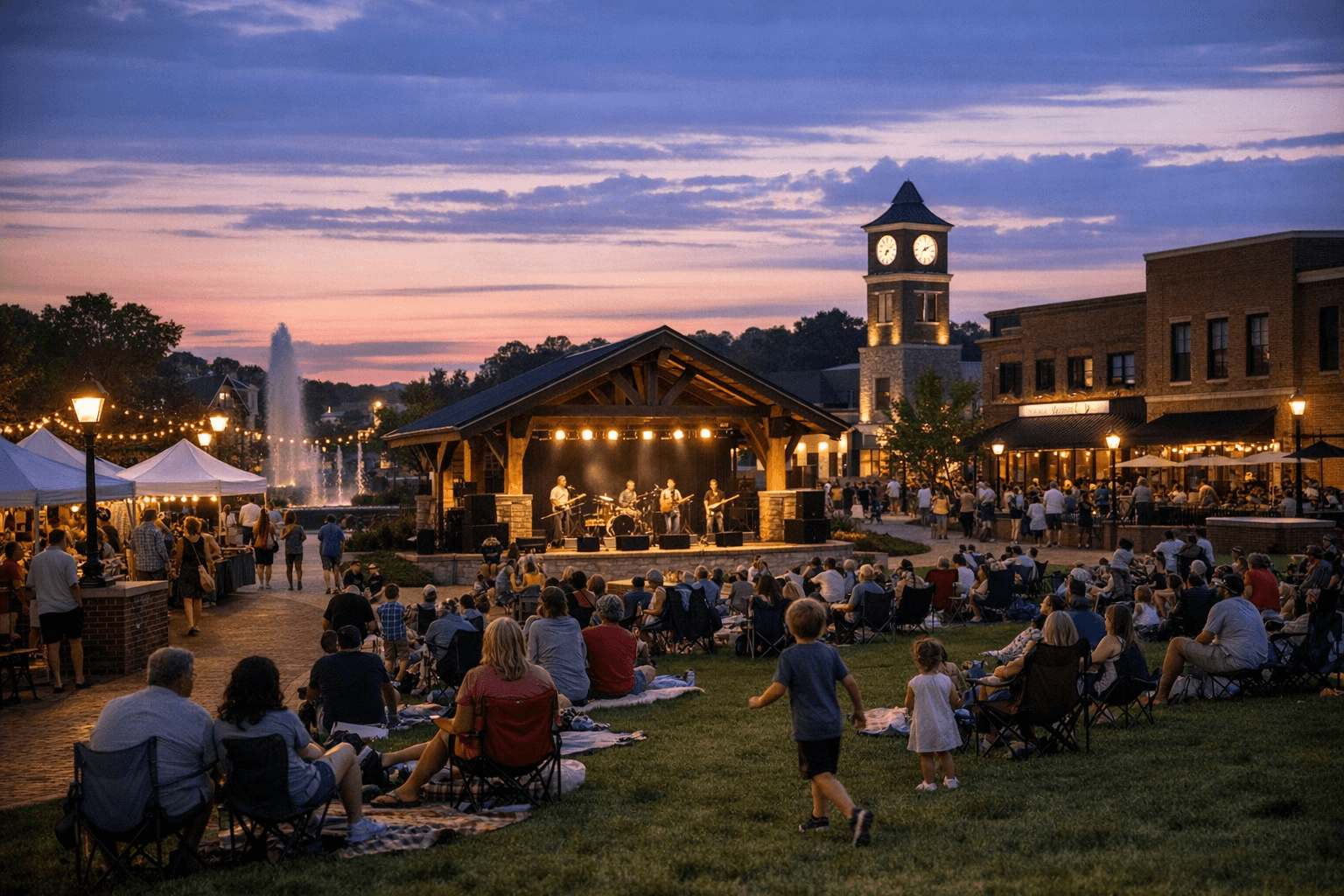
Cumming City Center and the historic courthouse square in downtown Cumming function as the county s main walkable hubs, drawing residents and visitors for entertainment, shopping and outdoor recreation. The City Center features the Lou Sobh Amphitheater, pocket parks and boardwalk trails and operates as a focal point for concerts, farmers markets and seasonal programming. Historic downtown centers on the courthouse square and bandstand and offers restaurants, boutiques, a steam engine display and family attractions such as the Tin Cup mini golf. Both areas connect to larger outdoor assets including Sawnee Mountain Preserve and the Big Creek Greenway, reinforcing their role as gateways to the county s trail network.
These public gathering places have clear implications for municipal policy and local institutions. City and county leaders must coordinate on planning, permitting, maintenance and transportation to manage increased foot traffic during events and peak recreation periods. Decisions about parking, pedestrian safety, public restrooms and storm water management will affect resident experience and the viability of small businesses that rely on event driven foot traffic. Budgeting for programming and infrastructure requires transparent decision making by city councils and county commissions, and clear communication about revenue sources and operating costs.
Economically, concentrated pedestrian zones support independent retailers and restaurants by increasing visibility and impulse visits. They also shape commercial leasing patterns and could influence property valuations around the square and City Center. Those effects carry consequences for long term zoning and land use discussions, as well as workforce needs in hospitality and retail sectors. Local officials will face choices about incentivizing small business, investing in public realm improvements, and balancing growth with preservation of historic character.
From a civic engagement perspective, regular public events and accessible outdoor spaces create informal opportunities for political outreach and community organizing. Walkable gathering places make it easier for local candidates, community groups and election officials to reach residents and to host voter information activities. Sustaining that civic potential depends on predictable permitting processes and equitable access to event platforms for a broad range of community organizations.
For Forsyth County residents the practical impact is immediate. These hubs provide daily recreation, cultural programming and retail options within walking distance of neighborhood centers, while shaping longer term debates about land use, public investment and community priorities. Ensuring that those decisions reflect broad resident input will determine whether Cumming City Center and historic downtown remain inclusive anchors of county life.
This article was produced by Prism’s automated news system from verified source data, official records, and press releases, then run through automated quality and moderation checks before publishing. The system is built and supervised by the people who set the standards it runs under. Read our full AI policy.
Did this article answer your question?