Forsyth County Faces Up to Three-Quarters-Inch Freezing Rain; Officials Urge No Travel
National Weather Service guidance warned Forsyth County could get 0.5 to 0.75 inches of freezing rain, creating slick roads and outage risk; officials urged residents not to travel and to prepare.
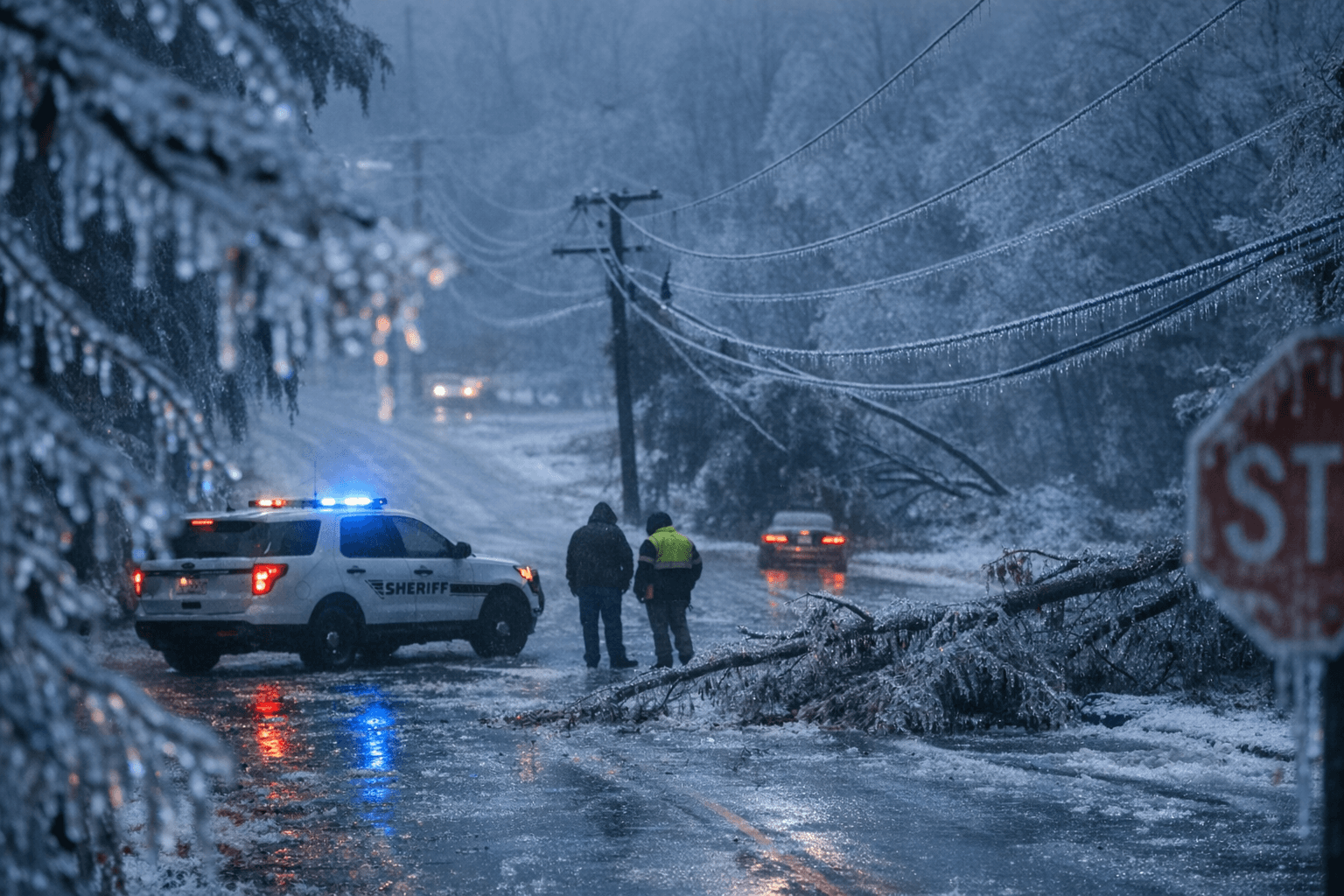
The National Weather Service warned that Forsyth County received between roughly one-half and three-quarters of an inch of ice in the storm's main freezing-rain band on Jan 22, with locally higher amounts possible. That level of accumulation produced hazardous travel conditions, raised the risk of heavy ice on trees and power lines, and prompted county officials to urge residents to avoid travel and prepare for outages.
Timing and hazard details emphasized that bridges and overpasses iced first, making short stretches of highway and local arterials particularly treacherous. Accumulations of heavy ice on tree limbs and utility lines increased the likelihood of downed branches and temporary power loss. County emergency officials and public works teams moved to pre-treat critical routes and coordinate with utility crews, but the combination of concentrated icing and subfreezing temperatures made rapid clearance and restoration more difficult than for a plain rain or snow event.
The immediate impact on the community included limited travel, school and service disruptions, and localized power outages. Slick surface conditions slowed commutes and hampered response times for municipal services. For households, the principal concerns were maintaining heat during outages and preventing burst pipes where exposed plumbing faced prolonged cold. Small businesses along corridors with heavy tree cover experienced short-term accessibility problems that affected deliveries and customer traffic.
Officials urged practical precautions for residents. Driving recommendations included avoiding travel unless essential, reducing speed significantly when roads were slick, increasing following distance, and exercising caution on bridges and overpasses which ice earlier than roadway surfaces. Household measures to protect indoor plumbing included insulating exposed pipes, allowing taps to drip slowly when temperatures were near freezing, and keeping thermostats at a consistent temperature. Emergency kit guidance focused on securing flashlights and extra batteries, ensuring a charged phone power bank, stocking bottled water and nonperishable food, and keeping prescription medications accessible.
The event highlights institutional challenges for Forsyth County governance and infrastructure planning. Repeated freezing-rain episodes place strain on road treatment budgets, tree-trimming programs, and the electric grid. Coordination among Forsyth County Emergency Management, Public Works, and utilities is crucial for reducing outage duration and restoring services. Residents and elected officials face choices about prioritizing investments in resiliency, such as targeted tree management and grid hardening, to reduce vulnerability in future events.
For now, residents should treat winter-weather alerts seriously, follow Forsyth County advisories, and use this episode to review household winter plans. The storm underscores that preparedness at the household level and clear, timely institutional response together determine how quickly the community can recover from icing events.
This article was produced by Prism’s automated news system from verified source data, official records, and press releases, then run through automated quality and moderation checks before publishing. The system is built and supervised by the people who set the standards it runs under. Read our full AI policy.
Did this article answer your question?