Forsyth County line starts Special Olympics torch run in Gwinnett
About 50 officers ran 20 miles from the Forsyth County line through Gwinnett, backing Special Olympics Georgia and its nearly 18,000 athletes statewide.
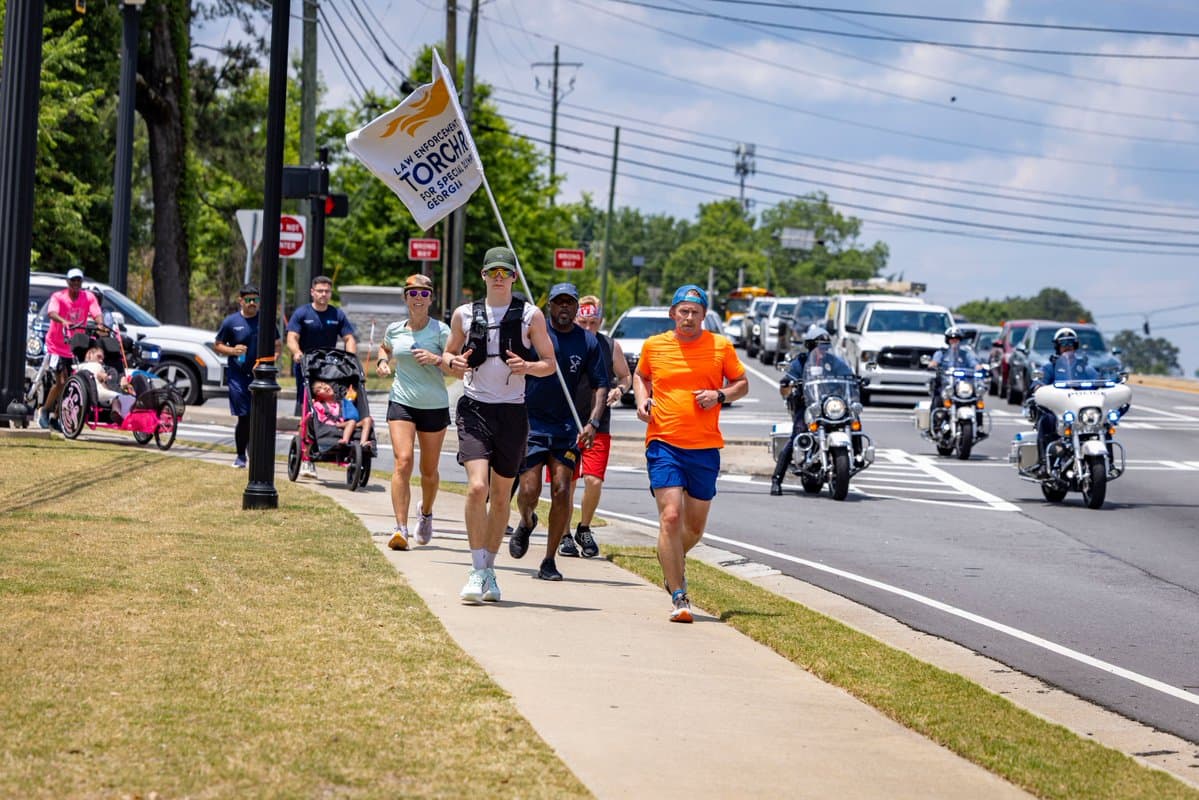
A chain of about 50 law enforcement runners carried the Special Olympics torch across 20 miles of Gwinnett County, starting near the Forsyth County line and ending in Loganville. The annual relay began at 10 a.m. at Pike Nurseries on Peachtree Industrial Boulevard in Suwanee and finished around 2:30 p.m. at Mission World Church, tracing a route that stretched from Forsyth County to Walton County.
The runners came from the Gwinnett County Police Department, Norcross Police Department and Gwinnett County School Police. Their run was part of the Law Enforcement Torch Run, a statewide relay that Special Olympics Georgia says includes more than 1,000 officers from over 100 agencies and covers about 1,000 miles over two weeks. All 11 Georgia relays converge at Emory University for the State Summer Games opening ceremony, tying local streets like Peachtree Industrial Boulevard to one of the state’s biggest annual inclusion events.

Special Olympics Georgia says the torch run plays a significant role in its annual budget and helps support athletes with intellectual disabilities. The organization serves nearly 18,000 athletes statewide, and the Gwinnett leg was timed to build support for the Summer Games. The relay began in 1981 in Wichita, Kansas, and has grown into a global fundraising and awareness campaign for Special Olympics.
For Forsyth County families and Gwinnett neighbors, the practical takeaway is straightforward: the torch run helps fund the year-round programs that give athletes access to competition, coaching and a broader network of support. Donations to Special Olympics Georgia directly help sustain those programs, and community support around the Summer Games and local inclusion efforts keeps the relay from being just a ceremonial run.
This article was produced by Prism’s automated news system from verified source data, official records, and press releases, then run through automated quality and moderation checks before publishing. The system is built and supervised by the people who set the standards it runs under. Read our full AI policy.
Did this article answer your question?