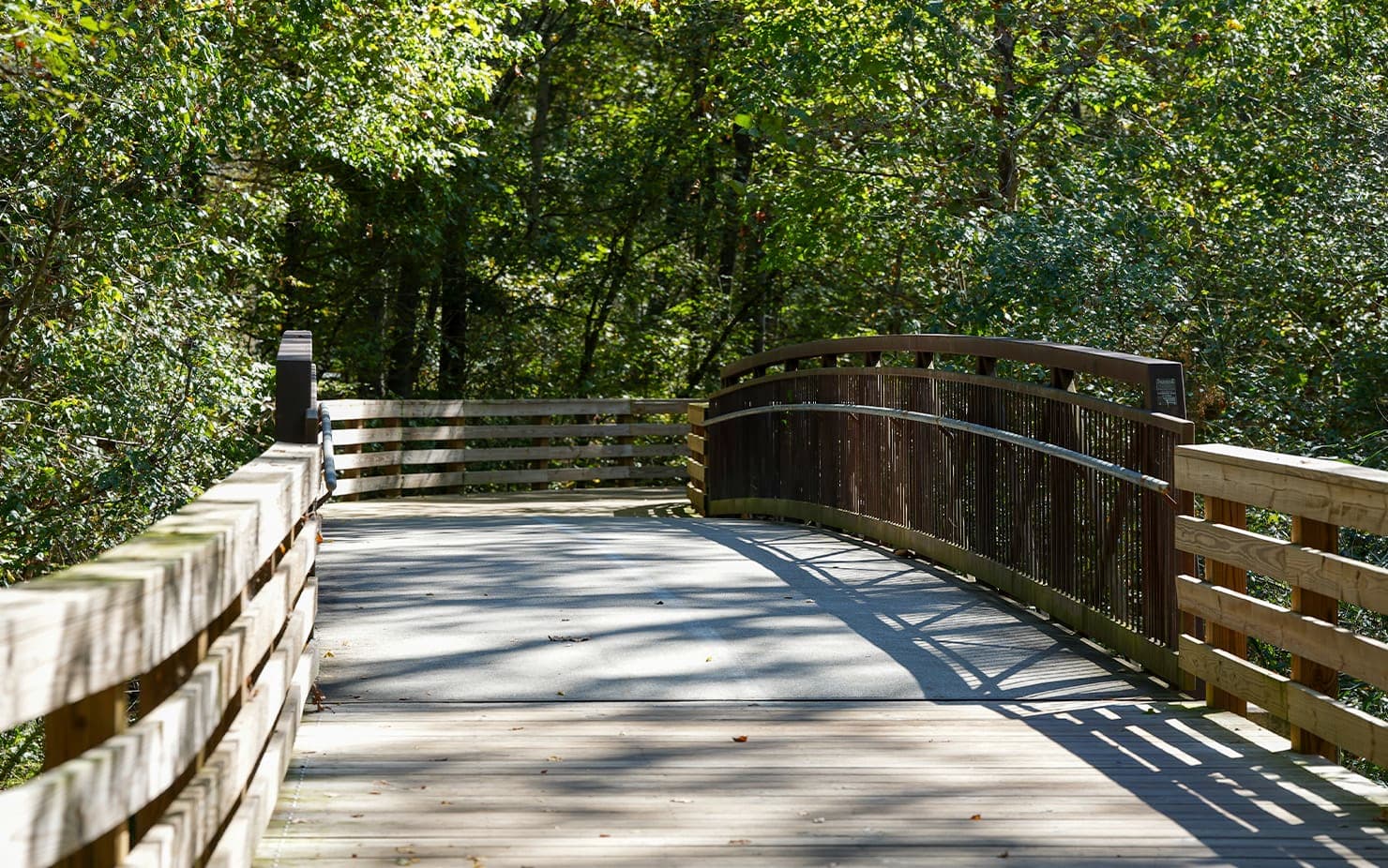
Sawnee Mountain Preserve offers Forsyth County’s signature hiking experience
Sawnee Mountain Preserve is Forsyth County’s signature mountain outing, with 11 miles of trails, seasonal hours, and a growing lineup of family-friendly amenities.

The Indian Seats overlook anchors Sawnee Mountain Preserve, a 963-acre park just north of Cumming with more than 11 miles of trails. Sawnee is Forsyth County’s closest thing to a true mountain day trip, with a visitor center, multiple trail access points, and amenities that range from picnic pavilions to a playground. The preserve opened to the public in 2005 and has kept growing.
Why Sawnee matters in Forsyth County
Forsyth County lists Sawnee Mountain Preserve at more than 820 acres of forested mountain terrain, while tourism and park materials list 963 acres. Sawnee is a passive park operated by Forsyth County Parks and Recreation, focused on hiking, views, learning, and family use rather than team sports fields.
The preserve opened in 2005, added a visitor center with interpretive exhibits in 2008, and expanded again in 2016 with 6.5 additional trail miles, a playground, and picnic pavilions.
The Trust for Public Land includes Sawnee Mountain in Forsyth County’s heritage and history and lists a natural rock amphitheater with 140 seats at the summit. Forsyth County ties the Sawnee name to a local leader from the Cherokee Nation and to the mountain’s first inhabitants before settlement.
When to go, season by season
Sawnee is usable year-round, but the best visit depends on the calendar. From March through October, trail hours run from 6 a.m. to 9:30 p.m., which makes spring, summer, and early fall the most flexible seasons for longer hikes, sunset views, and after-school outings. From November through February, trails close at 7 p.m., so winter visits work best when daylight is the priority and the hike starts earlier in the day.
Spring is the easiest season for first-timers. Temperatures are more comfortable, the longer trail hours are in effect, and the preserve’s mix of overlooks, family amenities, and wooded terrain makes it a good place to test a full afternoon without committing to a long mountain drive. Fall is the other sweet spot, with cooler air and the same extended trail window through October.
Summer still works, but timing matters more. The preserve opens early enough for a dawn start, and the long trail hours through 9:30 p.m. make evening walks possible after the heat breaks. If you want a quieter experience, early morning is the safest bet, especially before the visitor center fully settles into its day.
Winter is shorter but still worthwhile on clear days. The 7 p.m. cutoff means there is less room to linger, so the best winter trips are straightforward hikes, quick family visits, and short climbs to the overlook before sunset. The visitor center itself operates Monday through Saturday from 8:30 a.m. to 5 p.m., which makes midmorning through afternoon the most reliable window for exhibits and planning.
How to get there and what to expect at the trailheads
The main visitor center sits at 4075 Spot Road in Cumming, and the preserve has trail access points at 4075 Spot Road, 2500 Bettis Tribble Gap Road, and 2505 Bettis Tribble Gap Road. Those multiple access points make Sawnee more flexible than a single-trailhead park. If one entrance looks crowded, you can use another to start closer to the part of the trail network you want.
That flexibility is useful on weekends and during school breaks, when Sawnee’s reputation as a local day-trip destination tends to draw more people. The preserve is close enough to Cumming for a quick visit, so it naturally picks up people looking for a few hours outdoors rather than a full backcountry day. Arriving early gives you the best chance to park where you want and start before the busiest family hours build.
One rule matters more than most: dogs are prohibited on all trails. That restriction applies across the preserve, so anyone planning a visit needs to leave pets at home and build the outing around that policy.
Which parts fit beginners and regular hikers
For a first visit, the Indian Seats overlook is the place to anchor the day. It is the preserve’s best-known destination and the route that most clearly delivers the mountain experience people associate with Sawnee. If you want a shorter outing, keep the trip focused on that goal and the visitor-center area rather than trying to treat the whole preserve as a single loop.
Regular hikers have more room to stretch out. With more than 11 miles of trails, the preserve can fill a half-day or longer if you are comfortable covering more ground and working through the network at a steadier pace. The expansion in 2016 added 6.5 more trail miles, which is part of why the preserve can serve both casual walkers and people who want a stronger workout.
The site also works for people who are not there primarily to hike. The playground, picnic pavilions, and visitor center make it possible to turn Sawnee into a family outing even when the trail plan is short.
More than trails: education, play, and private experiences
Outdoor recreation programs at Sawnee include hands-on environmental education and skill-based instruction, and the preserve has been used for youth camps and environmental education field trips.
- an outdoor amphitheater
- picnic pavilions
- a rock-climbing tower
- a zip-line
- a bird observatory
- the Fairy Trail
- a treehouse
- an indoor classroom
- educational gardens
The preserve also includes a long list of built features and activities:
Rentals and private experiences include tree climbing, tower climbing, archery, and animal encounters.
Why the preserve feels especially current now
Barker Overlook is funded by SPLOST IX, and 2024 renovations at the preserve are part of Phase 4A of the master plan.
In January 2026, after a proposal to rename Sawnee Mountain to “Trump Mountain,” the county said it intended to keep the historic Sawnee name. That stance connected directly back to the mountain’s cultural meaning, including its ties to a Cherokee Nation leader and to the area’s first inhabitants before settlement.
This article was produced by Prism’s automated news system from verified source data, official records, and press releases, then run through automated quality and moderation checks before publishing. The system is built and supervised by the people who set the standards it runs under. Read our full AI policy.
Did this article answer your question?