What Forsyth County Boaters Need to Know About Lake Lanier Safety
Lake Lanier supplies drinking water for Forsyth County and draws boaters across 38,000 acres, follow new education rules, carry proper ID, wear life jackets, and confirm permits before you launch.

If you head to Lake Lanier this weekend, remember the lake is not just a playground: it’s the primary surface‑water source supporting drinking‑water intakes, recreation and local economies across Forsyth, Hall and Gwinnett counties. The following numbered guide lays out what you need to know, laws, safety steps, commercial responsibilities and local contacts tied directly to Lake Lanier’s 38,000 acres and 76 boat launches.
1. Why Lake Lanier matters to Forsyth County
Lake Lanier spans roughly 38,000 acres in the foothills of North Georgia and touches Hall, Gwinnett, Forsyth and Lumpkin counties. Beyond recreation, boating, fishing, swimming, camping and a network of marinas, resorts and restaurants, the lake supports drinking‑water intakes that serve Forsyth County, making safe operation and pollution prevention local public‑health priorities. Treat the lake as critical infrastructure as well as a recreational resource.
2. Who enforces rules on the lake
Multiple entities share enforcement on Lake Lanier: the U.S. Army Corps of Engineers (USACE) is named as an enforcing authority and permit issuer, local authorities patrol recreational areas, and some materials list “GADNA” alongside state agencies. Confirm enforcement expectations with the Georgia Department of Natural Resources (DNR) and USACE, because agency names and duties are described differently across provider materials. If you operate commercially, expect inspections and permits from federal, state and local agencies.
3. Mandatory boater education and ID requirements
If you were born on or after Jan. 1, 1998, you must complete a boater education course approved by Georgia DNR before operating a vessel on state waters, including Lake Lanier. Operators 16 and older must carry proper identification onboard; a “Competent Adult” is defined as a person 18 or older who is not under the influence and who carries proper ID. Make sure your boater education card is physically on the boat when you go out.
4. Vessel registration and commercial Certificates of Inspection (COI)
Commercial passenger boats carrying more than six passengers for hire must have a valid U.S. Coast Guard Certificate of Inspection (COI), which ensures required fire extinguishers, life jackets and staffing levels. Private vessel registration requirements were referenced but not fully included in available materials, confirm your vessel’s registration status with Georgia DNR before leaving the dock and consult the USCG for COI details.
5. USACE Special Use Permits and permitted activities
USACE Special Use Permits are referenced for Lake Lanier activities but full conditions and application steps weren’t provided in the materials reviewed. Contact the U.S. Army Corps of Engineers (Lake Lanier office) to determine when a Special Use Permit is required, for example, commercial docks, special events or large group activities often have permit requirements and potential fees.
6. Operator and platform responsibilities (commercial and rental)
All Getmyboat operators “must adhere to and take responsibility for operating in accordance with local guidelines,” including obtaining registrations, permits and using designated docks. Rental operators such as Lake Lanier Jetski require operators and passengers to view Georgia DNR safety videos and complete quizzes; Lake Lanier Jetski explicitly states “Boating Safety is our #1 Priority ” and requires renters to be 21+ with a valid driver’s license. If you rent or list a vessel, verify that operators fulfill these requirements and retain documentation.
7. Night operations and tow‑sports restrictions
Navigation at night requires proper lighting and vigilance because Lanier has significant boat traffic after dark. It is illegal for boats or PWC to tow skiers, skiboards, or any similar device between sunset and sunrise; plan water‑skiing and tow sports within daylight hours and ensure your lighting and navigation equipment meet USCG standards.
8. Life jackets and on‑board safety gear
Multiple sources emphasize the central role of life jackets: children should always wear properly fitted life jackets; even confident swimmers are urged to wear jackets because a fall with a head injury can make swimming impossible. Ensure your boat carries a throwable floating device, sufficient fire extinguishers, a first‑aid kit, rope and functioning navigation lights. If you’re unfamiliar with life‑jacket classifications, rental operators and Georgia DNR safety materials list jacket types (Type I through others) and fit guidance, request that info before you launch.
9. Awareness Zone, passenger positioning and PropClear
Holiday on Lake Lanier materials stress boating etiquette: “Like driving a car, driving a boat has its own set of road rules to ensure everyone can enjoy being on the water safely.” Operators are responsible for avoiding collisions: “Remember, if you think you are headed for a collision, it is the responsibility of the boat operator, or Person In Command, to slow down, steer away, or stop.” The “Awareness Zone” concept covers the immediate area around a boat and restricts passengers from riding on the bow, transom, swim platform and gunnels while moving. Suntex Marinas’ PropClear™ campaign reminds captains to verify passengers before engine start: “PROP CLEAR PROCEDURE, ‘BEFORE STARTING ENGINE! STEP 1: Captain or person in command (PIC) of vessel is responsible for taking headcount to verify all passengers are on board.’”
10. Launch points, swim areas and notable local sites
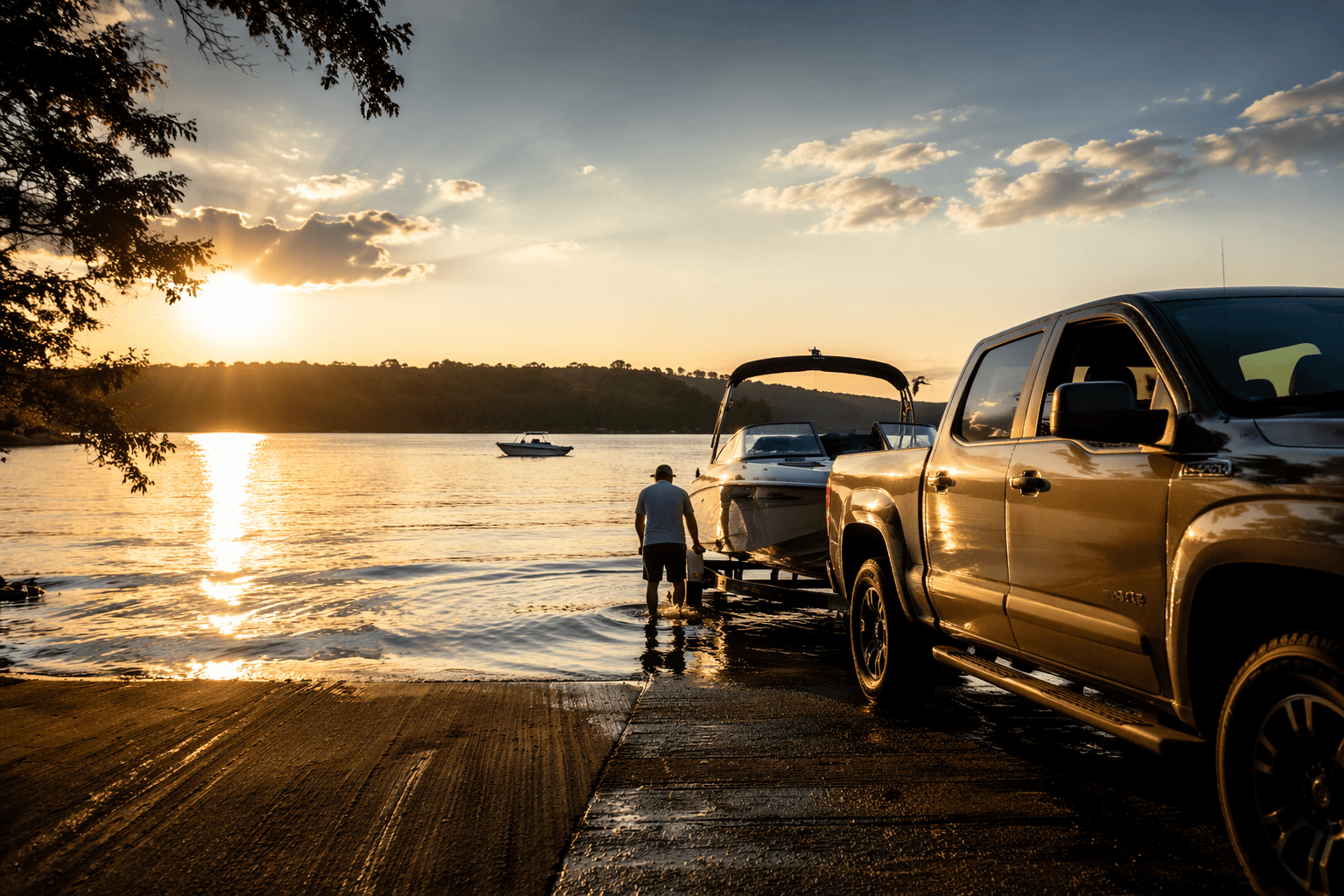
Lake Lanier has seventy‑six boat launches along its shoreline, providing wide public access from Forsyth out to Hall and Gwinnett. Clark Bridge Park, known as Lake Lanier Olympic Park, hosted the 1996 Olympic Games and remains a popular access point. On the lake’s southeastern side, Lanier Islands hosts Lanier World Beach, the water park and Margaritaville; all swim areas there are marked “swim at your own risk” because lifeguards are not provided at many public beaches.
11. Mortality and injury context you need to know
“While Lake Lanier doesn’t have dangerous undercurrents or strong waves, many people have died there, usually due to drownings and boating accidents.” Between 1994 and October 2021, 204 people died on Lanier, a statistic that underscores behavior and safety gaps rather than unusual natural hazards. Many accidents were preventable: wear life jackets, avoid alcohol when operating, and ensure someone aboard knows CPR.
- Check that everyone has a life jacket and that children’s jackets are properly sized.
- Assign a sober Person In Command with a boater education card if required by birthdate rules.
- Confirm lights, fire extinguishers, throwable device, first‑aid kit and working bilge pumps are onboard.
- Take a headcount before engine start, follow PropClear STEP 1 and verbalize passenger locations.
12. Practical safety steps to take before you leave the dock
These steps align with Lake Lanier Association guidance: “We continue to encourage all boat operators to observe the 100 foot rule and take a boat operation course,” and remember: “Quick action can save a life.”
13. Rentals, training and on‑site requirements
If you rent PWC or boats, expect mandatory safety videos and quizzes: Lake Lanier Jetski sends the required video and quiz by email before appointments, “If you are booking with us, the required video and quiz is automatically sent to your email. That way we spend less time the day of and more time in the water.” Rentals often require operators to be at least 21 and carry valid ID; confirm with the rental provider whether the Georgia DNR video satisfies the state’s legal requirement and ask to see proof that staff enforce age and certification rules.
14. Contacts and where to verify permits, education and enforcement
For permits and lake maps, contact U.S. Army Corps of Engineers (Lake Lanier office). For boater education requirements, vessel registration and state enforcement, contact Georgia DNR. For COI procedures consult the U.S. Coast Guard; for local enforcement practice check with Forsyth County law enforcement or marine patrol. Lake Lanier Association’s office is at Village Shoppes of Gainesville, 821 Dawsonville Hwy, Suite 110, Gainesville, GA 30501; Holiday on Lake Lanier is at 6900 Lanier Islands Pkwy, Buford, GA 30518, phone (770) 945‑7201.
15. Ambiguities to confirm before you operate
Several items in public guidance were truncated or inconsistent: the precise wording of the “100 foot rule” as used by Lake Lanier Association, full vessel registration text referenced by listing platforms, the complete Awareness Zone exceptions, PropClear steps 2 and 3, and whether “GADNA” is a typographical variant of Georgia DNR. Before organizing group outings or commercial trips, verify these points with Georgia DNR, USACE and your rental or marina operator.
Final point Lake Lanier is a major regional resource, 38,000 acres of water that provide drinking supply and support a robust recreational economy, and safe use depends on following clear rules, carrying the right gear and confirming permits. Take the required boater education, carry IDs and life jackets, follow PropClear’s headcount step, and when in doubt contact USACE, Georgia DNR or your marina: quick action and correct documentation can prevent injury and protect the lake that Forsyth County relies on.
This article was produced by Prism’s automated news system from verified source data, official records, and press releases, then run through automated quality and moderation checks before publishing. The system is built and supervised by the people who set the standards it runs under. Read our full AI policy.
Did this article answer your question?