Forestiere Underground Gardens, Fresno's handmade oasis and climate refuge
At 5021 W. Shaw Avenue, Baldassare Forestiere spent 40 years hand-carving a cool underground world that turns Fresno heat into part of the story.
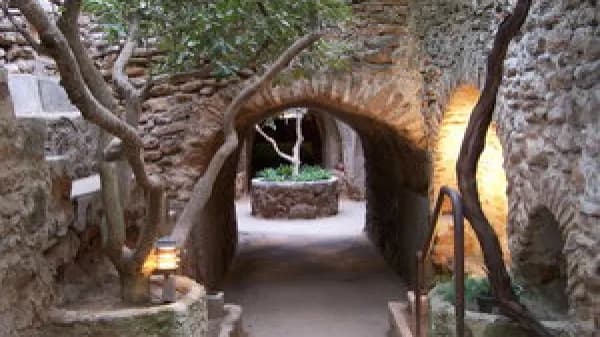
At 5021 W. Shaw Avenue in Fresno, Forestiere Underground Gardens turns triple-digit heat into part of the experience. Baldassare Forestiere spent four decades carving rooms, passages, and gardens below the San Joaquin Valley’s hot, arid surface, building a place that still feels both improbable and deeply local.
A handmade refuge under West Shaw Avenue
Baldassare Forestiere was born in Sicily in 1879 and died in 1946, and the underground complex grew with his life. The project ran for about 40 years, from 1906 to 1946, as he excavated the hardpan by hand and shaped a ten-acre parcel into something no Fresno house or museum quite matches.
The California State Parks Office of Historic Preservation describes the site as a “fantastic retreat” and a “living monument” to a creative and individualistic spirit. That language fits the place because the whole complex is built on refusal: refusal to treat hard soil, brutal summers, or conventional building limits as final answers.
What Forestiere actually built
The underground gardens are not a single tunnel or novelty room. Historic register materials describe a complex of underground caverns, grottos, patios, and garden courts encircling Forestiere’s underground home, all tucked into the same ten-acre setting. The scale matters because it shows this was not a decorative whim but a sustained act of construction, planning, and persistence.
The landmark description makes the method as important as the result. Forestiere worked beneath the surface of the San Joaquin Valley, digging the hardpan by hand and turning what most builders would see as an obstacle into structure, shade, and usable space. The result is a rare example of vernacular subterranean architecture in California, built without the machinery or finish one might expect from a formal estate.
A local temperature reading captures why the design still reads as ingenious rather than merely eccentric. One report noted that trees inside the gardens were well under 70 degrees while it was already in the triple digits across the street. That gap is the point of the place: depth, soil, and shelter do the work that walls and air-conditioning normally handle elsewhere.
Why this story belongs to Fresno County
Forestiere’s work makes sense in Fresno because the county has always been shaped by climate pressure and practical invention. The San Joaquin Valley’s summer heat is not an abstract talking point here, and the gardens show one immigrant’s answer to living and building in that environment long before climate adaptation became a public policy phrase.
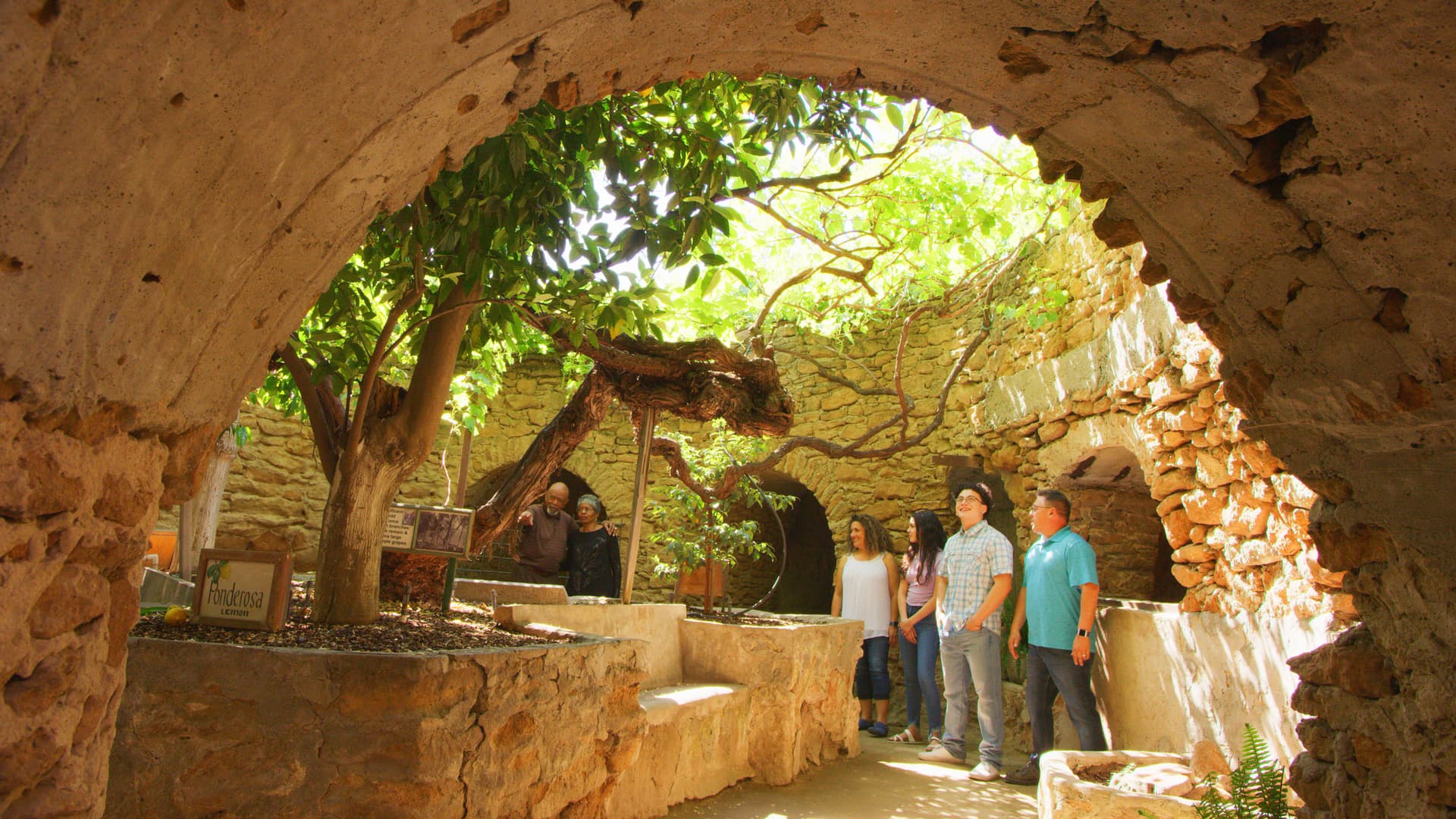
The site also sits inside Fresno’s immigrant history. Forestiere, a Sicilian-born builder working in the early 1900s, brought a different architectural imagination to the Central Valley and spent his life pursuing it in hardpan soil. That is part of why the gardens feel so specific to Fresno County: they reflect labor, patience, and the kind of improvisation that has long defined orchard country, farm towns, and the neighborhoods built around them.
Seen that way, the attraction is not just a curiosity for visitors passing through on the way to the coast or the Sierra. It is a record of how one person translated the region’s most punishing condition, summer heat, into a functional design element. That makes the gardens useful as history, but also as a reminder that adaptation has always been embedded in local life.
How to plan a visit
The gardens operate seasonally, and the main touring season runs from March through November. The site describes itself as a weather-permitting operation, so summer conditions can affect the schedule even during the busy months.
A few practical details matter before heading west on Shaw Avenue:
- Guided tours are the way to experience the gardens.
- When temperatures climb above 105°F, some afternoon tours may be canceled.
- In the same extreme heat, the site may close early for the comfort and safety of guests and staff.
- The historic register address is 5021 W. Shaw Avenue, Fresno, so the site sits squarely in the city rather than far outside it.
Those policies are part of the experience, not an inconvenience separate from it. The gardens were created to answer heat, so the current operation still has to respond to it, balancing access with safety when Fresno weather turns severe.
Why the place still resonates
Forestiere Underground Gardens endures because it compresses several Fresno stories into one site. It is an immigrant-built landscape, a feat of hand excavation, a response to extreme weather, and a rare surviving example of subterranean design shaped by one man over 40 years. The project’s ten-acre footprint and its mix of rooms, passages, patios, grottos, and courts make it feel less like a single attraction than a hand-built environment with its own internal logic.
That is what gives the site its lasting power in Fresno County. In a place where summer heat is a fact of life and ingenuity often arrives out of necessity, Forestiere’s underground world still reads as a local blueprint: build with what the land gives you, and make survival look like art.
This article was produced by Prism’s automated news system from verified source data, official records, and press releases, then run through automated quality and moderation checks before publishing. The system is built and supervised by the people who set the standards it runs under. Read our full AI policy.
Did this article answer your question?