Fresno Hits 93 Degrees, Shattering March Heat Record Nearly 100 Years Old
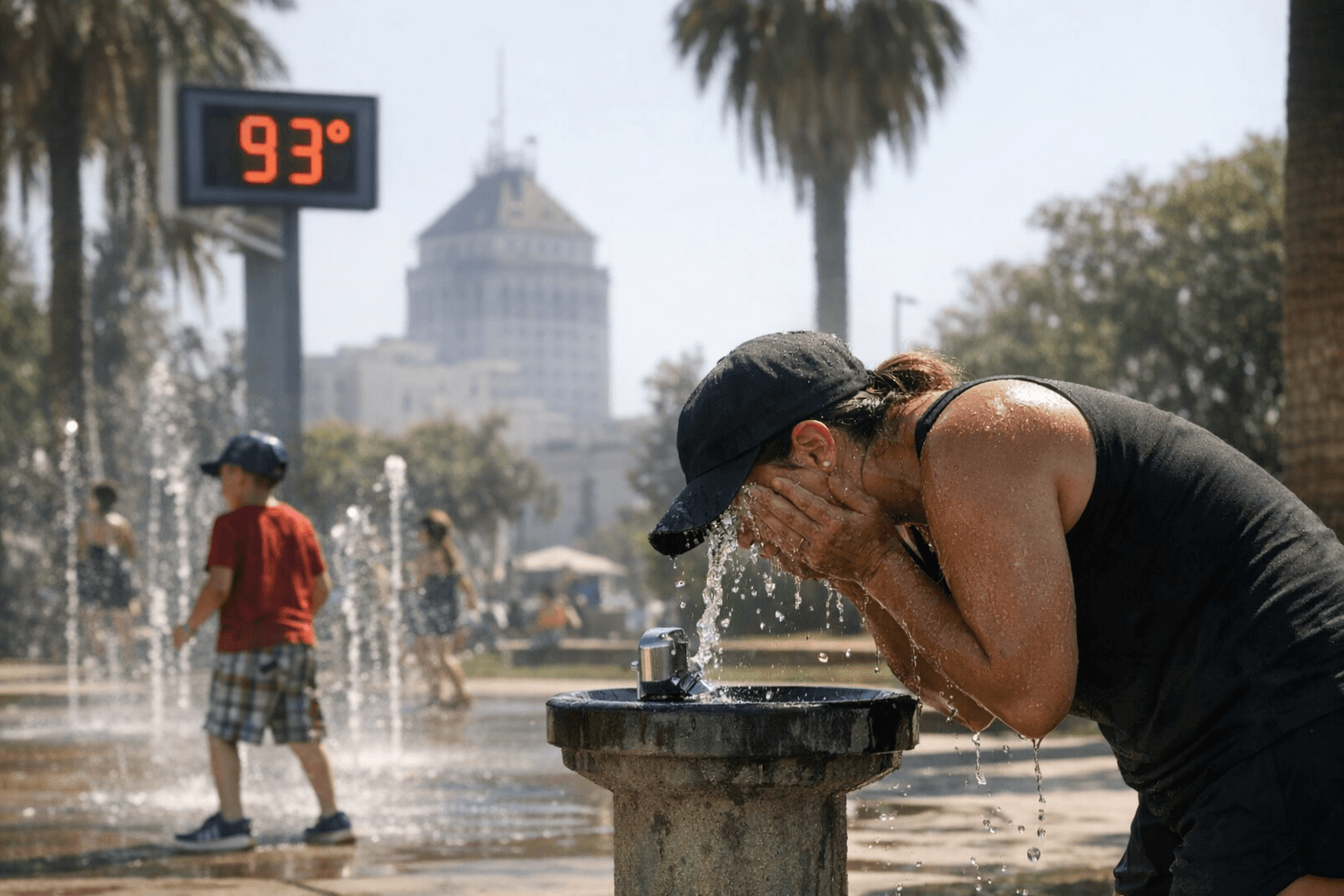
Fresno hit 93 degrees on March 18, obliterating a March heat record set in 2015 as temps ran 20-25 degrees above normal across the Central Valley.
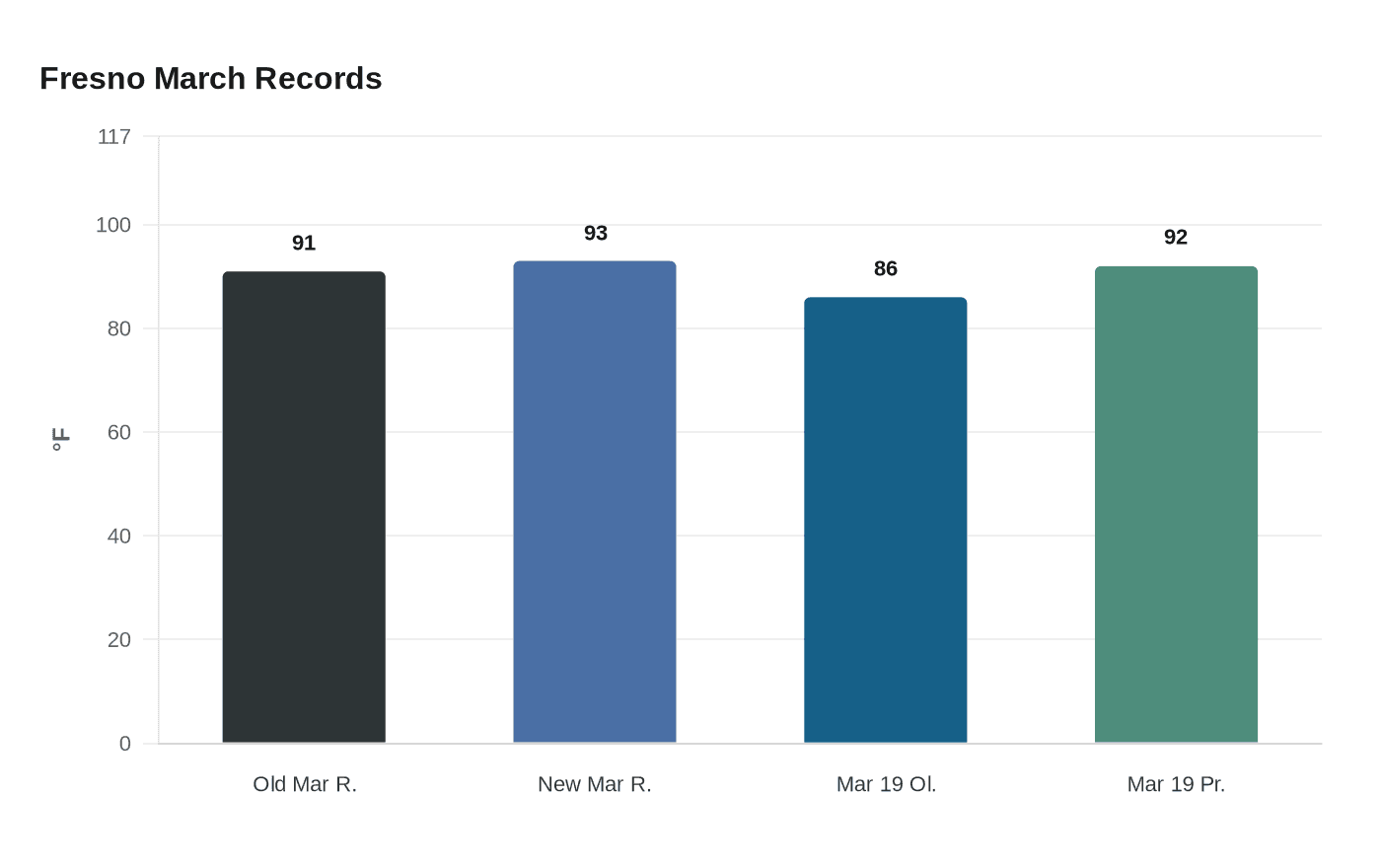
Fresno shattered a March temperature record that had stood since 2015 when the city hit 93 degrees Wednesday, surpassing the previous monthly high by two degrees, according to the National Weather Service. The reading arrived more than three weeks before the calendar turns to April, with temperatures running 20 to 25 degrees above average across the Central Valley.
The 93-degree reading on March 18 displaced the former monthly benchmark of 91 degrees, which itself had only been set 11 years ago. But the record-breaking did not stop there. Thursday brought another chapter: afternoon temperatures climbed to 90 degrees and were projected to reach 92, which would obliterate the March 19 daily record of 86 degrees set in 1928, a mark that had survived nearly a century of Central Valley springs.
That 1928 record is particularly notable because it predates modern air conditioning, freeway infrastructure, and the urban development that has reshaped Fresno's landscape over the past century. The city has grown dramatically since then, yet even accounting for urban heat effects, a 92-degree March afternoon represents a departure from seasonal norms that forecasters described as exceptional.
The heat wave was expected to continue pressing against the record books through Friday, with the National Weather Service tracking conditions across the region. The multi-day stretch of extreme warmth placed the event well beyond a single anomalous afternoon, raising the prospect that several daily records could fall before temperatures return closer to seasonal norms.
For a city where summer triple-digit heat is routine, March temperatures in the low 90s carry a different weight: they arrive before trees have fully leafed, before irrigation schedules have shifted, and before residents and agricultural operations in the San Joaquin Valley have transitioned to warm-weather routines. Fresno sits at the heart of one of the most productive farming regions in the country, and an unseasonable heat spike of this magnitude in mid-March can stress early-season crops and accelerate soil moisture loss at a critical point in the growing cycle.
The full scope of the heat wave's record-setting run through the Central Valley was still being tallied as of Thursday afternoon.
This article was produced by Prism’s automated news system from verified source data, official records, and press releases, then run through automated quality and moderation checks before publishing. The system is built and supervised by the people who set the standards it runs under. Read our full AI policy.
Did this article answer your question?


