Kearney Mansion ties Fresno County history to early agricultural boom
Kearney Mansion still shows how Fresno County’s agricultural wealth was built, from M. Theo Kearney’s Fruit Vale Estate to the French Renaissance house and grounds.
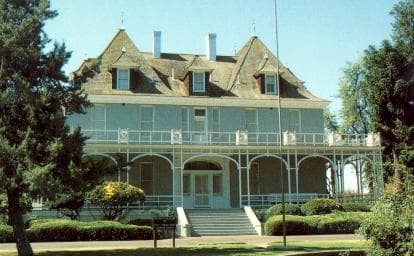
Kearney Mansion still puts Fresno County’s early agricultural boom in one place you can walk through. Set at 7160 W. Kearney Boulevard, about seven miles west of downtown Fresno, the 1903 property pairs a French Renaissance main residence with adjoining servants’ quarters, which makes it more than a display house. The layout, the landscape, and the surviving estate setting all point to the same story: wealth from land, orchards, and subdivision helped shape the built environment west of Fresno.
A house built to signal power
The mansion is not a standalone showpiece. Historic Fresno’s National Register entry describes two buildings on the property, a main residence and an adjoining servants’ quarters, and that arrangement matters because it shows how the estate functioned as a working property. The house is credited to Rudolph Ulrich as landscape architect, tying the site to a designer with national standing rather than a local decorator.
Ulrich’s credentials deepen the story. He was Frederick Law Olmsted’s chief designer for the 1893 World’s Columbian Exposition in Chicago, a connection that places the Fresno estate inside the same design culture that shaped major American civic landscapes. In Fresno County, that translated into a formal setting that still helps visitors read the ambitions of the era through the grounds, the building style, and the separation between family and service spaces.
M. Theo Kearney and the land boom that made the mansion possible
The mansion sits in the orbit of M. Theo Kearney, born Martin Theodore Kearney in 1842 and dead in 1906. He arrived in Fresno in 1869, and by 1871 he had already made land purchases, an early sign of how quickly land acquisition and agricultural expansion were moving across the county. Fresno historical sources describe him as one of California’s most powerful and prosperous agricultural leaders, and they also called him the “Raisin King,” a nickname that captures his role in the region’s late-19th-century farm economy.
That background makes the mansion a local identity story, not just a preservation site. A ValleyHistory note says, “M. Theo. Kearney’s life is the story of Fresno. . . . A history of Fresno County without a sketch of Mr. Kearney would not be a history.” The line fits the place itself: Kearney’s influence ran through orchards, land deals, and the systems that turned open ground into a productive agricultural district.
Fruit Vale Estate, established in 1889 west of Fresno, is the other key piece. It was planned as an agricultural colony intended to be subdivided to middle-class buyers, which shows how estate agriculture and land speculation overlapped. Kearney Mansion survives as a physical remnant of that model, where a private residence, service quarters, and designed grounds reflected the same economic forces that spread settlement and wealth across Fresno County.
Why the site still matters to Fresno today
Kearney Mansion is useful because it makes the county’s growth visible in one address. Fresno’s farm economy did not only produce crops; it also produced roads, estates, subdivisions, and public spaces that still shape west Fresno development. The mansion helps explain how agricultural income fed architectural ambition, how land assembly worked, and how a single figure like Kearney could influence both farming and the built landscape.
The site also remains relevant because it bridges private wealth and public history. Fresno County has plenty of stories about orchards, packing, and irrigation, but fewer places show the social structure around that economy so clearly. The mansion, servants’ quarters, and grounds preserve the contrast between the people who owned the land and the labor required to maintain it, which is part of the county’s longer development story.
What to see and how to visit
The Kearney Mansion Museum keeps the site active with guided public tours on Fridays, Saturdays and Sundays at 12:00 p.m., 1:30 p.m. and 3:00 p.m. A public listing says ages 12-adults pay $10 for the tour. That makes the mansion one of the more accessible ways to see Fresno County’s agricultural past in person, especially for families and students looking for a local site with a direct tie to land, architecture, and design.
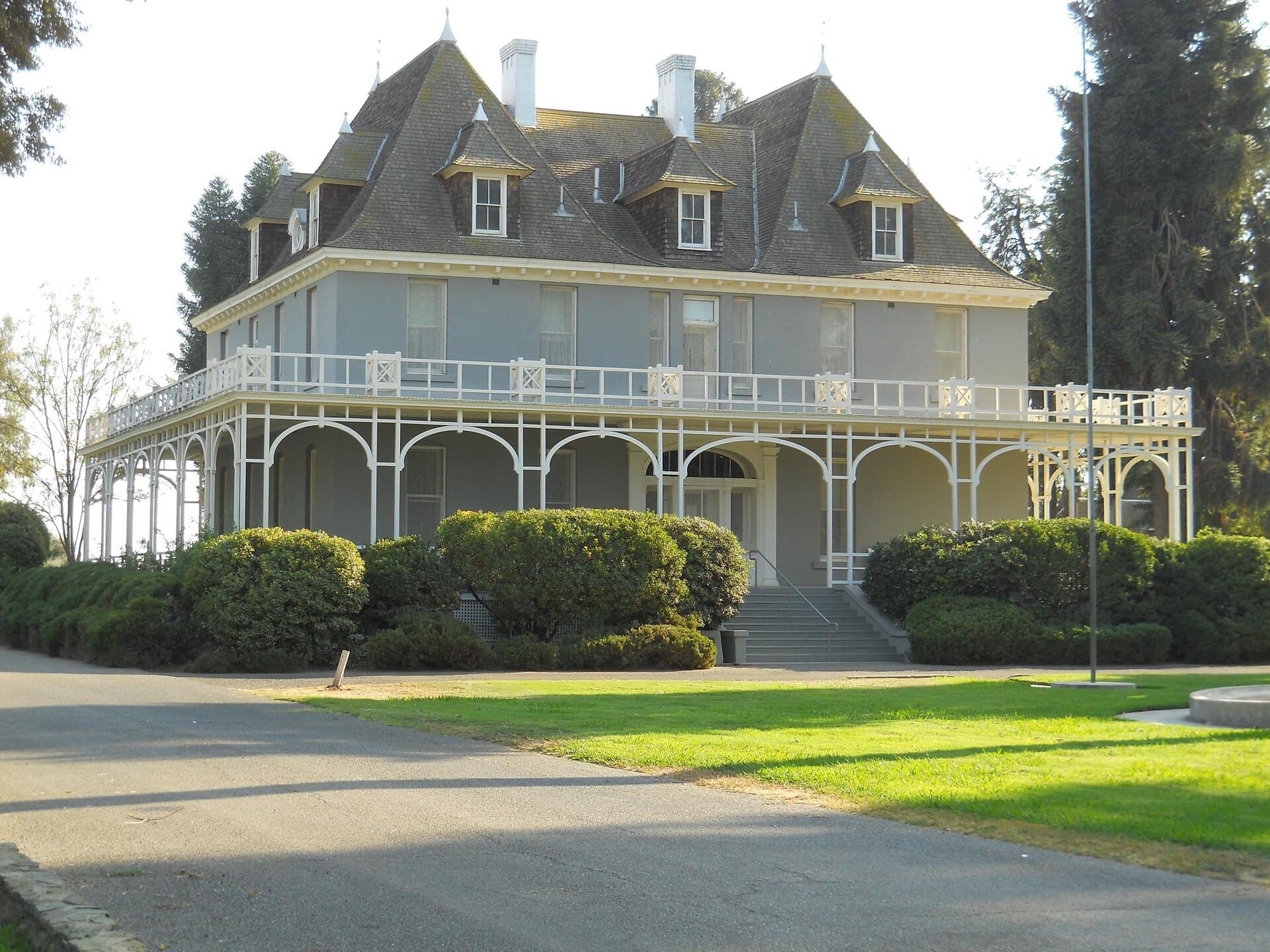
A visit gives you more than a photo stop. The address, the French Renaissance style, the two-building estate plan, and the Ulrich landscape connection are all visible parts of the experience, and they help explain why the property has stayed important long after the original agricultural colony faded. The mansion’s fixed details, especially its location and surviving structure, make it easy to understand as part of Fresno’s westward reach rather than as an isolated relic.
A living preservation story
Public interest has stayed strong enough to keep the site in circulation. In December 2021, Fresno County Supervisor Brian Pacheco said the annual holiday event at Kearney Mansion drew more than 550 local history fans, a sign that the property still works as a community landmark. That kind of turnout shows the site is not only remembered, but actively used as a place where residents connect family outings and school visits to county history.
The preservation story is continuing as well. In September 2024, the museum said County of Fresno funds were allocated to restore the carriage house as a classroom for school field trips. That plan gives the estate a new educational role while keeping the historic footprint intact, and it fits the property’s original character as a place where work, learning, and display all existed together. Kearney Mansion endures because Fresno County can still read its own development in its walls, grounds, and surviving estate layout.
This article was produced by Prism’s automated news system from verified source data, official records, and press releases, then run through automated quality and moderation checks before publishing. The system is built and supervised by the people who set the standards it runs under. Read our full AI policy.
Did this article answer your question?