Yosemite Search and Rescue Responds to Record High Incidents in 2025
Yosemite Search and Rescue saw one of its busiest seasons in 2025, with hundreds of rescue incidents; the surge affects Fresno County residents who visit, recreate, or rely on park emergency services.

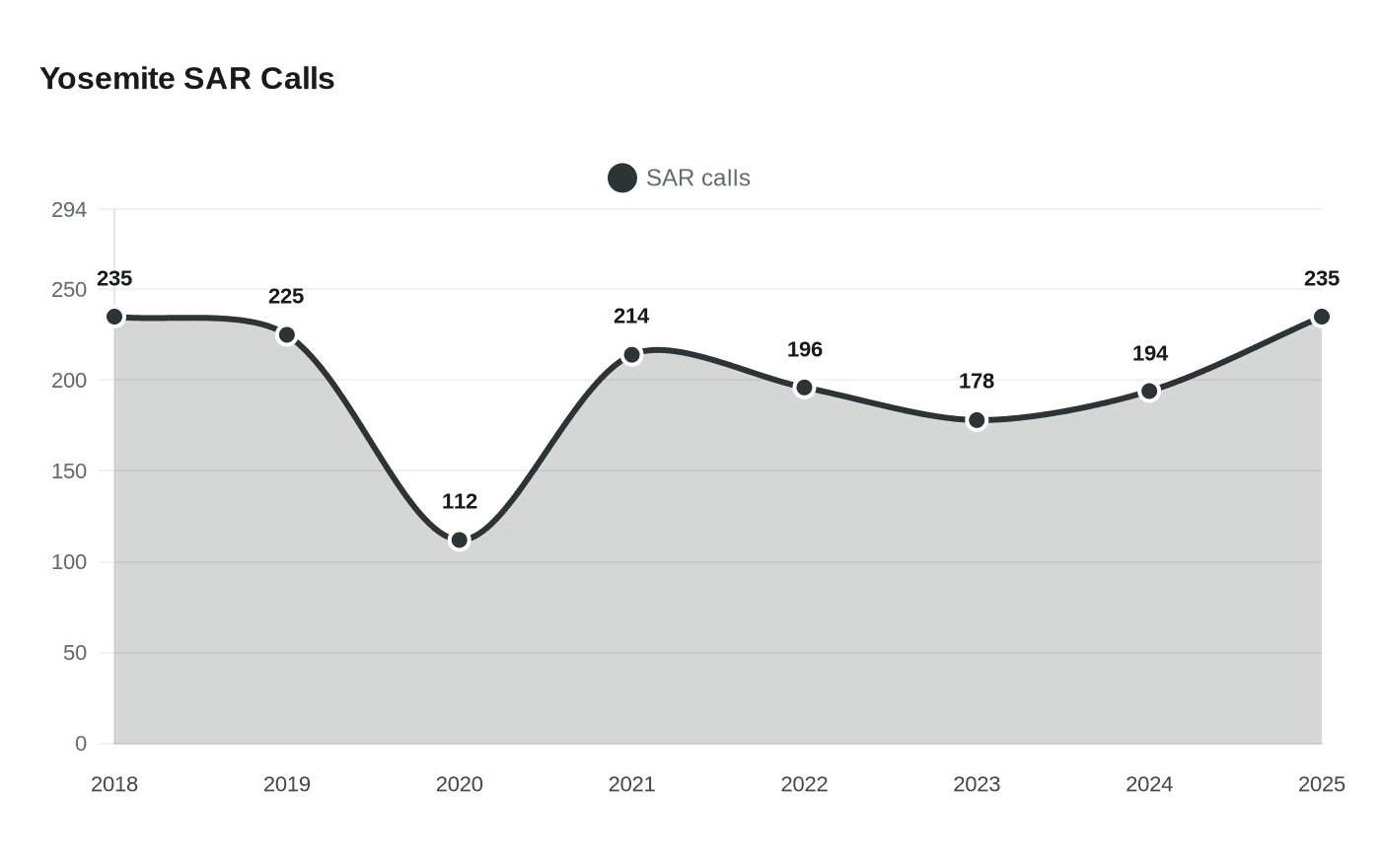
Yosemite National Park’s search-and-rescue operations logged an exceptionally high number of missions in 2025, rivalling counts not seen since 2018 and raising questions for local residents about park safety and emergency capacity. Friends of Yosemite Search and Rescue reported roughly 247 incidents for the year, while the National Park Service had recorded 235 SAR events as of November 12, 2025, a level officials described as the most since 2018.
Year-to-year data show the park’s SAR workload has fluctuated: 235 SAR calls in 2018, 225 in 2019, 112 in 2020, 214 in 2021, 196 in 2022, 178 in 2023 and 194 in 2024. Park visitation also rose in 2025, with estimates between 4.4 and 4.5 million visitors, making 2025 likely the second-busiest year on record according to park estimates. Politico found that search-and-rescue missions increased 40 percent in Yosemite between January and July 2025 compared with the same months in 2024.
Operationally, the park saw a marked rise in technical rescues. A National Park Service spokesperson said, “In 2025, Yosemite conducted 19 short‑haul missions, five operational heli‑rappels, and three operational hoists.” The spokesperson added, “All three hoist missions and at least six short hauls were for climbers. Climbing‑related rescues remain a major component of the park’s helicopter SAR operations.” Those figures matter to Fresno County residents who travel to Yosemite Valley, Tuolumne Meadows and the High Country for climbing and backcountry trips, because technical rescues require helicopter assets and specialized crews that can strain regional emergency response.
Staffing and funding dynamics were also prominent in coverage of the season. One account noted: “Perhaps larger than the SAR count, 2025 was singular in that Yosemite EMS workers were asked to do more, even at times for free. Many seasonal NPS employees in 2025 were casualties of DOGE cuts at the beginning of their seasons, and the season ended in the middle of the government shutdown.” Those changes affect response times and the availability of seasonal rangers who handle first response and prevention outreach.
Volunteers and Valley-based responders reported uneven demand on the ground. Katy Stockton, a 2025 Valley SAR Siter, said, “I think we went almost a month without a SAR,” reflecting how lulls can precede intense periods. Fresno Bee reporting noted that Yosemite Search and Rescue recovered nine bodies in 2025 and partnered with other groups for missions outside park boundaries, underscoring the human cost behind the statistics.
Prevention efforts continue through the park’s Preventive Search and Rescue program. Yosemite Conservancy materials state, “Many of the accidents, injuries, and other incidents that require emergency responses in Yosemite each year are preventable. As a result, the park’s Preventive Search and Rescue (PSAR) initiative launched in 2007 to reduce the number of avoidable incidents through three primary methods: education, landscape design that discourages risky behaviors, and temporary and long-term trail closures.” The conservancy says PSAR supports outreach on the Mist Trail and in Little Yosemite Valley during busy months; the organization can be reached at 415-434-1782 or 101 Montgomery Street, Suite 2450, San Francisco, CA 94104 for volunteer and program information.
For Fresno County residents, the season’s numbers underscore two practical realities: more visitors and reopened access such as Tioga Road increase exposure to remote terrain, and technical rescues depend on limited specialized resources. Officials, volunteer groups and conservation partners will need to reconcile differing incident counts and clarify staffing impacts as they plan for 2026; in the meantime, personal preparedness and heeding PSAR outreach remain the most immediate ways locals can reduce demand on strained emergency services.
This article was produced by Prism’s automated news system from verified source data, official records, and press releases, then run through automated quality and moderation checks before publishing. The system is built and supervised by the people who set the standards it runs under. Read our full AI policy.
Did this article answer your question?


