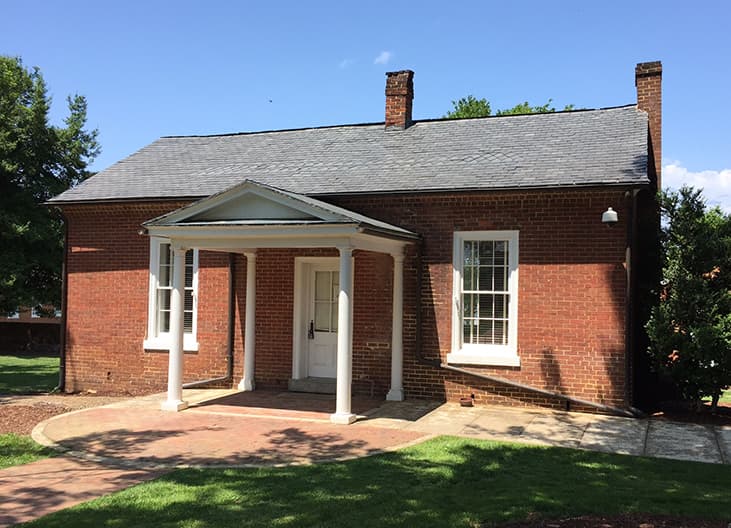
Central High campus blends history, arts, athletics and agriculture
Central High is now a working campus, not a preserved shell. It combines arts space, athletics, agriculture, and Black education history in one place Goochland can still use every week.

The Central High campus in Goochland is built for more than memory. Its restored buildings now hold classes, meetings, exhibits, exercise space, and agricultural services, giving the site a daily purpose that reaches far beyond a single museum visit. For residents, that means one campus can serve a concert, a community program, a farm consultation, a walk, and a history lesson without leaving the Courthouse area.
A campus with several jobs at once
At the center of the site is the Cultural Arts Center, which the county describes as a 170-seat multi-use auditorium with an automatic retractable screen, state-of-the-art sound, and a stage. That makes it useful for performances, lectures, civic presentations, and school or community events that need a real auditorium rather than a temporary setup. Five classrooms, a training room, a museum, conference space, historic exhibits, and an interactive kiosk add more uses to the same building, so the campus is not simply preserving a façade. It is being actively programmed.
That mix matters because it changes how the property functions in daily life. A place with classrooms and a training room can host instruction, workshops, and small-group meetings. A place with a museum and conference space can bring in visitors while also giving local organizations somewhere to gather. The interactive kiosk and exhibits tie those uses back to the building’s own story, keeping the history visible as the campus continues to host new activity.
The athletics side gives the site regular foot traffic
Just next door, the Athletics and Activities Center adds a different kind of public use. The county says the building includes a 14,000-square-foot gymnasium, a large multi-use room, and a warming kitchen that can be converted into a large-scale events space. That combination gives Goochland a place for recreation, indoor gatherings, and event hosting all in one structure.
Outside, the campus extends that utility with a quarter-mile walking track, two multi-use fields, and demonstration spaces. Those amenities matter because they make the site usable on ordinary days, not just during special programs. The county’s future plans for a playground, nature trail, and pavilion would add even more reasons to use the grounds, especially for families, walkers, and community groups that need open-air space close to the Courthouse area.

Agriculture is not an accessory here
The agricultural side of Central High is easy to miss if you only think of the campus as a former school, but it is one of its most practical functions. Goochland says the Agricultural Center opened in January 2019 and occupies 6,800 square feet. It houses the Goochland County Cooperative Extension and the Monacan Soil and Water Conservation District, putting two key local resource providers in the same place.
The building includes administrative space, a demo and programming kitchen, lab space for diagnostic services, meeting space, demonstration areas, and wall displays that highlight the county’s agricultural history, services, and programs. That makes it a working information center as much as a display space. A farmer, landowner, or resident can come for a meeting, get help through Extension programming, or use the site’s diagnostic and educational resources without treating the campus as a purely symbolic landmark.
The county also describes the ACRES initiative as a way to share information with the agricultural community and provide public engagement space, print materials, and an interactive kiosk. In a county where agriculture remains part of the local economy and landscape, that gives Central High a role that is immediate and functional. If the agricultural wing were underused, Goochland would lose a place where information, outreach, and hands-on programming are physically anchored to the community.
History is still active on the grounds
Central High’s historic importance is built into the present-day campus, not separated from it. The county scheduled a historical marker dedication recognizing Central High School, with self-guided tours of the renovated cultural and educational complex following the event. That setup reflects the way the site now works: visitors can come for a specific ceremony, then move through the campus at their own pace.

The Goochland County History Center adds another layer. The county says it will serve as the home of the Goochland Historical Society and as a welcome center for visitors to the Courthouse area and the county. That gives the campus a role in orientation as well as preservation. Instead of history being confined to a display case, the site helps direct people to the county’s broader civic and cultural landscape.
The deepest historical context comes from Goochland’s own school-building record. County history notes that between 1910 and 1938, Goochland built 23 schools to serve its Black community, including 10 Rosenwald schools. A map showing those schools is on display in the Central High Museum, linking the campus to a broader story of Black education that once spread across the county. The nearby Second Union Rosenwald School Museum extends that work with a mission to preserve and interpret the history of Black education in Goochland.
Why this campus still matters to Goochland
Central High works because it is layered. It is a place for arts programming, indoor recreation, agricultural support, local meetings, and historical interpretation all at once. The Cultural Arts Center, Athletics and Activities Center, Agricultural Center, and History Center each serve a different audience, but they also reinforce one another by keeping the campus active throughout the week.
That is the practical value Goochland gains from the site. Residents get classrooms, a gym, meeting rooms, walking space, fields, a museum, public exhibits, extension services, and a welcome center in one campus. If those uses faded, the county would not just lose a preserved landmark. It would lose a place that still delivers programs, access, and local activity in the center of the community.
This article was produced by Prism’s automated news system from verified source data, official records, and press releases, then run through automated quality and moderation checks before publishing. The system is built and supervised by the people who set the standards it runs under. Read our full AI policy.
Did this article answer your question?