Goochland's James River Parks Offer Family-Friendly Spring Paddling Adventures
Spring turns the James River in Goochland higher, colder, and faster; here's what every paddler needs to know before launching at Tucker Park this season.

Spring does not ease onto the James River in Goochland County. By April, snowmelt and rain runoff from the Blue Ridge have pushed flows well above their summer baseline, water temperatures remain dangerously cold despite mild air, and current speeds that feel manageable in August can pin a capsized paddler against a strainer in seconds. That reality does not cancel spring paddling; it reframes it. The same seasonal surge that creates risk also delivers the river's best scenery, strongest fishing, and most uncrowded stretches. Getting out safely just requires knowing exactly what the water is doing, where to launch based on your skill level, and what to do if something goes wrong miles from the nearest cell signal.
The Honest Picture: What Spring Changes on the James
The most important number to understand before April paddling is not your shuttle distance. It is the combined air and water temperature. The Upper James River Water Trail and Virginia's Department of Wildlife Resources both flag 110 to 120 degrees Fahrenheit as the threshold below which cold-water paddling becomes genuinely hazardous; if air and water temperatures added together fall below that range, you face real hypothermia risk within minutes of an unexpected swim. In early spring on the Goochland stretch, water temperatures in the James can still sit in the low 50s even on a 65-degree afternoon, meaning that combined figure may hover right at the warning line on pleasant days.
Higher spring flows also accelerate trip times significantly. Summer paddlers on the James average two to three miles per hour; spring current can push that pace noticeably faster, which compresses your decision-making time around obstacles and makes it easier to overshoot a take-out. Hazards that are submerged and invisible in summer, including strainers from downed trees, submerged rocks, and bridge pilings, can sit just below the surface or gather debris in ways that trap boats. Plan shorter floats than you think you need, and always carry a float plan: someone on dry land should know your put-in, your take-out, and a hard return time.
Tucker Park at Maidens Crossing: The Right Launch for Most Paddlers
For families, beginners, and anyone launching a kayak or canoe into Goochland's section of the James for the first time, Tucker Park at Maidens Crossing (1300 Maidens Rd) is the county's most complete and safest access point. The 36-acre facility sits on roughly 1,200 feet of river frontage and features a dedicated non-motorized boat ramp designed specifically for kayaks and canoes, which means no competing with powerboat trailers or backing ramps. The water at Maidens is generally calmer than sections closer to Richmond, making it a realistic choice for paddlers who want a spring outing without navigating technical whitewater.
Parking is available on both sides of the park. The boat ramp has its own lot; the opposite side serves the one-mile walking and exercise trail, playground, outdoor classroom, and the Tucker Bark Dog Park, which is split into separate large-dog and small-dog sections. The CarMax Cares Outdoor Amphitheater, set within a lined sycamore grove with its own overflow parking and electrical hookups, anchors the facility's riverfront side and can host large group events with advance reservation through Goochland Parks and Recreation. Portable restrooms are on-site. There is a pedestrian crossing beneath the Route 522 bridge that connects the two sides of the park, so there is no need to drive between lots once you arrive.
A practical note for spring launches here: the boat ramp's proximity to the Route 522 bridge means you will lose cell signal unpredictably once you round the first bend downriver. Do not rely on navigation apps to manage your float; download offline maps before you leave the parking lot.
Other Put-Ins and Float Segments by Skill Level
Goochland County officially released four float routes along the James, each with documented distances and approximate float times, with the county's own caveat that both figures change with water level. For the most current versions of those routes, Goochland Parks and Recreation maintains updated documentation on the county website. Here is a general framework for matching skill to segment:
- Beginners and families: Tucker Park at Maidens as both put-in and out-and-back turnaround. Short, predictable, and close to the ramp if conditions change.
- Intermediate paddlers: The West Creek and Maidens sections of the James offer scenic day-trip segments with quieter stretches than the Richmond corridor. These point-to-point runs require a shuttle vehicle; distances and access vary with season.
- Land-based staging: Leakes Mill Park and Hidden Rock Park function well as pre- or post-paddle gathering points with trail access and birding opportunities along adjacent bottomland habitat. Neither replaces a river launch, but both add dimension to a full-day outing.
Gear Checklist and the 110°F Rule in Practice
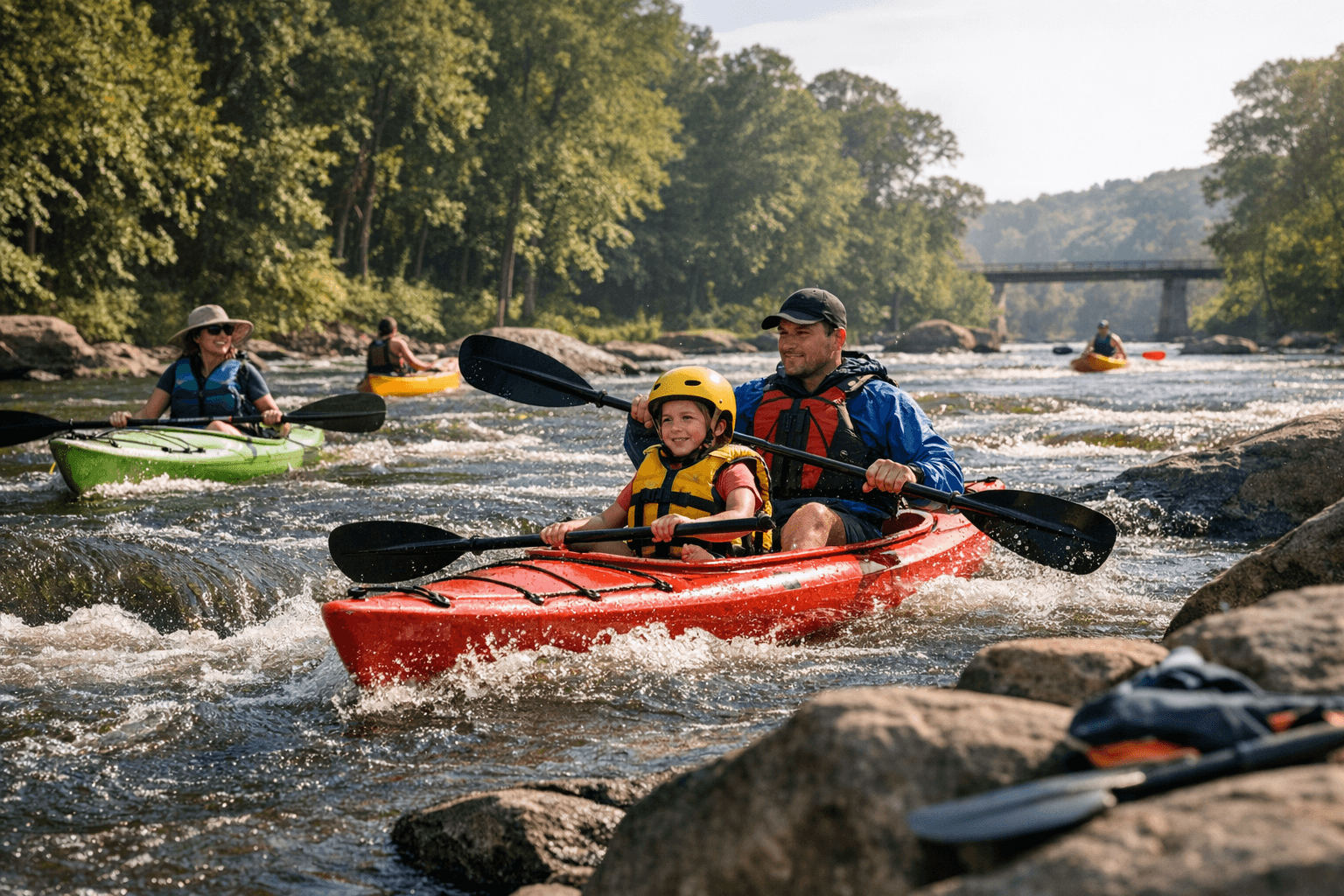
Wearing a U.S. Coast Guard-approved life jacket is non-negotiable, and in spring it is not just about drowning risk. Cold water shock can cause involuntary gasping and muscle failure within seconds of immersion, meaning even a strong swimmer can go under before a life jacket matters if it is not already on. Dress for the water temperature, not the air temperature.
For a spring float on the Goochland stretch, bring:
- A wetsuit or drysuit if combined air and water temps are below 120°F
- A whistle or air horn (audible signal for emergencies, required on many waterways)
- A waterproof bag with a basic first-aid kit, sunscreen, and a fully charged phone in airplane mode to conserve battery
- Enough water and food for the float plus an extra hour
- A physical copy of your float plan left with someone onshore
Do not bring glass containers; pack out everything you carry in.
Shuttle Strategy and Float Timing
Managing a shuttle correctly is the logistical piece that most new paddlers underestimate. The standard approach: drive both vehicles to your downstream take-out first, leave one car there, then drive together to the put-in. Write the take-out car's keys on your float plan so nobody launches with both sets in the same pocket. If you are running a solo vehicle, either paddle an out-and-back from Tucker Park or contact one of the regional outfitters that operate shuttle services on the James River corridor for a fee.
Start early. Spring afternoon thunderstorms are common in central Virginia, and getting off the water before an electrical storm rolls in requires having enough time to complete your float without rushing. A good rule: be off the water by 2 p.m. if afternoon storm probability exceeds 30 percent.
Checking Conditions Before You Go
The USGS Westham gauge (station 02037500) measures James River stage and flow every 15 minutes and is the primary real-time reference for Richmond-area conditions. The site HowsTheJamesRVA.com aggregates that gauge data alongside NOAA forecasts and water temperature to give a single paddling-conditions read. The James River Association's James River Watch tool shows flood stage levels with color-coded safety guidance for specific segments.
Check both before every trip, not just the morning of: a rain event 48 hours upstream can push Goochland levels significantly higher within hours of launch, even on a clear local day.
Rules, Stewardship, and Group Reservations
Tucker Park and Goochland's other river access points are non-motorized zones at the ramp itself; respect that boundary, as it protects the ramp condition for kayaks and canoes. Dogs are permitted throughout the park but must be leashed outside the dedicated dog park enclosure. Observe posted hours and conservation signage at all sites.
The James River Association and local volunteer groups periodically run river cleanup events that specifically target Goochland-area banks; those outings are the most direct way to keep access points open and in good condition. For groups planning organized events at Tucker Park's amphitheater or other facilities, permit and reservation requests go through Goochland Parks and Recreation before you put boats in the water.
Spring paddling on the James is genuinely worth the extra planning. The river corridor through Goochland is one of the most undercrowded and ecologically rich stretches within easy reach of Richmond, and the elevated spring flows bring shad runs, osprey arrivals, and water clarity that summer crowds never see. The river rewards preparation; it does not forgive improvisation.
This article was produced by Prism’s automated news system from verified source data, official records, and press releases, then run through automated quality and moderation checks before publishing. The system is built and supervised by the people who set the standards it runs under. Read our full AI policy.
Did this article answer your question?