Goochland’s last blacksmith shop preserves a Black family legacy
Goochland’s last surviving blacksmith shop still has original tools, public demonstrations, and a Black family line that stretches from enslavement to the present.
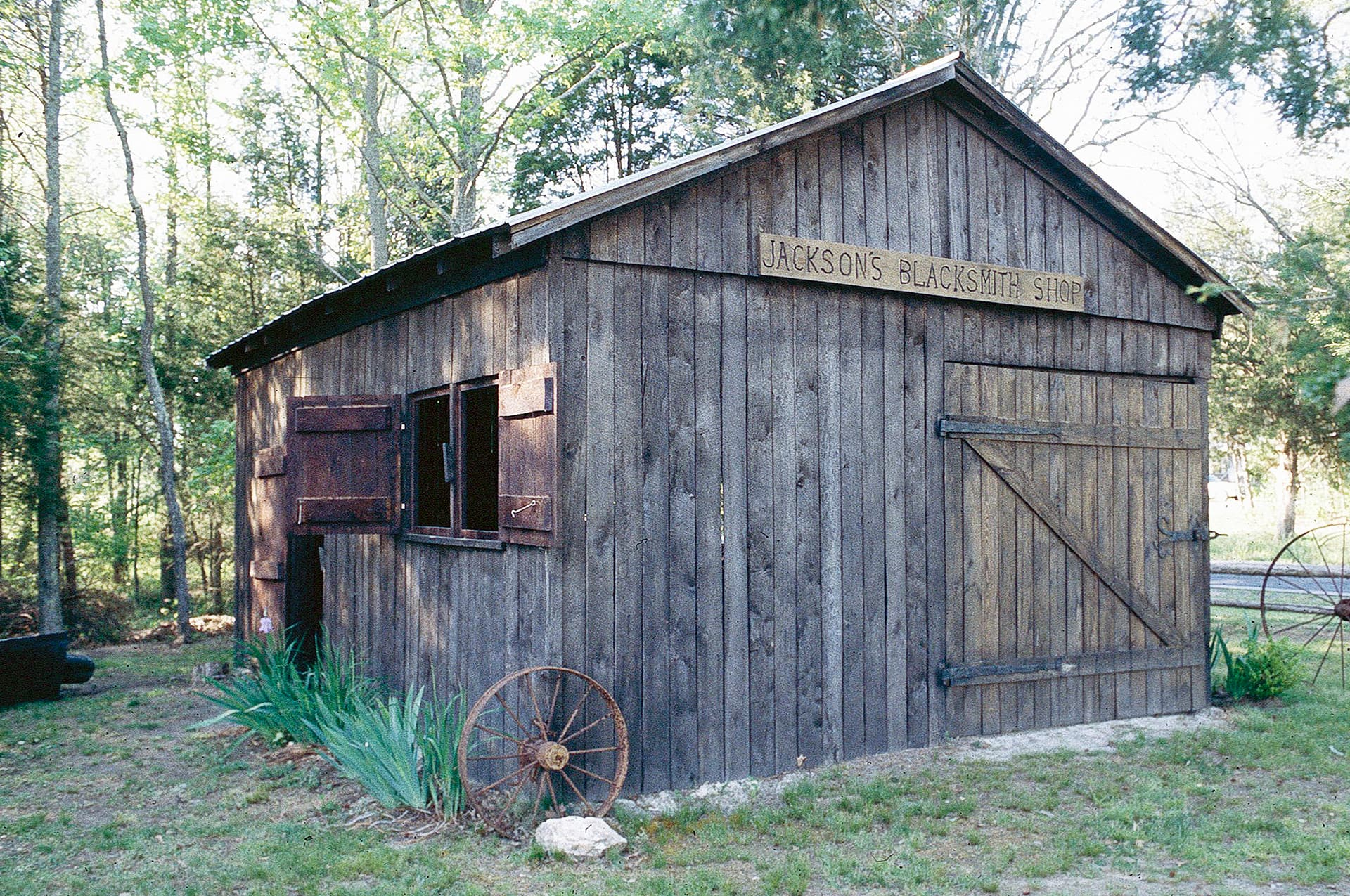
The Jackson Blacksmith Shop is the last surviving blacksmith’s shop in still predominantly rural Goochland County, and it remains one of the county’s clearest Black craft legacies. At 2558 Blacksmith Shop Road, the small working shop preserves three generations of Jackson family labor, with original tools still in place and a current interpretation that goes beyond the forge to tell a broader story of African American enterprise.
What still stands at the site
The surviving building is a simple vertical-plank frame structure measuring 16 feet by 24 feet. The Virginia Department of Historic Resources says it was erected in 1932 by George Jackson, and the site sits near the locations of two earlier blacksmith shops run by Henry Jackson or his oldest son, Wilson. That detail matters because the place is not just a preserved outbuilding. It is the physical remnant of a family business that moved through slavery, emancipation, and the twentieth century without losing its place in the county landscape.
The shop’s official record is unusually specific. It was listed on the Virginia Landmarks Register on September 17, 1997, and added to the National Register of Historic Places on December 11, 1997, under reference number 97001511. The National Register nomination identifies its areas of significance as Industry and Ethnic Heritage: Black. Those designations place the site squarely within the public preservation system, where documentation, recognition, and stewardship determine whether a place like this survives long enough for people to see it at all.
A Black family line tied to the forge
The Jackson family history gives the site its weight. The Virginia Department of Historic Resources describes the shop as representing three generations of an African American family’s blacksmithing tradition that began with Henry Jackson, who was born into slavery around 1830. The history page on the shop’s own site says Henry Jackson, born around 1826, built his own shop in 1880. Taken together, the records show the same broad arc: a Black craftsman who started before or around emancipation, passed the work to his descendants, and helped anchor a family trade in rural Goochland for decades.
Virginia tourism materials say George W. Jackson, Jr. practiced blacksmithing into the early 1970s in the last shop, and that the building was restored in 1995. That makes the site more than a static display. It marks the end of working blacksmithing as a daily trade in the family line while preserving the tools, structure, and memory of how the work was done. The preservation record also makes clear that the shop’s story is not confined to plantations or enslaved labor alone. It is a Black working history, built around skill, repair, transport, farm life, and local commerce.

What you can see now
The shop is still in working order, and the official site says it retains original tools used by three generations of Jackson blacksmiths. An exhibition building on the grounds holds artifacts and exhibits, and a new exhibit focuses on local African American businesses of the past. That broader interpretation turns the site into a place where visitors can connect blacksmithing to the larger economic life of Black Goochland, not only to one family’s trade.
The site’s own history page says farmers and sawmillers came from many parts of Virginia to have horses shod and farm tools repaired. That is the most practical window into the shop’s original role: it was a service stop, not a decorative relic. The work kept animals moving, tools usable, and farms functioning, which is why the building still carries meaning beyond architectural survival.
How to visit
The Jackson Blacksmith Shop is open for visits May through September by appointment only. It is located about 35 miles west of Richmond and about 40 miles east of Charlottesville, which places it within reach of residents making a day trip from either direction. The listed address is 2558 Blacksmith Shop Road, Goochland, VA 23063, and the contact number on the site is (804) 556-8160.
Visitors should expect a site that is preserved, not casual-access public parkland. The appointment-only schedule helps protect the shop, its tools, and the smaller exhibit space while still allowing residents to see a Black family business that has outlasted the century around it. In a county where so much historical storytelling still leans toward plantation-era memory, this is one of the few places where ordinary work, Black ownership, and rural skilled labor are centered in the same frame.

Who keeps it going
The shop is maintained by the family and friends of the Jackson smiths, and blacksmithing demonstrations by the Central Virginia Blacksmith Guild help keep the craft visible to the public. That combination of private stewardship and public interpretation is what makes the site durable. No preservation listing can substitute for people who continue to care for the building, open it to visitors, and teach the trade in front of an audience.
The guild describes its mission as promoting and preserving blacksmithing while sharing its history and techniques with the public. Its listed membership cost is $30 per year. For anyone looking to support the wider craft tradition tied to the Jackson shop, that gives the public a concrete way to stay connected to the living skill behind the building, not just the building itself.
Why this place matters now
The Jackson Blacksmith Shop shows how Goochland preserves African American work history when it chooses to protect more than grand houses and plantation landscapes. Its survival depends on a rare combination of official recognition, family care, and active interpretation, and that mix is not automatic. A place like this can easily disappear from public memory even when the structure survives, which is why the designation, the restoration, and the continuing demonstrations matter.
Its value today is immediate and visible. You can still stand at the site, see the original tools, walk into the exhibit building, and learn how a Black family trade carried across generations in rural Virginia. You can also see how preservation works when it is done with purpose: not as nostalgia, but as a record of labor, skill, and ownership that belongs in Goochland County’s public history.
This article was produced by Prism’s automated news system from verified source data, official records, and press releases, then run through automated quality and moderation checks before publishing. The system is built and supervised by the people who set the standards it runs under. Read our full AI policy.
Did this article answer your question?