Tuckahoe plantation reveals Goochland's colonial history and Jefferson link
Tuckahoe still reads like a plantation landscape, with Jefferson’s schoolhouse, preserved outbuildings and tours that show Goochland’s colonial past on the ground.
Tuckahoe is not just a famous house in eastern Goochland County. The property still shows how a colonial plantation occupied land, organized labor and shaped daily life, from the H-shaped mansion to the schoolhouse where Thomas Jefferson studied and the row of outbuildings that once kept the estate running. For residents driving Virginia Route 650 today, it remains one of the clearest places in the county to see how preservation, public access and hard history meet on the same ground.
How the site reads on the land
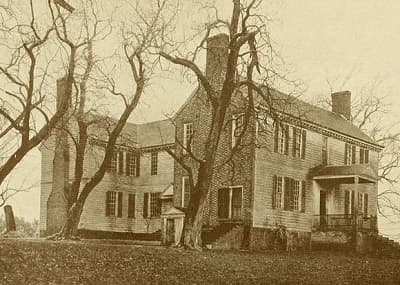
The first thing to understand about Tuckahoe is that the house was never meant to stand alone. The Virginia Department of Historic Resources describes the north wing as likely dating to about 1733, with the south wing, connecting saloon and carved woodwork added soon after, creating the rare H-shaped form that still gives the mansion its character. That shape matters because it shows a building expanded in stages as wealth and family needs changed, rather than a single planned showpiece.
North of the house, a row of early outbuildings forms what preservation specialists call a plantation street, a surviving cluster of service buildings that makes the estate legible as a working colonial compound. The remaining storehouse, smokehouse, barn, kitchen, plantation office and two preserved slave quarters give the site its most immediate public meaning today: this was a managed landscape of production, storage, food preparation, recordkeeping and forced labor, not only a residence. That physical arrangement is what turns Tuckahoe into a readable guide to plantation Virginia.
The National Park Service places the plantation about 13 miles west of Richmond on the south side of what is now Virginia Route 650. That location helps explain why the property sits at the edge of so many county stories at once, tied to the James River corridor, colonial travel routes and the landholding patterns that spread west from the city. In other words, the setting is part of the story, not just the backdrop.
The Randolph family built the foundation
Tuckahoe’s earliest history begins with William Randolph, born in 1651 and associated with Turkey Island. He left part of the land to his son Thomas Randolph, born in 1683, and Thomas enlarged his share in 1714 by purchasing adjoining land from his brother. By the time Thomas Randolph came of age in 1752, the plantation property historically encompassed about 25,000 acres, a scale that makes clear how much of the surrounding countryside once belonged to one interconnected estate.
The family line helps explain why Tuckahoe remains such an important Goochland property. The Virginia Department of Historic Resources says it was one of several estates William Randolph established for his sons, and the property stayed in the Randolph family until 1830. That continuity matters because it links the architecture, the land and the family record across generations, while also reminding readers that the plantation’s wealth came from land accumulation and the labor system that sustained it.
When Thomas Randolph died, his widow Maria Judith Page Randolph and their orphaned children remained tied to the property. The site’s later history also reflects changing ownership and stewardship: Mr. and Mrs. N. Addison Baker acquired Tuckahoe in 1935, and their descendants live there today. That living connection gives the plantation a different kind of public role than a museum house with no family presence. It is both a preserved historic site and a place still occupied by the family that carried it into the modern era.
Jefferson’s childhood is part of the landscape
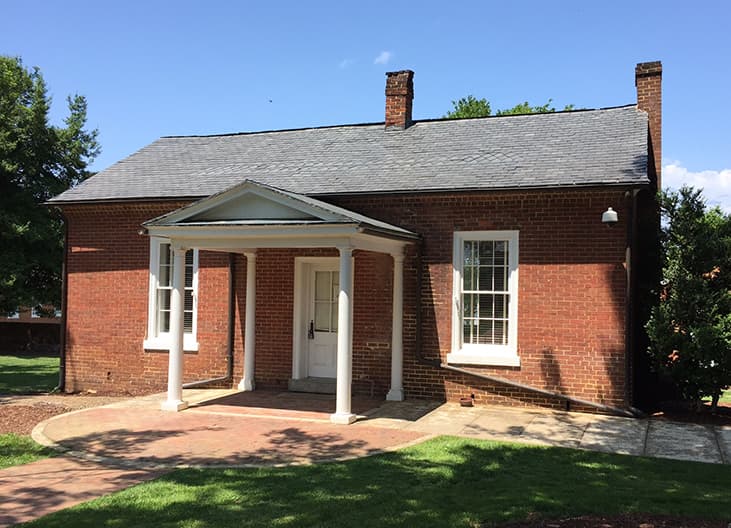
Tuckahoe’s national importance comes in part from Thomas Jefferson’s childhood, but the best way to understand that connection is through place rather than biography alone. The National Park Service says Jefferson was there for seven years, and Encyclopedia Virginia dates that stay from 1745 to 1752. The plantation’s own visitor information highlights the small schoolhouse on the property as the place where Jefferson’s education began, which makes the site especially resonant for readers who know him more as a president and architect of American ideas than as a boy in Goochland County.
That is why the property works as a local-history story as well as a Jefferson story. Visitors are not only looking at a future Founding Father’s childhood setting. They are seeing where a prominent Virginia family lived, learned and labored in the middle of the 18th century, on a property that had already grown into a major plantation by the time Jefferson was there. The schoolhouse, the main house and the service buildings together show how education, family privilege and plantation life overlapped.
Encyclopedia Virginia notes that Jefferson lived at Tuckahoe from 1745 to 1752. The National Park Service describes the plantation as the boyhood home where he spent seven years and received his elementary education. Put together, those details make the site more than a line in a biography. They make it a landscape where the county’s colonial past is visible in the buildings that still survive.
Why preservation still matters here
Tuckahoe’s formal recognition reflects that layered significance. It was listed on the Virginia Landmarks Register and the National Register of Historic Places in 1968, then designated a National Historic Landmark in 1969. Those designations recognize the house, the outbuildings, the gardens and the broader plantation setting as one of the finest examples of early-to-mid-18th-century domestic architecture in Virginia and the United States.
For Goochland, the preservation value goes beyond prestige. The site protects evidence of how a southern plantation actually functioned, including the structures that supported farming, storage, household work and enslaved labor. The presence of the preserved slave quarters is especially important because it keeps the plantation’s history from being reduced to architecture alone. It forces the full story into view.
The site’s official visitor information makes that history accessible through open-house historic tours, with tours beginning in the historic schoolhouse of Thomas Jefferson and a reduced admission rate of $10 per person for some tours. That format matters because it invites visitors to start at a smaller, more intimate building before moving outward to the larger estate. It also gives local families and history-minded travelers a practical way to enter a property that has long been known nationally but still belongs to Goochland’s living landscape.
Tuckahoe endures because it is both an icon and a local place. The mansion carries the weight of colonial architecture and Jefferson memory, but the outbuildings, the schoolhouse and the surviving family connection make the site useful in a more immediate way: they show how land was used, who lived there, and what parts of plantation Virginia remain visible in the county today.
This article was produced by Prism’s automated news system from verified source data, official records, and press releases, then run through automated quality and moderation checks before publishing. The system is built and supervised by the people who set the standards it runs under. Read our full AI policy.
Did this article answer your question?