VDOT tracks I-64 and Route 623 interchange project in Goochland
VDOT's Goochland interchange file tracks a Route 623 redesign that could change Exit 173, with safety fixes, construction impacts and new growth pressure.
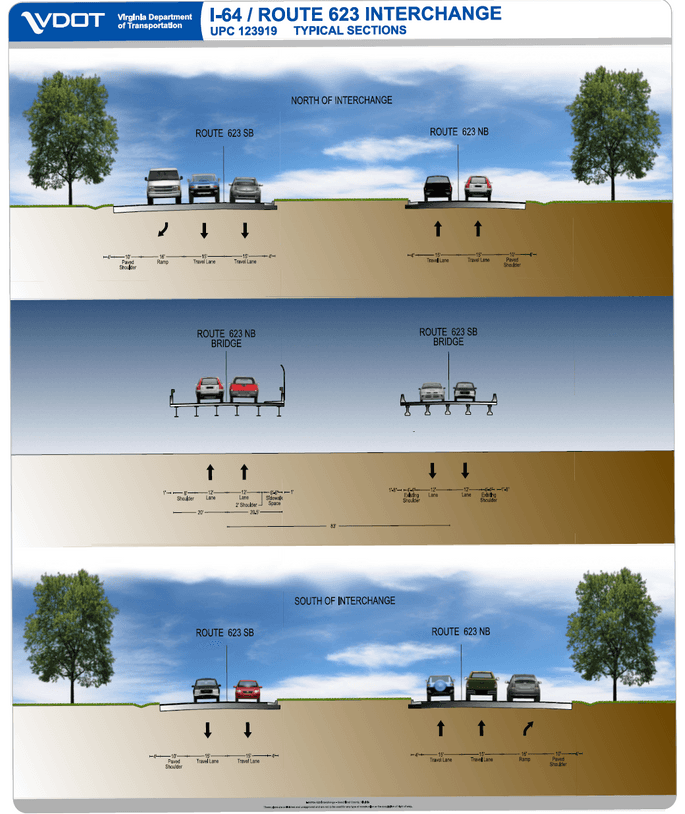
The Interstate 64 and Route 623 interchange in Goochland is one of those road projects that reaches well beyond the ramp itself. VDOT’s Richmond District page puts Exit 173 at the center of a corridor where commuter flow, safety, and future development all collide.
Why this interchange matters to your drive
I-64 is one of the most heavily used east-west routes in central Virginia, so changes at Route 623 can affect more than one neighborhood or one rush hour. For daily drivers on Ashland Road, the concern is not just whether traffic moves faster, but whether entering and exiting the interstate becomes safer and more predictable.
That is why this project has drawn attention from nearby property owners, county officials, and commuters who use the corridor to reach Short Pump, central Goochland, and points farther east and west. A ramp or junction at Exit 173 can influence how long backups last, how freight moves through the area, and how emergency vehicles navigate the same roads everyone else uses.
The county’s own transportation page is titled “Ashland Rd/I-64 Diverging Diamond Interchange,” a sign that the project has long been framed as more than a routine resurfacing job. It is a redesign of a key access point on a road that already carries both local traffic and regional trips.
What VDOT and the interchange study are trying to solve
PublicInput materials tied to the corridor say the Interchange Access Report study is meant to evaluate safety and operational issues and develop solutions for the I-64 / SR 623, or Ashland Road, interchange at Exit 173. That study matters because VDOT and the Federal Highway Administration require an IAR before an interchange modification can move forward on the U.S. interstate system.
That process tells residents something important about the project’s status: this is not an ad hoc road tweak, but a formal state-and-federal review of how the interchange should function. The focus is on access, traffic movement, and safety, which is exactly where daily frustration on a busy connector tends to show up first.
The Commonwealth Transportation Board added another step on Jan. 6, 2026, when it approved limited access control changes for the I-64 and Route 623, or Ashland Road, interchange improvements project, UPC #123919. In practical terms, those kinds of decisions can shape where access is allowed along the corridor, which matters to nearby parcels, driveways, and any future turn lanes or development entrances.
How the project has moved from concept to funding
Goochland County said in June 2023 that the diverging diamond interchange at Ashland Road, Route 623, was officially fully funded through Virginia. That announcement came after WRIC ABC 8News reported on June 26, 2023, that funding had been approved for a diverging diamond interchange in Goochland County.
The timeline matters because it shows the project progressing through the kind of milestones that usually separate a concept from actual work on the ground. County material later connected the effort to the Rockville Opportunity Corridor, and in April 2025 Goochland County said roadway improvements on Ashland Road there were expected to begin in spring 2025 and continue through summer.
For nearby drivers, that is the period most likely to bring lane shifts, equipment in the right-of-way, slower turns, and more stop-and-go traffic around the work zone. For businesses along the corridor, the same window can mean changed access patterns and shorter or less predictable customer trips, even when the long-term goal is better flow.
What earlier engineering work says about this corridor
The Route 623 interchange has already been through major capacity work before. EBA Engineering’s project portfolio describes an earlier “I-64 Widening and Route 623 Interchange Improvements” effort that widened I-64 from four lanes to six lanes eastbound from Route 623 to Route 271 and westbound from Route 271 to Route 622.
That earlier project record shows the corridor has repeatedly been treated as a pressure point in the regional network. It also explains why the current interchange page should be read in a larger context: this is not the first time VDOT or contractors have had to solve a traffic problem around Route 623, and it probably will not be the last time the county has to weigh mobility against growth.
VDOT’s separate Goochland project page titled “Intersection improvement at Hockett Road (Route 623) in Goochland” adds to that picture. The same route number appears in more than one project context, and the road is also referred to locally as Ashland Road, which can make corridor discussions sound fragmented when they are really pointing to the same roadway system.
What the ripple effects are for residents, businesses, and land use
The biggest near-term benefit local drivers want from an interchange project is relief: fewer backups at the ramps, safer merges, and clearer movements through Exit 173. The official materials are focused on safety and operations, which means the core promise of the work is not just speed, but fewer conflict points where traffic slows or crashes can happen.
The harder question is what growth follows improved access. In Goochland, a better interstate connection can make nearby land more attractive for business activity, housing pressure, and corridor development, especially around Ashland Road and the Rockville Opportunity Corridor. That is where transportation planning and land-use policy start to overlap, because a road that moves traffic more efficiently can also invite more of it.
The public record now lays out the main milestones: a VDOT project page in the Richmond District, an IAR study required by VDOT and the Federal Highway Administration, county funding claims in 2023, a 2025 construction window for Ashland Road improvements, and a 2026 access-control decision from the Commonwealth Transportation Board. What remains for Goochland is the real test for Exit 173: whether the finished design eases daily travel without pushing the next wave of development pressure onto the same corridor first.
This article was produced by Prism’s automated news system from verified source data, official records, and press releases, then run through automated quality and moderation checks before publishing. The system is built and supervised by the people who set the standards it runs under. Read our full AI policy.
Did this article answer your question?