BATA connects Traverse City, villages and key destinations across county
BATA is Grand Traverse County’s car alternative, linking downtown, villages, the airport and beach district with free and on-demand service.
In Grand Traverse County, BATA is the trip that keeps the county moving when driving is not an option. It ties Traverse City to the East Bay Beach District, Grand Traverse Commons, Meijer, the airport corridor and villages as far as Suttons Bay and Glen Arbor, giving workers, students, seniors and neighbors in outlying towns a way to reach jobs, errands and appointments without a car.
How BATA works across the county
BATA is more than a city bus line. The agency says it serves about 900 square miles across Grand Traverse and Leelanau counties and runs fixed routes seven days a week, along with door-to-door on-demand service. That mix matters in a county where daily life stretches from downtown Traverse City to rural townships, resort areas and village centers.
The system is built around practical trips, not abstract transit lines. BATA routes reach shopping, medical sites, schools, business corridors, the airport area and places where people already gather for work or errands. For many riders, that makes BATA the substitute for a second car, or the only reliable ride at all.
The downtown routes and the free Bayline
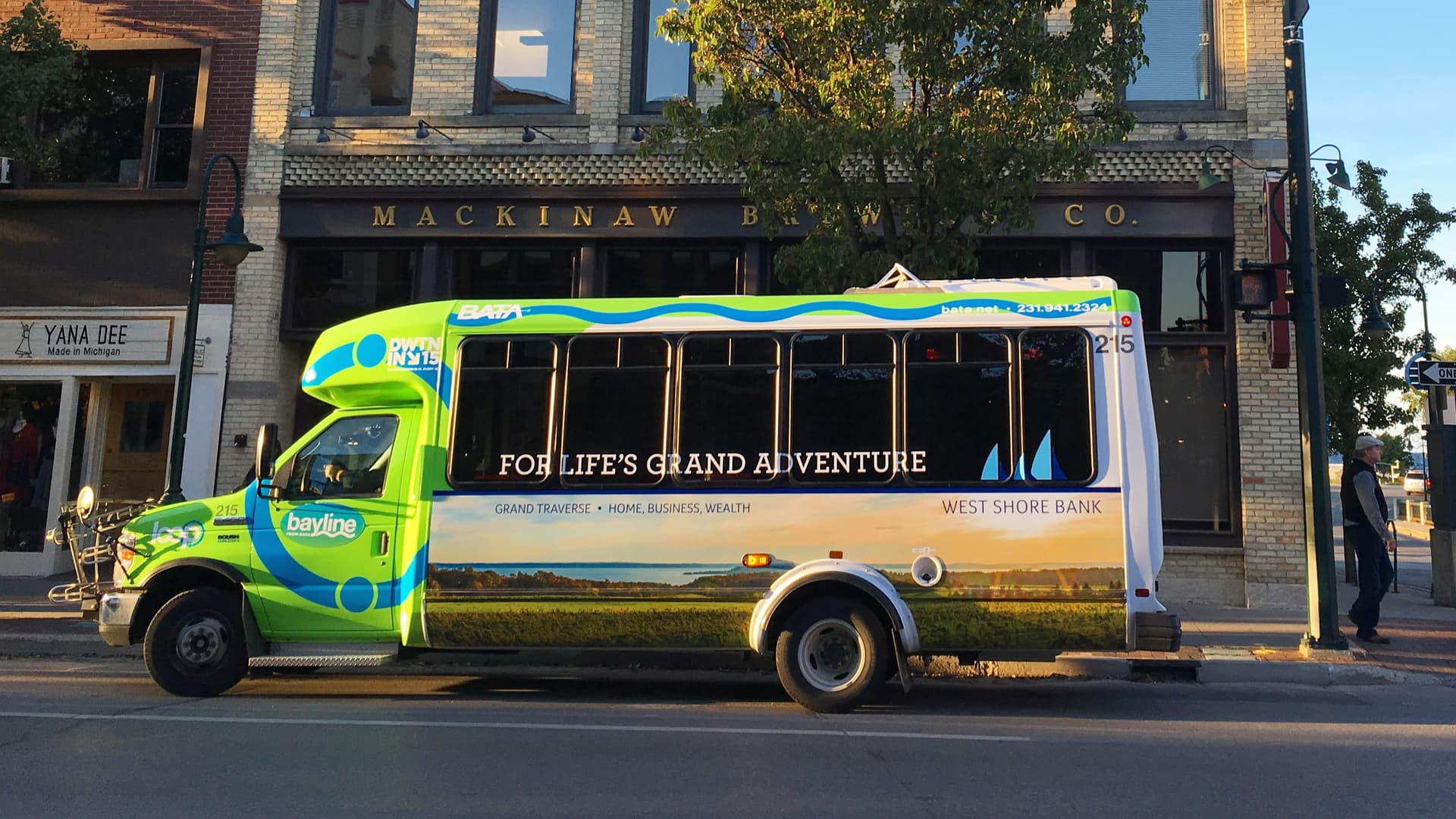
The strongest city-side route is the free Bayline, which runs between the East Bay Beach District and downtown Traverse City. It also connects to major anchors such as Grand Traverse Commons and Meijer, making it useful for shopping, commuting, park-and-ride trips and event travel.
BATA says Bayline is popular with riders headed to the Cherry Festival, the Bayshore Marathon, school, medical needs and shopping. That combination gives the route unusual reach for a free service: it is not just for visitors or downtown errands, but for daily living and peak-event movement when traffic and parking get harder.
The Bayline also shows how transit can shave costs from ordinary life. A rider can use it for a grocery run, a medical appointment, a commute into downtown or a festival trip without paying for parking, gas or downtown congestion. In a county where the beach district, central business area and west-side commercial stops all pull traffic in different directions, a free line with those connections is a meaningful public utility.
Village Loop service reaches beyond Traverse City
BATA’s Village Loop network is what makes the system countywide rather than merely urban. The routes connect downtown Traverse City with communities in Grand Traverse and Leelanau counties, including Suttons Bay, Glen Arbor, Chum’s Corner, Blair, Interlochen, Kingsley, the airport and the Acme corridor.
- Route 10 to Suttons Bay
- Route 11 to Glen Arbor
- Route 12 to Chums Corner, Blair and Interlochen
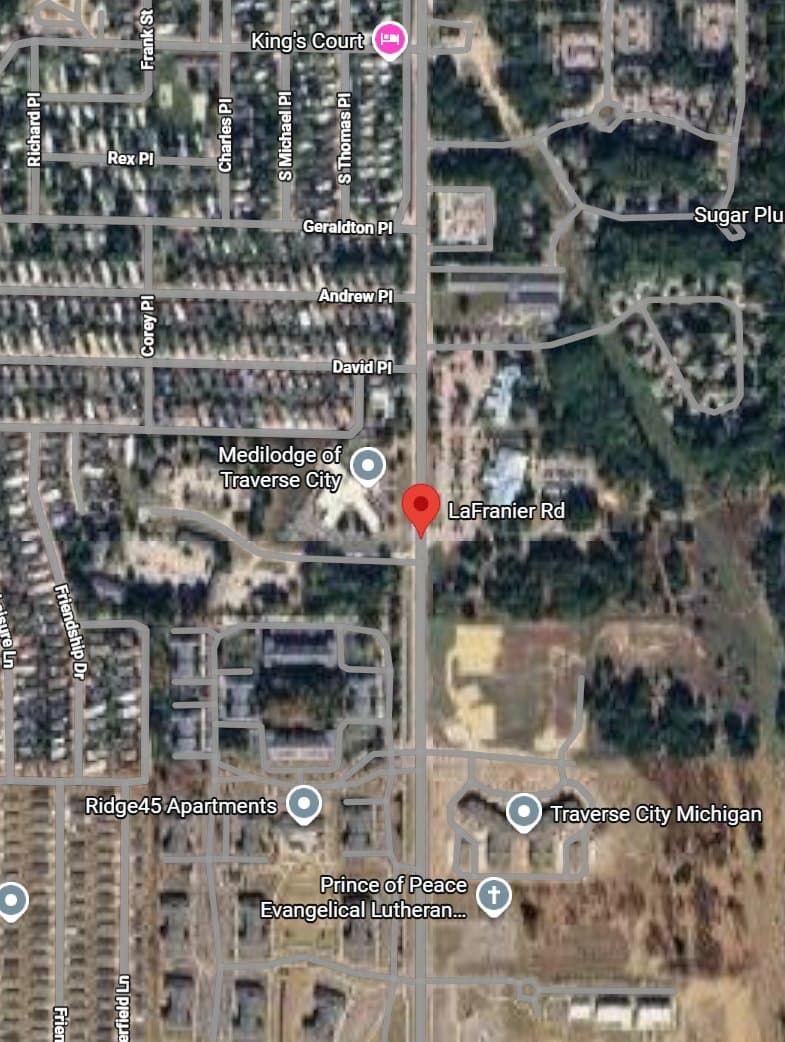
- Route 13 to LaFranier Park-n-Ride and Kingsley
- Route 14 to TVC Airport, hotels and Acme
The route map lists these village services:
That reach matters for people who live outside the city but still depend on Traverse City for work, school, appointments or major shopping. The service is especially important for neighboring-town residents who need a way into the county seat and back home without arranging a private ride.
BATA says Village Loop riders can arrange pickups or drop-offs up to three-quarters of a mile off the normal route path through deviations and flag stops. That flexibility extends the system beyond the main road but still keeps it anchored to fixed corridors, which is a strength and a limitation at the same time: it helps more people than a strict bus stop map would, but it does not behave like a private car that can go anywhere on demand.
Link fills the last-mile gap
When a fixed route is not the right fit, BATA’s Link service provides door-to-door on-demand transportation in Traverse City, Grand Traverse County and Leelanau County. That service is built for riders who need a closer pickup or a more direct trip than the village buses can offer.
Link is especially useful for seniors, riders with disabilities and anyone traveling with mobility barriers, medical needs or time-sensitive errands. It closes the gap between a bus stop and a front door, which is often the difference between a trip that happens and one that does not.
Bikes, mixed travel and real-world use
BATA also supports trips that combine transit with biking. The agency says most fixed-route buses can carry up to three bikes, which helps riders link a bus trip with a final ride to work, class, a trail, or a neighborhood farther from the route.
That matters in a county where people do not always make one simple trip from home to destination and back. A commuter may bike to a stop, ride into downtown, then continue on foot. A student may use a bus for the long leg and a bike for the last mile. For a region spread across beaches, campuses, business corridors and village centers, that kind of mixed travel is a practical advantage.
What the numbers show about demand
BATA says it provides about 1,000 rides a day across the county. In fiscal year 2024, the agency reported 409,217 total rides, up from 373,027 in fiscal year 2023. Its 2020 annual performance index listed 402,947 passengers, showing that usage has stayed substantial over several years.
The system’s event ridership can spike sharply. BATA highlighted 1,100 Bayline riders before dawn for the Bayshore Marathon, a reminder that transit here is not only for routine commuting. It also absorbs unusually high demand when a major event collides with parking pressure and early-hour travel needs.
BATA says more than 170,000 annual rides are provided to seniors or disabled riders. That figure underscores why the network matters beyond convenience: it is a mobility system for people who may not be able to drive safely or at all, and for households that are trying to keep up with medical visits, shopping and appointments on a fixed income.
How public support keeps the system running
The county’s transit system is built with local tax support. BATA said its 2017 millage proposal would cost a homeowner with $200,000 in market value about $16 more annually than the prior rate, and that the increase was meant to support operations, fleet replacement, facilities, and shelter and stop improvements.
BATA later said the 2021 millage renewal would raise $4,783,786 in annual property-tax revenue collectively from Grand Traverse and Leelanau counties, and that the renewal passed with 61% support in the two-county vote. The agency also said more than 2 million rides had been provided since 2017, which gives a concrete measure of what that public investment is underwriting.
The clearest way to understand BATA is this: it links Traverse City to the places people actually need to reach, and it does so with fixed routes, free downtown service, village connections, bikes and door-to-door rides. In a county spread across 900 square miles, that is not a side service. It is the transit structure that keeps daily life connected.
This article was produced by Prism’s automated news system from verified source data, official records, and press releases, then run through automated quality and moderation checks before publishing. The system is built and supervised by the people who set the standards it runs under. Read our full AI policy.
Did this article answer your question?