Grand Traverse County road weight limits kick in as frost leaves roads
Spring weight limits are back on Grand Traverse County roads, slowing heavy trucks to 35 mph and carving out key exemptions for state highways, utilities and farm moves.

Heavy trucks are dropping to 35 miles per hour on Grand Traverse County roads as frost leaves the roadbed soft and vulnerable. The seasonal limits hit freight haulers, farms, movers, utility crews and contractors first, but the larger bill is for everyone who shares the pavement: the rules are meant to stop damage before it turns into repairs, closures and slower routes. County officials also time the restrictions by weather, not by the calendar, so the start and end dates change from year to year.
How the seasonal limits work
The Grand Traverse County Road Commission says the restrictions exist to protect roads while frost is coming out of the ground. When the limits are in force, most heavy trucks must cut speed and axle load, and the county sets the truck speed limit at 35 mph during the restriction period. Michigan guidance also explains why the rules matter so much in spring thaw: reduced loading lowers axle weights by 25% on rigid pavements and 35% on flexible pavements.
There is no fixed calendar day when the county flips the switch. The Road Commission ties the timing to weather conditions instead of a set date, which is why one spring can end quickly and another can linger well into April. That variability is the point of the system, because the pavement is most fragile when the frost is leaving the roadbed and water is moving through the base layer.
Where the limits do not apply
The county’s rules are not one-size-fits-all. The Road Commission says all state highways in Grand Traverse County are considered Class A roads, so trucks may continue their loads and speeds there. Roads that have been built or reconstructed to a higher standard are also exempt, which means the county’s map of restrictions has built-in exceptions for routes that can safely carry more weight.
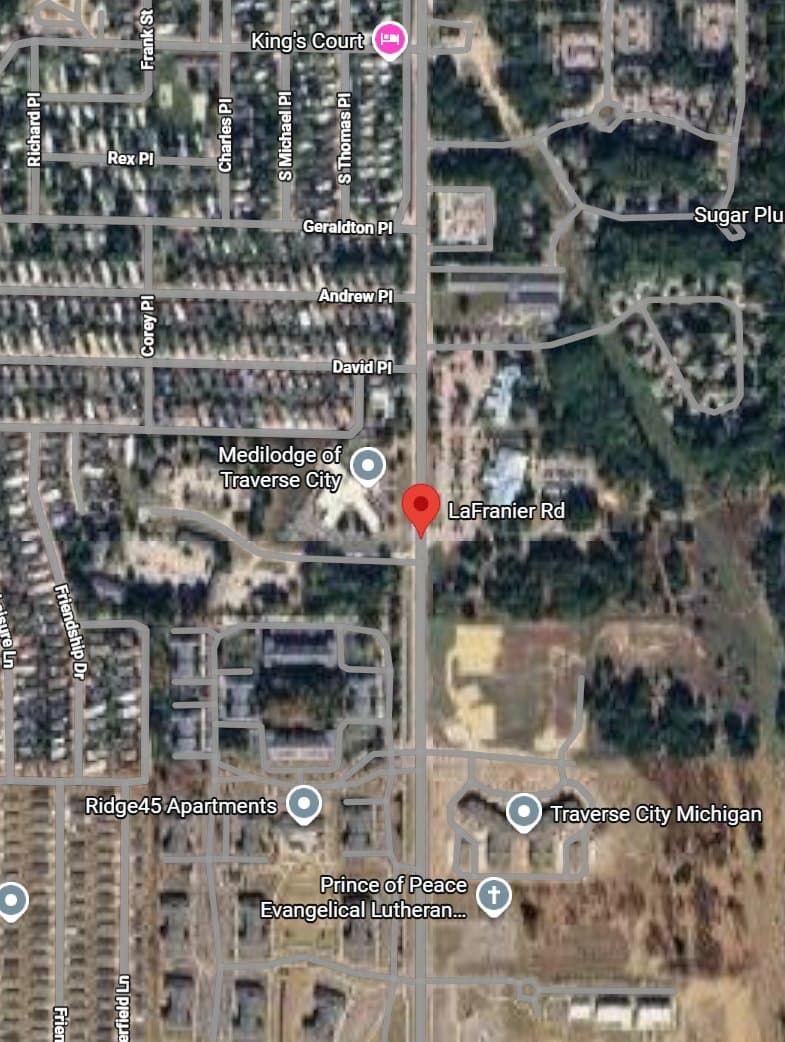
That matters in a county that stretches well beyond downtown Traverse City. The township and village service area includes Acme, Blair, East Bay, Fife Lake, Garfield, Grant, Green Lake, Long Lake, Mayfield, Paradise, Peninsula, Union, the Village of Fife Lake, the Village of Kingsley and Whitewater. In other words, the seasonal system is countywide, not a downtown-only concern, and the county’s main office at 1881 LaFranier Road in Traverse City is the local place to check on it. The office is open Monday through Thursday from 6:00 a.m. to 4:00 p.m.
Permits that keep essential work moving
The Road Commission does allow legal exemptions for some classes of business, but they are not automatic. Companies still need written permission for the intended route, and the commission says Seasonal Public Utility, Agricultural Move and Milk Transportation permits are required when weight restrictions are on. A Utility Route Notification or Agricultural Route Notification must accompany the permit request, which keeps the process tied to a specific road and a specific move.
There is one hard stop: no special moves are allowed for loads that are overweight or oversized during the restriction period. That rule is especially important for utility work, farm logistics and freight schedules, because those jobs often cannot simply wait for dry weather. For businesses trying to move equipment, milk, seed, feed or utility materials, the county system is designed to keep essential work going without asking every road to take the same punishment at the same time.

Bridge postings can change the route
A rough spring road is not always the same thing as a posted infrastructure limit. The clearest sign that a route needs attention is a county posting, and Grand Traverse County currently has three bridges with weight restrictions listed by the Road Commission. Diamond Park Rd between Euclid Ave and M-137 in Green Lake Township is posted 40/40/50, West County Line Rd in Section 34 between Allen Rd and Barratt Rd in Mayfield Township is posted 3 tons, and Ramsay Rd in Section 26/35 between E. Elliott Rd and Fritz Rd in Fife Lake Township is posted 3 tons.
Those bridge restrictions are reviewed per Michigan Department of Transportation requirements, which is why the county’s road-regulation pages matter so much for route planning. The Road Commission keeps bridge restrictions, road ratings, seasonal roads and dust control together in one place, giving residents and drivers a way to see whether a problem is a short-lived spring nuisance or a specific, posted infrastructure limit. If a bridge is posted, it is not a guess. It is a route limit that should be treated as a structural warning.
When the county starts, and how the dates have shifted
The county’s recent history shows why drivers and businesses cannot rely on the calendar. The Road Commission’s records show seasonal weight restrictions have started and ended on different dates in recent years, including March 13 to April 22 in 2019, February 21 to April 30 in 2018, February 17 to April 5 in 2017, and March 4 to March 25 in 2016. The same history table also shows 2021 and 2020 with March 2 and March 30 listed together, underscoring how weather-driven the timing can be.
Grand Traverse County’s most recent local start date was 7:00 a.m. Monday, March 3, 2025, when seasonal weight and speed restrictions took effect on county roads under PA 300 of 1949 and the Michigan Vehicle Code, MCL 257-722. Statewide, the Michigan Department of Transportation said annual spring weight restrictions began on February 12, 2026 to protect Michigan roads, then lifted all remaining seasonal restrictions on May 15, 2026 as conditions improved. That same cycle is what county road commissions watch every year.
Why it matters to taxpayers, haulers and anyone driving here
The financing behind the system is part of the story too. Grand Traverse County Road Commission says its principal source of funding is the Michigan Transportation Fund, with additional support from state and federal grants, townships and a millage. The commission also says it has 188 total routes in its Adopt-A-Road program, a reminder that the county’s road network is a large, shared asset rather than a collection of isolated streets.
That is why seasonal limits are more than a trucking rule. For freight haulers, farm operators, movers, utilities and contractors, the restrictions shape routes, weight loads and schedules. For residents, they help keep spring damage from becoming a bigger repair bill later, and they reduce the odds that a weak road or bridge will force a closure at the worst possible time.
This article was produced by Prism’s automated news system from verified source data, official records, and press releases, then run through automated quality and moderation checks before publishing. The system is built and supervised by the people who set the standards it runs under. Read our full AI policy.
Did this article answer your question?