How to use Grand Traverse County’s parcel search tool
Grand Traverse County’s parcel search can verify ownership, tax history, and lot lines before you buy. It also helps you track nearby properties and shifting tax burdens.
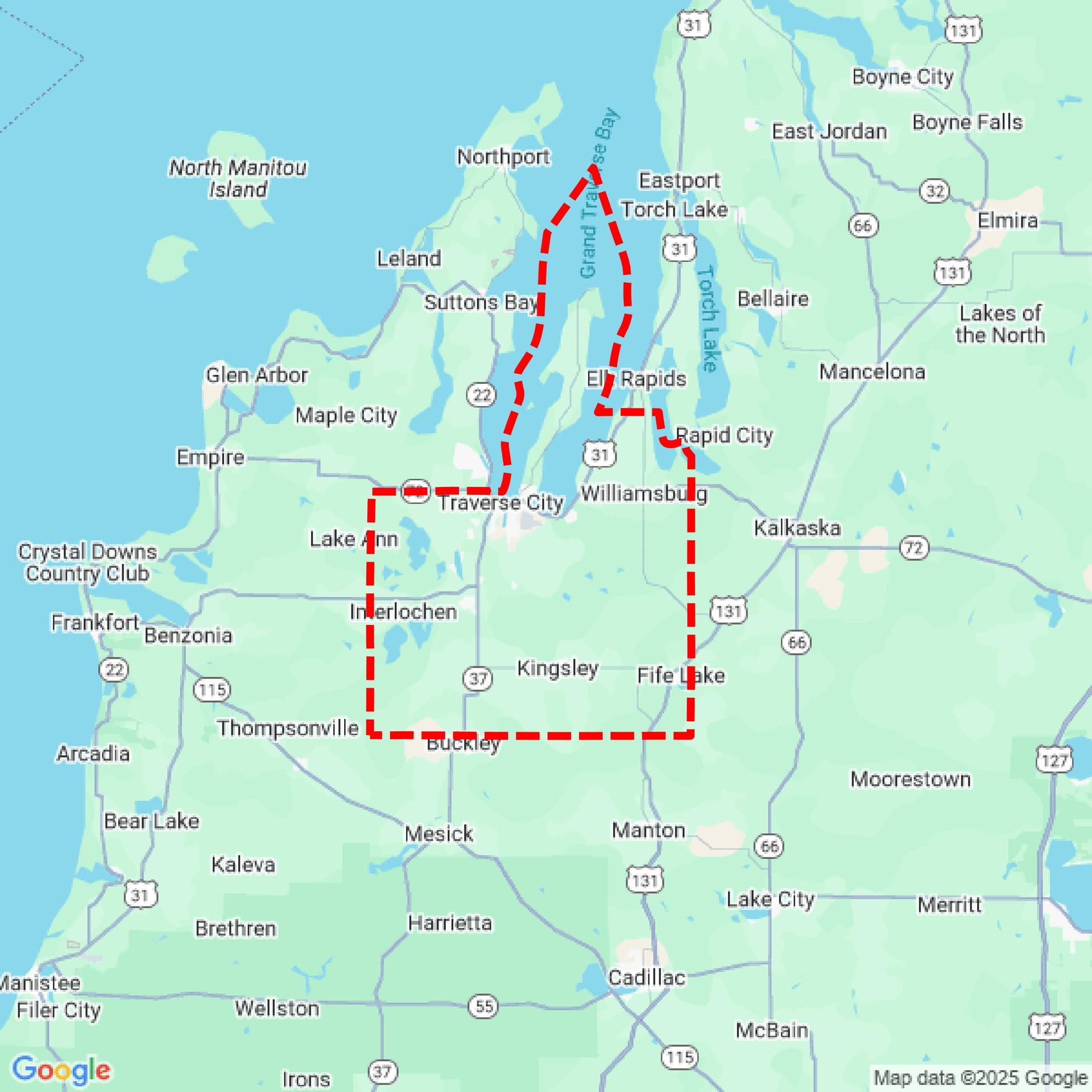
Grand Traverse County’s free parcel search lets you look up a property by parcel number, owner name, address number, or street name, then opens a record with ownership, tax values, sale history, and a full legal description. For a buyer, that can flag a problem before closing. For a neighbor, it can show who owns the lot next door and what kind of land record sits behind a development rumor.
What the parcel search actually shows
Once you open a property detail page, Grand Traverse County shows the parcel number, jurisdiction, owner name, property address, mailing address, current taxable value, current assessment, current SEV, and the current PRE percentage. The same page also lists the property class, yearly tax amounts, delinquent-tax information, sale history, and a full legal description of the parcel.
A homeowner can confirm that the mailing address is right. A buyer can see whether the property is classified the way it should be. A contractor can confirm the parcel’s legal description before work starts. A reporter or historian can use the sale history and legal description to track how a parcel changed hands and how the land is described in township and section terms.
Five local ways to use it without special training
The search works even when you do not have a parcel number in hand. If you only know a street name, a partial owner name, or an approximate address, you can still start a search and narrow it down from there. You can use it for everyday questions that come up in Acme Township, Traverse City, and the rest of Grand Traverse County.
- Before you buy a house: check the taxable value, assessment, SEV, and PRE percentage so you know whether the record matches what the seller is telling you.
- Before you contest a tax bill: compare the property’s tax amounts and delinquent-tax information with the parcel record.
- Before a neighborhood rumor turns into a building site: identify who owns the nearby lot and what the parcel actually looks like on paper.
- Before you plan work on a property line: use the legal description and parcel map to confirm which land is tied to the record.
- Before you dig into local history: review sale dates and split information to see how a parcel was carved up over time.
A sample Acme Township record includes the owner, the property and mailing addresses, school district code, current taxable value, current assessment, current SEV, tax amounts for multiple years, several past sale dates, and a metes-and-bounds style legal description. It also shows a split date of August 2, 2006, from parcel 01-002-005-20, which helps explain how the current parcel took shape.
Why the tax fields matter to your wallet
Grand Traverse County’s Equalization Department conducts the statutory annual equalization of assessments to create uniformity across taxing jurisdictions. Taxable value, assessment, and SEV are not interchangeable.

Current taxes are estimated by multiplying taxable value by the millage rate. In the county’s example calculation, non-PRE properties include an additional 18 school operating mills.
In Michigan, a principal residence exemption exempts an owner’s principal residence from up to 18 mills of local school operating tax, and the exemption is claimed by filing a Principal Residence Exemption Affidavit with the local assessor. Grand Traverse County’s parcel page displays the current PRE percentage, so you can see whether the record is treated as owner-occupied. Michigan warns homeowners not to use SEV instead of taxable value when calculating the homestead property tax credit, which is a common and costly mistake.
Use the map layers when the parcel page is not enough
The county’s Equalization and GIS departments make the parcel system broader than a simple lookup. Public information includes aerial photographs, equalization reports, millage rates, parcel descriptions, parcel maps, and sales information. The property-ownership layer labels an owner and an assessed value and precisely describes the location and shape of the parcel.
Grand Traverse County’s mapping gallery gives a timing check: the Parcel Tax Data Viewer is current to March 31, 2026, the ArcGIS Tax Parcel Viewer is current to the 2026 March Board of Review, and the county’s Tax Maps are current to 2024.
How to go deeper when ownership or records matter
When parcel data raises a question the map cannot answer, the county has other record systems to follow. The Register of Deeds office offers online records and images, which is the place to go when you need the actual recorded document behind a transfer, easement, or other land record.
Grand Traverse County’s 2026 top-taxpayer report lists DTE Gas Company, Consumers Energy, Cherryland Electric Coop, Grand Traverse Resort and Spa LLC, and Meijer Inc. among the largest taxable-value holders.
This article was produced by Prism’s automated news system from verified source data, official records, and press releases, then run through automated quality and moderation checks before publishing. The system is built and supervised by the people who set the standards it runs under. Read our full AI policy.
Did this article answer your question?