Judge tosses developer suit over Traverse City downtown project halt
A federal judge threw out a challenge to Traverse City’s halt on a Hall Street project, keeping the building stopped for now. The ruling could strengthen the city’s hand in future height fights downtown.

A federal judge tossed out the developer’s lawsuit over Traverse City’s decision to stop work on a downtown Hall Street project, leaving the building halted and giving City Hall a short-term win in a fight that has shaped the future of downtown height limits.
The ruling matters well beyond the two vacant parcels at 125 and 145 Hall Street. It reinforces Traverse City’s authority to enforce its own rules when a project runs into the city’s charter and zoning limits, a point that has been central to years of conflict over how tall downtown can grow and who gets the final say.
That dispute traces back to Proposal 3, which Traverse City voters approved on November 8, 2016. The charter amendment says the city generally cannot approve buildings over 60 feet tall unless voters authorize them at a regular or special election. In practice, that put a hard political check on taller downtown projects and turned building height into one of the city’s most consequential planning issues.
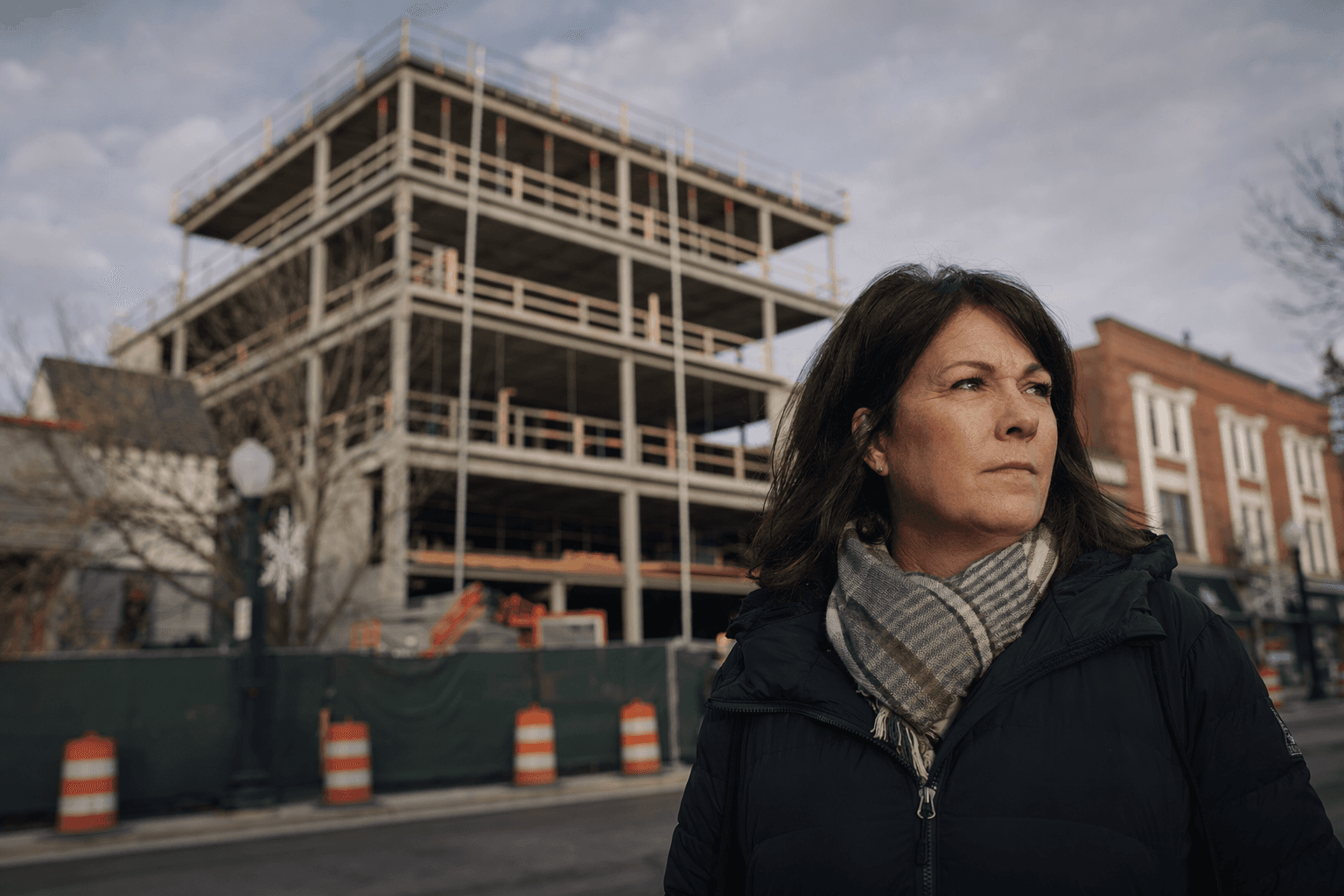
The Hall Street proposal became the latest test. Planning records described it as a six-story mixed-use building, with filings identifying it as either an 88-unit or 97-unit project at different stages. Traverse City planning commissioners approved the plan in March 2021, and site work began in September 2021 even as the legal fight was already underway. The project was slated for two vacant parcels in the Warehouse District, a part of downtown where scale, views and redevelopment pressure have become especially sensitive.
The city’s own internal debate over how to measure height helped fuel the broader fight. The city attorney’s memo and implementation policy relied on the zoning ordinance’s measurement method to decide whether a building exceeded 60 feet, while opponents argued the Hall Street project should be counted closer to 80 feet. City officials and the developer maintained it could be measured as 60 feet from the sidewalk to the roofline, excluding rooftop utilities and mechanical equipment. Save Our Downtown said the project could not move ahead without a voter-approved exception.
The legal history around downtown height already includes a 2018 Michigan Court of Appeals case involving 326 Land Company’s proposed 100-foot mixed-use residential building downtown, a plan the company said it had spent more than $100,000 preparing. A later 2022 Court of Appeals decision in Save Our Downtown v. City of Traverse City affirmed the core charter issue in favor of the plaintiffs but reversed declaratory and injunctive relief, leaving some remedies unresolved. That unresolved history, combined with this latest dismissal, leaves Traverse City with a stronger case for enforcing its 60-foot rule and for resisting pressure to let downtown projects rise without a public vote.
This article was produced by Prism’s automated news system from verified source data, official records, and press releases, then run through automated quality and moderation checks before publishing. The system is built and supervised by the people who set the standards it runs under. Read our full AI policy.
Did this article answer your question?