Medical Drone Pilot Achieves 91 Percent Success, Promises Faster Diagnostics
A May 2025 medical drone pilot near Munson Medical Center completed 67 flights with a 91 percent success rate, demonstrating that short range aerial transport of lab specimens can work in northern Michigan terrain. The project showed potential to cut road miles for specimen transport, speed diagnostic turnaround, and improve logistics for rural care in Grand Traverse County.
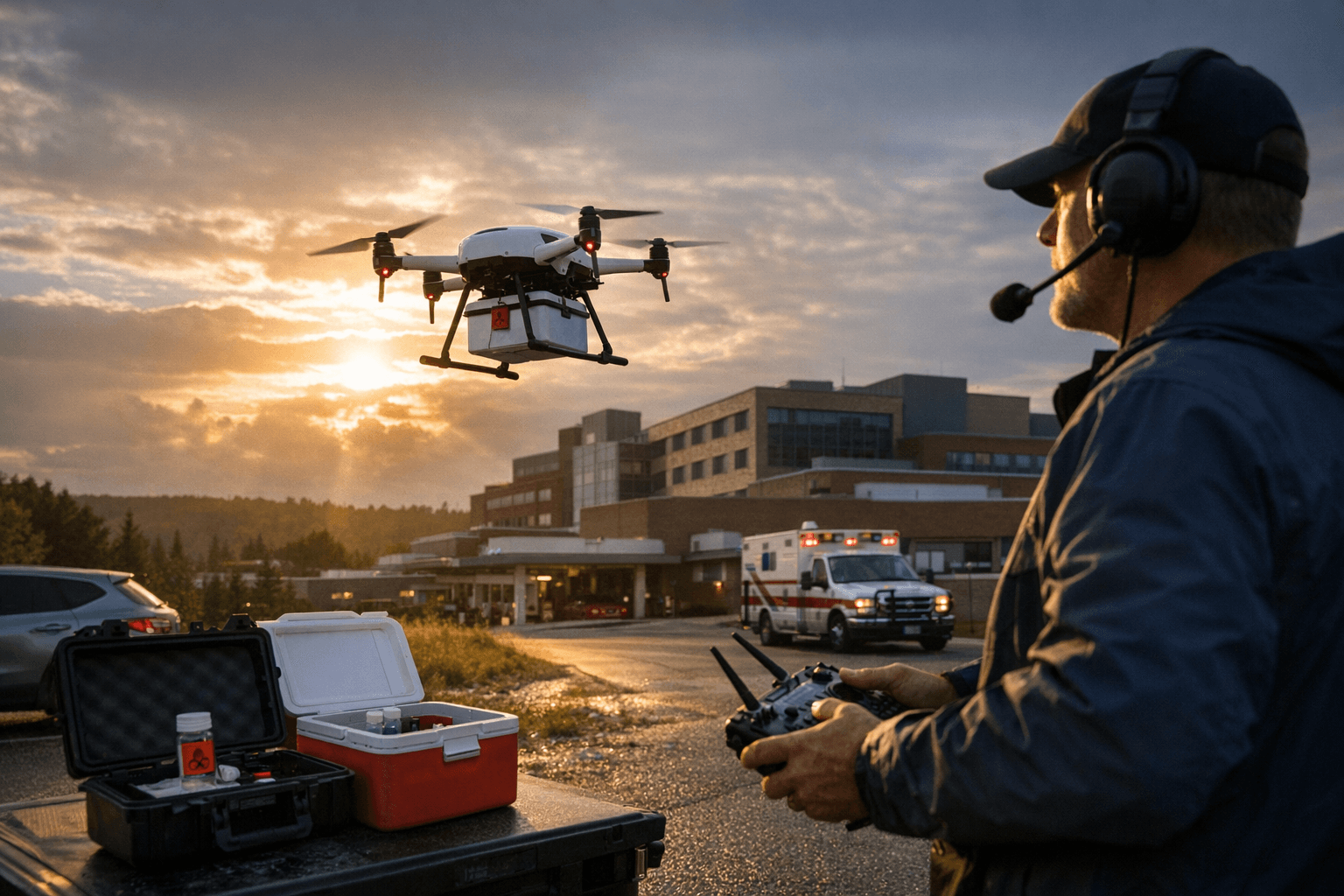
Munson Health Care and a coalition of regional and national partners reported in December that a May 2025 medical drone pilot near Munson Medical Center achieved a 91 percent success rate across 67 flights. The collaboration included Traverse Connect, blueflite, DroneUp and Central Michigan University’s Rural Health Excellence Institute, and the project received partial funding from the Advanced Air Mobility Activation Fund.
The pilot tested short range drone transport of clinical lab specimens and simulated deliveries to assess reliability in rural terrain and operational feasibility for healthcare logistics. Teams tracked mission outcomes, operational constraints and environmental factors, and they recorded average specimen temperatures during flights to evaluate temperature control for sensitive materials. Operations in the initial phase were conducted under visual line of sight rules, which limited range but allowed collection of baseline performance data.
Project findings highlighted several potential benefits for Grand Traverse County patients and providers. Reduced over the road specimen transport mileage could cut vehicle hours and lower the risk of delays caused by traffic or winter road conditions. Faster turnaround for diagnostic testing could speed clinical decisions for patients at rural clinics and outlying health centers, improving timeliness of care across the region. Improved logistics may also allow Munson and partner organizations to allocate courier resources more efficiently.
The pilot also made clear areas needing further development before routine use. Visual line of sight operations constrained distance and routing, and teams noted the importance of maintaining temperature control for sensitive specimens. Transitioning to beyond visual line of sight flights and integrating drones into regular supply chains will require additional testing, regulatory approvals and investments in infrastructure.
Munson and partner executives described the phase as validation that advanced air mobility can move toward practical deployment in northern Michigan. For Grand Traverse County residents, the study provides an early glimpse of technology that could reduce road travel for medical logistics and speed access to diagnostic services, while reminding local leaders and health systems that careful planning and oversight will be needed as the work moves forward.
Know something we missed? Have a correction or additional information?
Submit a Tip