Michigan Risks Losing Doctor Licensing Compact, Lawmakers Face March Deadline
Munson Healthcare's top quality officer warns 100,000 patient visits a day could be disrupted if Michigan lawmakers miss a March 28 deadline to renew a key doctor licensing compact.
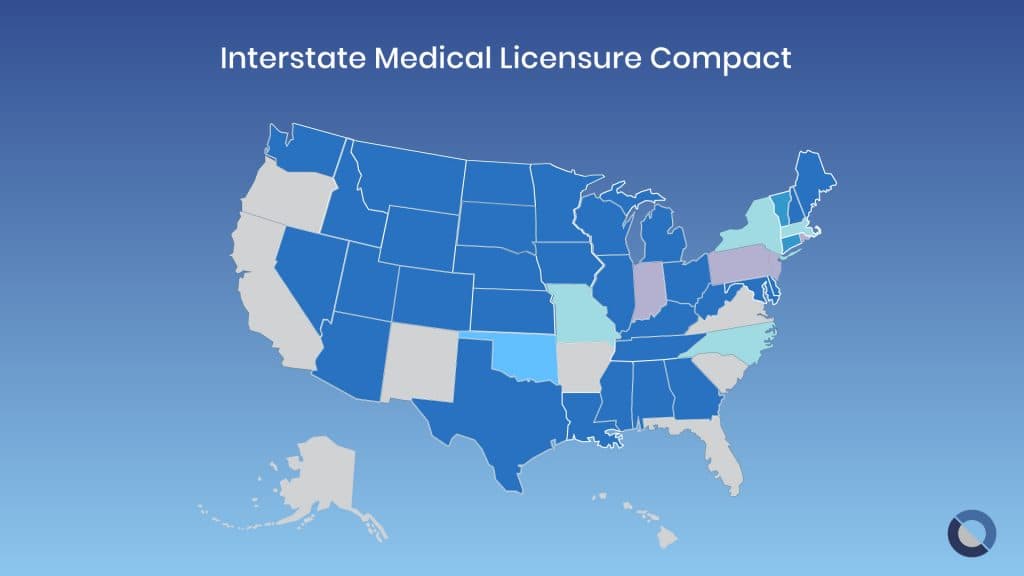
A licensing agreement that lets roughly 8,000 out-of-state physicians practice in Michigan expires in one week, and a finger-pointing standoff between the state House and Senate is threatening to let it lapse — with Munson Healthcare and other northern Michigan health systems warning of consequences that would ripple directly into exam rooms across the region.
Joe Santegelo, MD, chief medical quality and safety officer at Traverse City-based Munson Healthcare, said the disruption would be real even if short. "The hope is that this would be a short lapse," he told Interlochen Public Radio. "But it would really cause a whole lot of disruption to patients and to doctors that's just not necessary."
The Interstate Medical Licensure Compact, which Michigan joined in 2018, gives physicians licensed in other participating states a streamlined path to practice here. Without reauthorization by March 28, affected doctors could lose their authority to practice in Michigan entirely and face penalties for providing unlicensed care, according to an "Urgent Alert" posted on the IMLC's registration website as of March 20.
Dr. Mark Smith, chief medical officer at Michigan State University Health Care, put a number to the potential fallout: "That equates to about 100,000 patient visits a day that this would impact negatively." In Michigan's Upper Peninsula, where provider shortages are already acute, between 40 and 60 percent of doctors could be forced to stop practicing if the compact expires.
The stakes are just as high at rural community health centers statewide. Rachel Ruddock, director of workforce and career training at the Michigan Primary Care Association, said the compact is not optional infrastructure for many underserved communities. "There are physicians practicing at rural community health centers who would not be able to practice or serve those communities without the IMLC," she said. "In many parts of Michigan, the nearest specialist is often several counties or hours away, and recruiting physicians to underserved areas is already a massive challenge."

Dr. Emily Hurst, former president of the Michigan Osteopathic Association, said the compact's importance has gone largely unnoticed outside healthcare circles. "Michigan's membership in the interstate medical licensure compact may not be widely known to the public, but has become essential to how we provide health care in this state," she said.
The legislative machinery to fix the problem exists — but it has stalled. Senate Bill 303, introduced by Sen. Roger Hauck (R-Mt. Pleasant), passed the Senate last May. House Bill 5455, sponsored by Rep. Rylee Linting (R-Wyandotte), cleared the House early last month. Both drew bipartisan support, yet each chamber has declined to take up the other's version. Senate Democrats have said House Republicans "seem to be just waking up to the issue," while the House did not respond when asked when it would schedule action on the Senate bill.
The IMLC's own registration site signaled cautious optimism as of March 20, noting strong indications that lawmakers will act in time and that Gov. Gretchen Whitmer is expected to sign the legislation before the deadline. The Senate is expected to take up the House-passed measure within days, but with March 28 approaching, the margin for procedural delay has nearly run out.
This article was produced by Prism’s automated news system from verified source data, official records, and press releases, then run through automated quality and moderation checks before publishing. The system is built and supervised by the people who set the standards it runs under. Read our full AI policy.
Did this article answer your question?