Teen farmer grows pasture-raised chicken business in Grand Traverse County
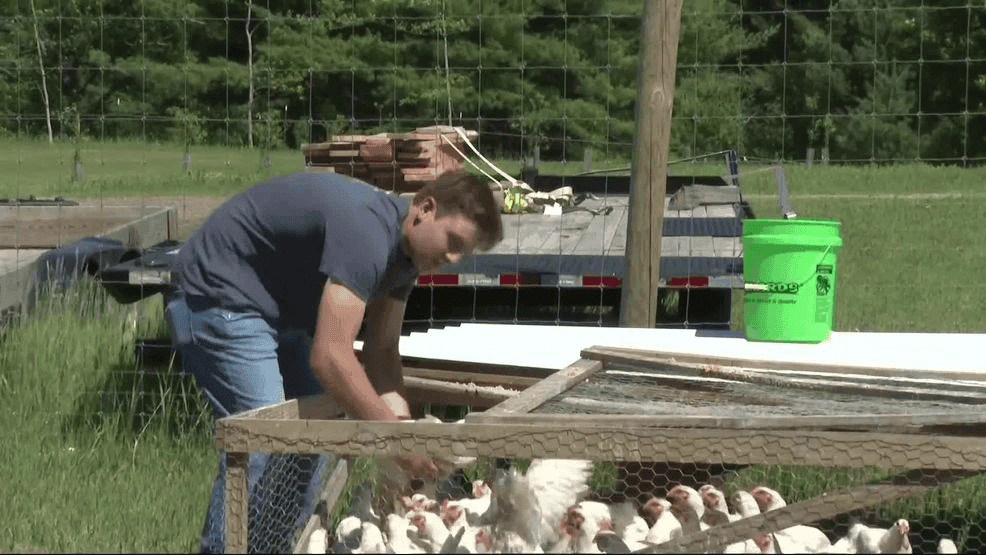
Jonah Ezell has scaled Good Father Farms from about 100 chickens at a time to 500 this year. He plans to raise 2,000 next year in Grand Traverse County.

Jonah Ezell raises about 500 birds at a time on Good Father Farms in Grand Traverse County, up from roughly 100 chickens at a time over the past few years, and plans to reach 2,000 next year.
He was first around chickens when he was 4 years old, and by the time the COVID-19 pandemic hit in 2020, he was 12 and thinking seriously about farming as a career. Homeschooled, he spent time by the chicken coop doing schoolwork, watching for predators and learning the daily routines of raising animals.
Good Father Farms was built without a family farming legacy. Ezell’s parents said the family came to country life without agricultural roots, with Stephen Ezell growing up in the Bronx and Amy Ezell in Rockford, Michigan. The business is now formalized as Good Father Farms LLC, which Michigan records show was registered on May 19, 2023, with a Williamsburg address and Stephen Ezell listed as registered agent.

The farm sells pasture-raised, non-GMO chicken. Its birds live in fresh air and sunshine and are fed fermented non-GMO feed. Jonah Ezell is a permaculture enthusiast focused on holistic care for animals, land and clients. Ezell has said he was put off by what he saw in commercial agriculture, especially around hormones and processing, and he built his operation around a different approach.
Grand Traverse County’s agricultural base includes cherries, apples, wine grapes, hops, berries, vegetables, field crops, livestock, dairy production and agritourism. In 2024, the county and Michigan State University promoted an inaugural agritourism summit and pre-summit farm tour aimed at farmers, municipal officials, agritourism businesses and community leaders.
USDA Food Safety and Inspection Service guidance requires documentation for pasture-raised claims on meat and poultry showing continuous, free outdoor access during the usual grow-out period, and non-bioengineered feed claims on meat and poultry labels generally need third-party substantiation. Selling farm-fresh poultry in the state means navigating processing and regulatory requirements.
This article was produced by Prism’s automated news system from verified source data, official records, and press releases, then run through automated quality and moderation checks before publishing. The system is built and supervised by the people who set the standards it runs under. Read our full AI policy.
Did this article answer your question?