Traverse City committee begins scoring road projects under Complete Streets policy
Sidewalks, bike lanes and crosswalks on Traverse City streets will now be scored before projects are built, starting with State Street.
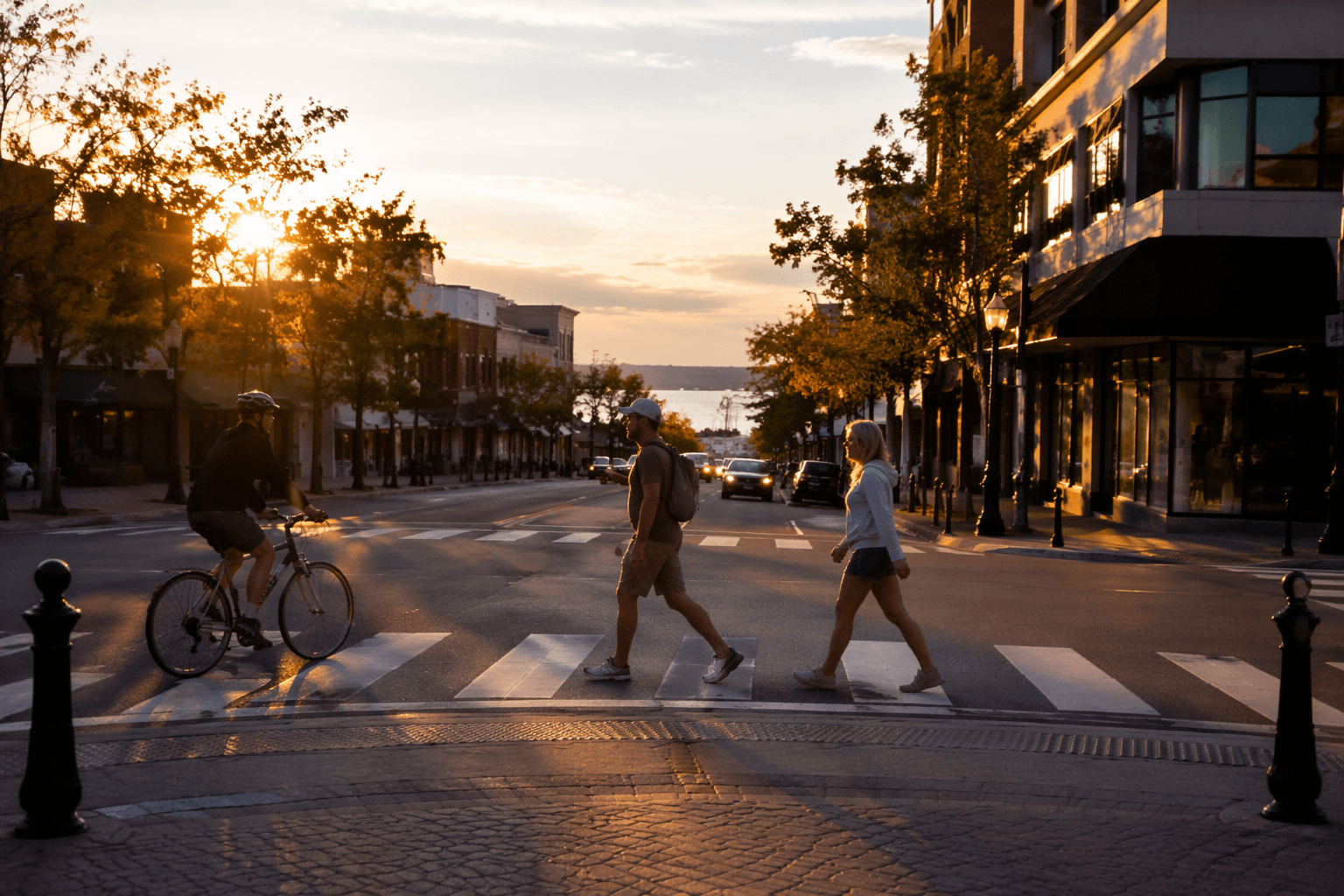
Traverse City’s new Complete Streets process is already reaching into the city’s road list, giving a seven-member advisory committee a say in how projects are scored before designs are locked in. That could change what drivers, bicyclists and pedestrians see on State Street and other busy corridors, where lane widths, crosswalks, sidewalks and traffic flow will now be weighed together instead of separately.
The city adopted its Complete Streets policy on Dec. 15, 2025, and tied it to a basic promise: new construction, reconstruction, resurfacing, repaving, restriping and rehabilitation should be planned for all users, not just cars. The policy also says the city will review the program after one year and at least every three years after that, turning it into a standing part of street work rather than a one-time statement.
Funding is part of that shift. Traverse City pledged to commit 1% of its annual budget to Complete Streets projects, and reporting on the 2025-26 budget put that amount at $253,400. Another account placed the set-aside at roughly $260,000, with much of it intended to help the city match state and federal grants. That matters because grant money can shape whether a project adds sidewalks, protected bike space, safer crossings or a narrower travel lane, instead of simply repaving what is already there.
The advisory committee is the mechanism that gives the policy teeth. It includes City Commissioner Lance Boehmer, city manager designee Anne Pagano and five residents, Jill Wilson, Dana Pflughoeft, Tim Werner, Jason Whittaker and Noah Roth. The panel meets every third Tuesday at 8:30 a.m. Its job is to set measurable goals, advise the city manager on priorities, review plans for compliance and create a rubric that ranks projects for selection.
That rubric could matter most on streets already in flux. State Street, Boardman Avenue and Pine Street have been part of a two-way traffic pilot in downtown Traverse City, a redesign the Downtown Development Authority says is meant to slow traffic and create a safer, more comfortable environment for pedestrians and bicyclists. The State Street conversion has already been treated as a major test case, and the committee’s scoring will likely influence whether future work keeps pushing in the same direction.
The policy also steers attention toward historically underinvested and underserved neighborhoods, including areas with lower-income residents, senior populations, youth or limited mobility. If the city approves an exception, it must meet minimum safety standards, win City Commission approval and be documented publicly for 30 days before that approval. In practice, that gives residents a clearer view of which projects will get crosswalks, sidewalks and bike lanes first, and which street designs will still be allowed to move ahead without them.
This article was produced by Prism’s automated news system from verified source data, official records, and press releases, then run through automated quality and moderation checks before publishing. The system is built and supervised by the people who set the standards it runs under. Read our full AI policy.
Did this article answer your question?