Traverse City dinner highlights local farm ingredients and summer dining
A sold-out $99 dinner paired Michelle Rodriguez with NanBop Farm, showing how Traverse City turns seasonal produce into a premium summer outing.
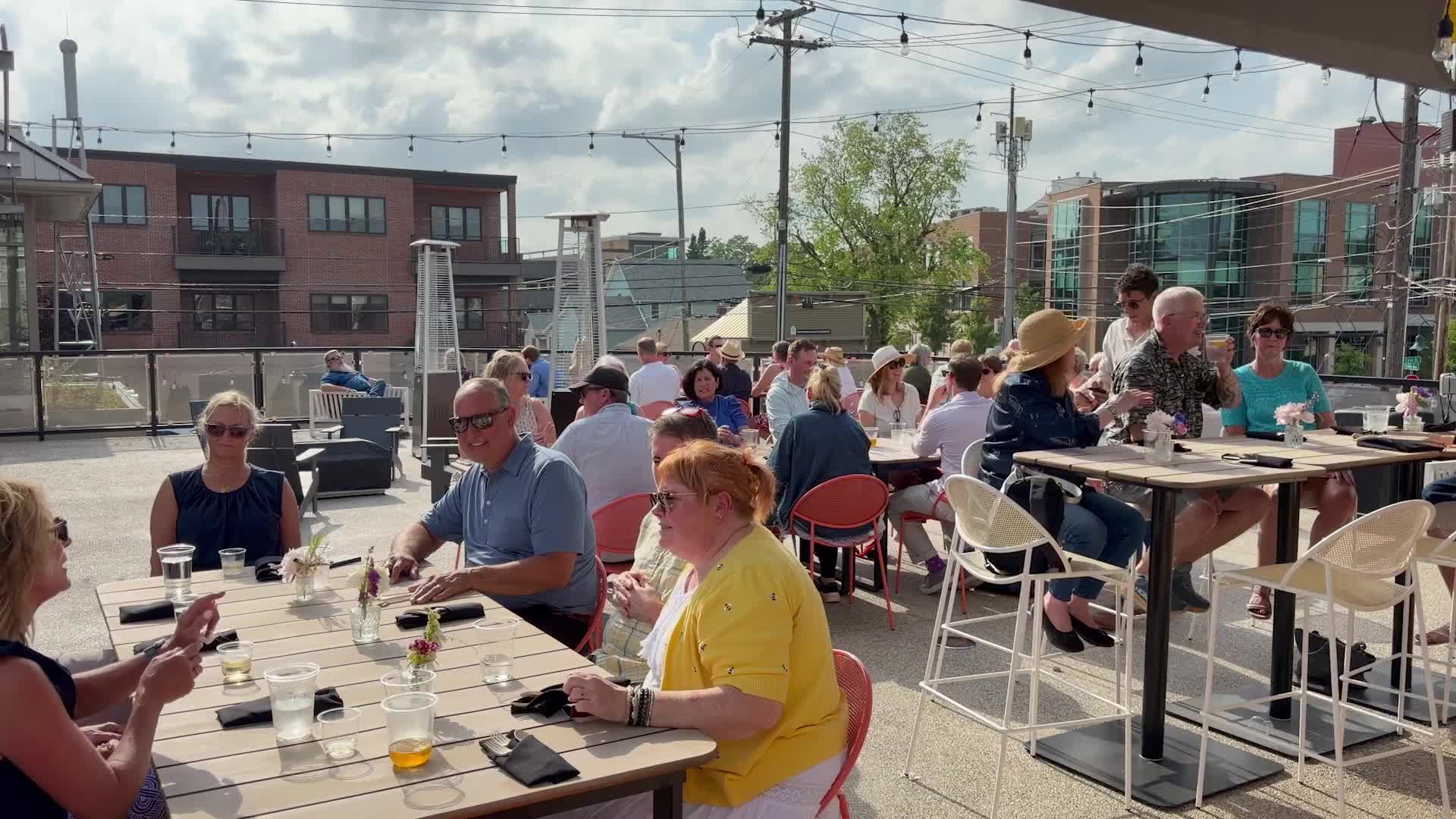
Michelle Rodriguez turned a Traverse City dinner into a live display of how local food can drive business, tourism, and summer dining at the same time. Her four-course meal with NanBop Farm sold out before guests arrived on the deck at 9&10, and about 40 people still packed in despite the heat.
A menu built from the field
The meal worked because the plates were tied directly to what NanBop Farm had in the ground. The farm supplied most of the vegetables used in the dishes, which gave the dinner a clear regional signature instead of the generic polish of a catered event.
That matters in a market like Traverse City, where seasonal dining is part of the summer draw. A $99 ticket, including fees, placed the dinner in premium territory, but the price also reflected something more than food alone: a limited-seat experience, a chef with a local following, and produce that could be traced back to a nearby farm. For a business model like this, the value comes from turning ingredients into an experience people will pay for in advance.
The attendance number reinforces that logic. Roughly 40 diners, even in very hot weather, is not a mass-market crowd. It is the kind of compact audience that makes a private-chef dinner and a farm partnership workable, because the event can stay intimate while still producing meaningful revenue from a single evening.
Why Michelle Rodriguez fits this role
Rodriguez is not new to this lane. A June 5 MyNorth profile put her at 38 and identified her as the chef-owner of Amor Comida, a Northern Michigan business centered on locally sourced catering and private events. That background makes her well suited to a dinner built around a specific farm and a tightly controlled guest count.
Her experience spans both Texas and Chicago, with work at La Condesa in Austin and Girl & The Goat in Chicago. Another local profile adds roughly 12 years in the industry, along with stops at The Cook’s House, Trattoria Stella, Epicure Catering and Black Star Farms. Taken together, those roles explain why she can work comfortably in the space between restaurant cooking, hospitality, and private-event service.
That mix is important for local economics. A chef who can move between farm dinners, catering, and intimate events can create revenue without the overhead of a full restaurant dining room. In practical terms, that means a stronger link between kitchen labor and local sourcing, because the menu can be built around what a farm has available rather than what a distributor is shipping in.
NanBop Farm’s business reaches beyond produce
NanBop Farm is built to do more than grow vegetables. The farm describes itself as a gathering place centered on food, family, entertaining, and the meaningful discussions that unfold around the table, and it says it offers farm tours, volunteer days, live music, cooking classes and guest-chef dinners.
The setting is part of the story too. NanBop sits on 60 acres of commercial property in Cadillac, on land that was once an empty lawn beside the former 9&10 News building. Founders Pete and Jolie Iacobelli turned that space into a farm that also functions as an event and education site, which gives it more ways to earn money than a traditional produce operation.
Seasonality is built into that model. A 2025 profile said NanBop’s early-season crops included artichokes and eggplants, with tomatoes, cucumbers and squash to follow. That progression shows why farm dinners can be compelling in Northern Michigan: the menu can change with the field, and the farm can sell the calendar as well as the harvest.
NanBop has also extended its business through a CSA program with delivery and pickup options in Cadillac and Traverse City. In 2023, the listed prices were $400 for a full-share vegetable box, $200 for a half-share vegetable box, $200 for a full-share egg share and $100 for a half-share egg share. Those prices show the farm already works through direct-to-consumer sales, and the dinner adds another channel where the same produce can earn more value through presentation and service.
What this says about the local food economy
The Rodriguez and NanBop partnership shows how a Grand Traverse County food business can stretch beyond a single meal. The farm supplies the vegetables, the chef supplies the technique and following, and the event space supplies the stage. Together, they create a product that is easier to market in summer, when visitors and locals alike are looking for something tied to place.
That structure is replicable, but only if the pieces line up. Other Grand Traverse food businesses would need a farm with dependable seasonal supply, a chef or caterer who can build a menu around what is available, and a venue that can sell intimacy rather than volume. The strongest version of the model is not a standard restaurant expansion, but a series of limited events that turn local ingredients into a premium evening out.
For Grand Traverse County, the lesson is that local food is not just a lifestyle story. It is a revenue strategy, one that rewards farms for growing distinctive produce, gives chefs a way to charge for craftsmanship, and gives diners a summer experience that feels rooted in Northern Michigan rather than imported from somewhere else.
This article was produced by Prism’s automated news system from verified source data, official records, and press releases, then run through automated quality and moderation checks before publishing. The system is built and supervised by the people who set the standards it runs under. Read our full AI policy.
Did this article answer your question?