Traverse City eyes zoning buffer changes near local waterways
Front Street owners could face tighter shoreline limits as Traverse City weighs new buffer rules that would curb building, paving and yard treatments near water.

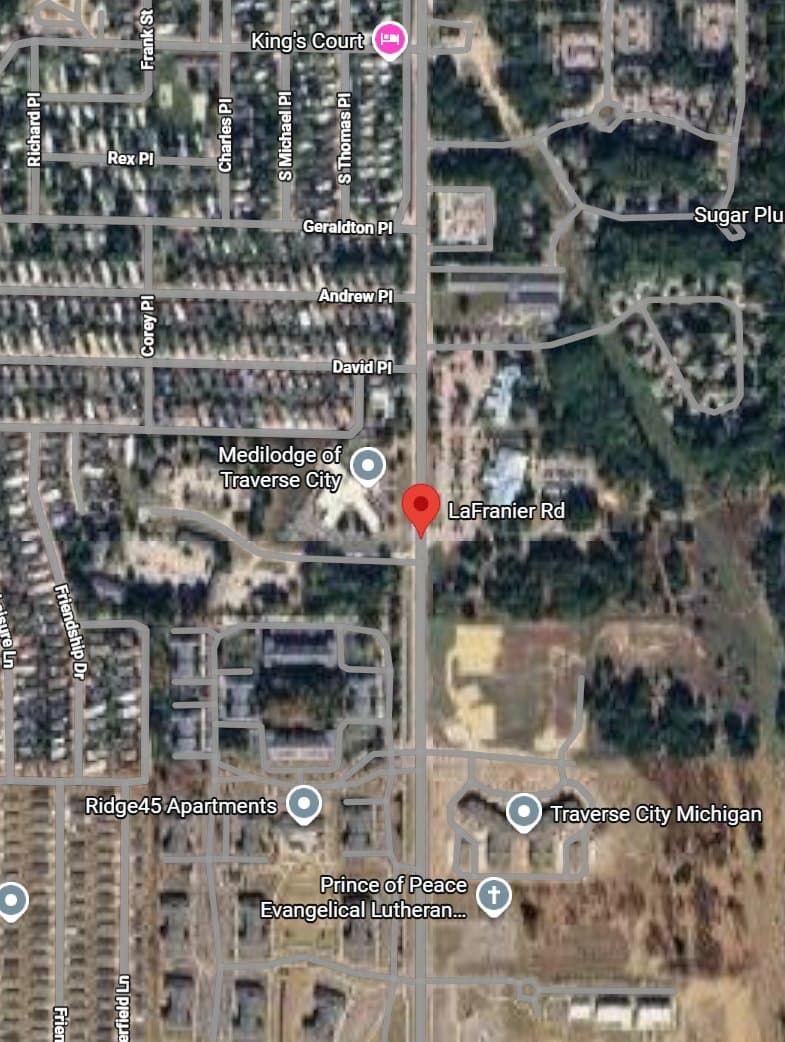
Property owners along Front Street and other Traverse City waterways could see new limits on what they can build, pave or plant if the city adopts a riparian buffer ordinance now under review. The Traverse City Planning Commission met Tuesday to consider the draft rules alongside a rezoning request for 1026, 1028 and 1040 E. Front Street, where three parcels are proposed to be combined for a new drive-through bank.
The draft ordinance would create a Riparian Buffer Zone beginning 25 feet from the ordinary high water mark, or 50 feet along Grand Traverse Bay and Boardman Lake, also called Boardman/Ottaway Lake. Inside that area, most activities, buildings and impervious surfaces would be restricted. The draft would also bar chemical fertilizer and pesticide use, along with snow storage, across the full buffer area. Existing limits on tree removal in the waterside setback area would remain, while decks, docks, walkways and public improvements would still be allowed in some cases.
That balance between private development rights and water protection has been central to the city’s long-running effort. Traverse City created a Riparian Buffer Committee in spring 2024 after asking for up to four at-large volunteers in February, with representation from Kid’s Creek, Boardman/Ottaway River and Grand Traverse Bayfront areas. City planning materials say the committee’s main job is to set ordinance standards for riparian buffers and shoreline protection. Its secondary goals include public education and management of city-owned riparian properties.
The city has said the ordinance is meant to address shoreline concerns that affect water quality, fish habitat, erosion banks and flood resilience. It is also intended to reduce mowing and limit fertilizer and pesticide use near the water’s edge. Earlier planning goals noted that the city had no riparian regulations beyond building setbacks, and said the ordinance would apply to Kids Creek, Boardman River, Boardman Lake and Grand Traverse Bay.
The framework grew out of the Lower Boardman Unified Plan, which the Planning Commission adopted on January 19, 2022. The committee includes Leslie Sickterman, Marcella Massa, John Williams, Dan Cline, Alice Bowe, Shea O'Brien, Anna Dituri and Mitchell Treadwell, with Deb Hershey serving in an advisory role through her position as Planning Commission chair.
Tuesday’s discussion showed that Traverse City is still in the early policy stage, but the stakes are already clear. If the buffer language is tightened, owners near creeks, rivers, lakes and the bay could lose flexibility on future projects. If it stays looser, more development remains possible, but the city may have less leverage to protect water quality and shoreline stability across Grand Traverse County’s most sensitive edges.
This article was produced by Prism’s automated news system from verified source data, official records, and press releases, then run through automated quality and moderation checks before publishing. The system is built and supervised by the people who set the standards it runs under. Read our full AI policy.
Did this article answer your question?