Traverse City Police Squad Nets 12 Felonies in 3-Day Enforcement Push
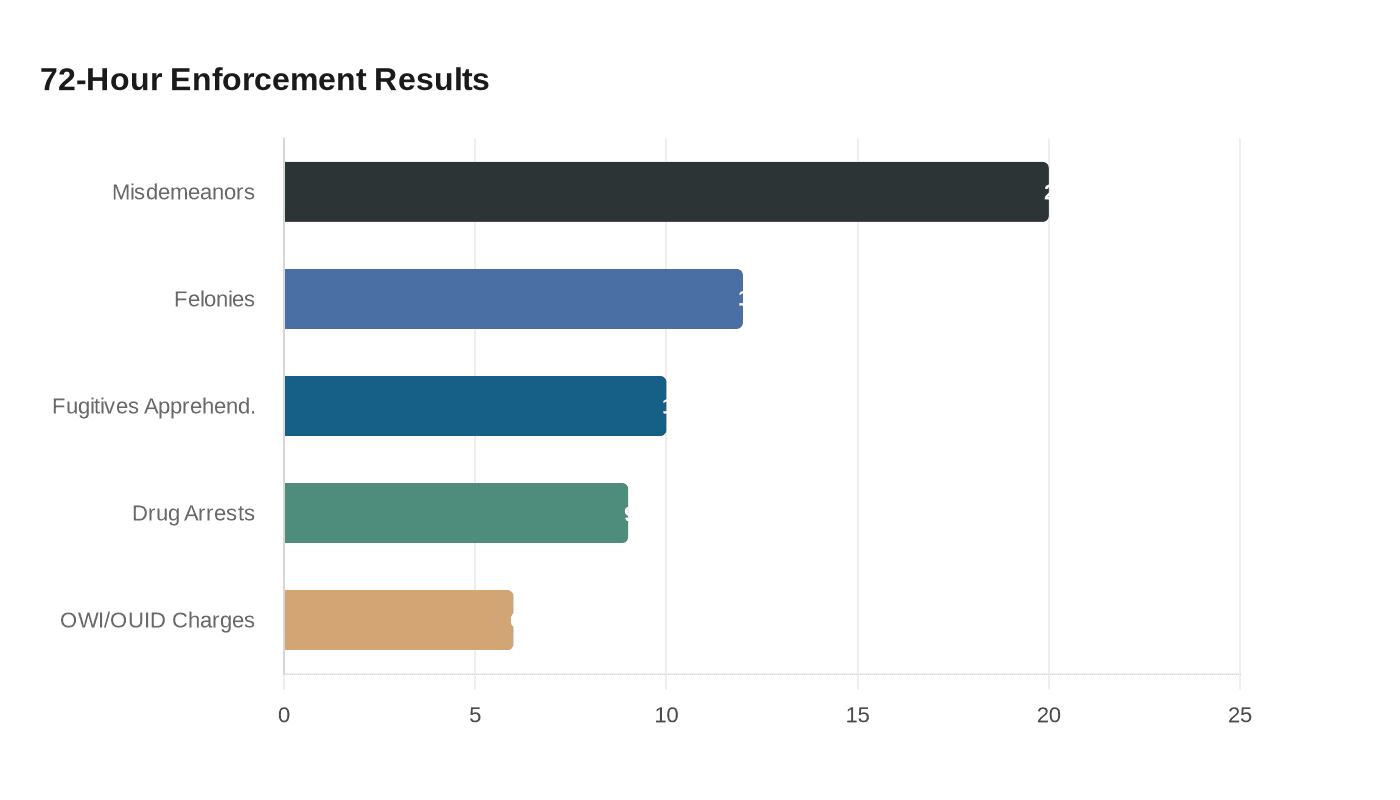
Ten fugitives pulled off the streets, nine drug arrests, and six drunk-driving charges in 72 hours: an MSP Traverse City Post squad's March enforcement push produced 12 felonies.
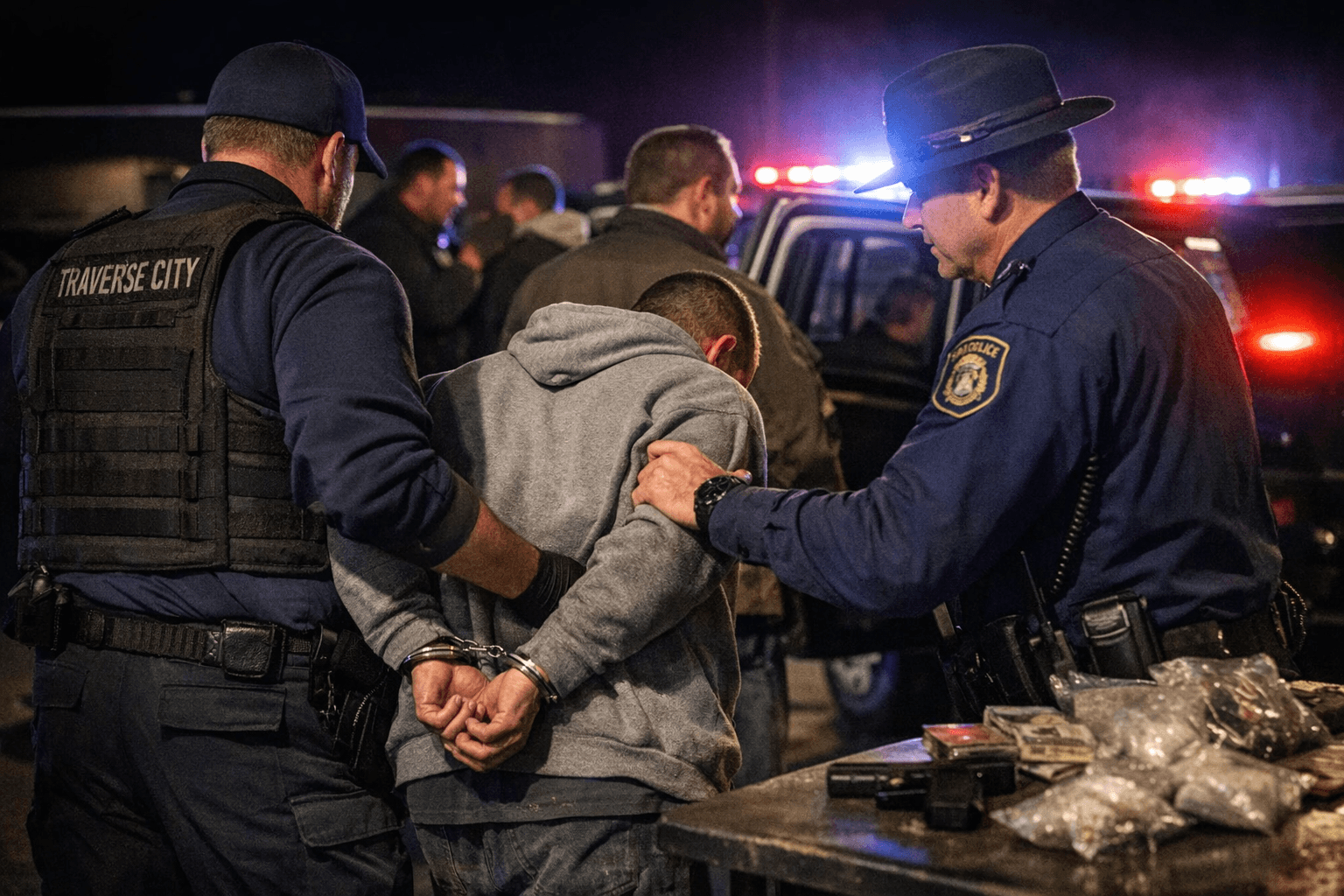
Twelve felonies and 20 misdemeanors in 72 hours: that is the output from a focused enforcement surge run by a Michigan State Police Traverse City Post squad between March 20 and March 22.
The three-day push produced nine dangerous drug arrests, six charges of operating while intoxicated or operating under the influence of drugs, and the apprehension of 10 fugitives carrying outstanding warrants. Post leadership praised the squad for what it described as excellent work.
The fugitive total is the most striking figure. Pulling 10 wanted individuals off Grand Traverse County streets in a single long-weekend window points to coordinated intelligence work far beyond standard patrol activity. Fugitives represent a specific category of elevated community risk: people who have already evaded the court system and have limited incentive to change course. Their removal in bulk, rather than one by one through routine patrol, is the kind of result that comes from a squad operating with a list, not just a beat.
The nine dangerous drug arrests likely account for the bulk of the 12 felony charges. Under Michigan law, dangerous drug offenses involving controlled substances routinely carry felony-level penalties, while the six OWI and OUID citations could split across both tiers depending on prior offense history. OUID cases, which involve drug impairment rather than alcohol, are among the most time-intensive charges troopers handle. Unlike breathalyzer-resolved OWI stops, OUID arrests require troopers certified as Drug Recognition Experts to conduct a 12-step evaluation in the field, a process that takes 45 minutes or more per stop.
For perspective on the scale: 12 felonies in three days works out to roughly four per day, a concentration that standard patrol scheduling rarely produces outside of targeted deployments. When a squad is freed from general service calls and directed at specific crime categories, the arrest curve sharpens. That is the design of pushes like this one, and the numbers reflect it working.
Impaired drivers follow recognizable patterns regardless of substance. On roads like US-31 or M-72, watch for vehicles drifting between lanes, making unusually wide turns, braking without cause, or decelerating sharply on open stretches. Call 911 immediately with a vehicle description, your location, and the direction of travel; do not attempt to stop or follow the driver.
Tips on drug activity or wanted individuals can be submitted anonymously to the MSP tip line at 1-855-MICH-TIP (1-855-642-4847). Residents navigating substance use disorders can reach the SAMHSA National Helpline at 1-800-662-4357, free and confidential 24 hours a day, seven days a week.
The Traverse City Post, which reopened in 2023 as MSP Post No. 75 and operates within the Seventh District covering northern Lower Michigan, has made targeted squad deployments a consistent part of its enforcement strategy in the region. Three days, 32 total charges, and 10 fewer wanted people on local roads is the clearest measure yet of what that approach can produce.
This article was produced by Prism’s automated news system from verified source data, official records, and press releases, then run through automated quality and moderation checks before publishing. The system is built and supervised by the people who set the standards it runs under. Read our full AI policy.
Did this article answer your question?