Traverse City trail, road closures continue near Hull Park through June 30
Hull Park access is shifting as new force main pipe work forces trail and road detours near the Boardman Lake Loop through June 30.
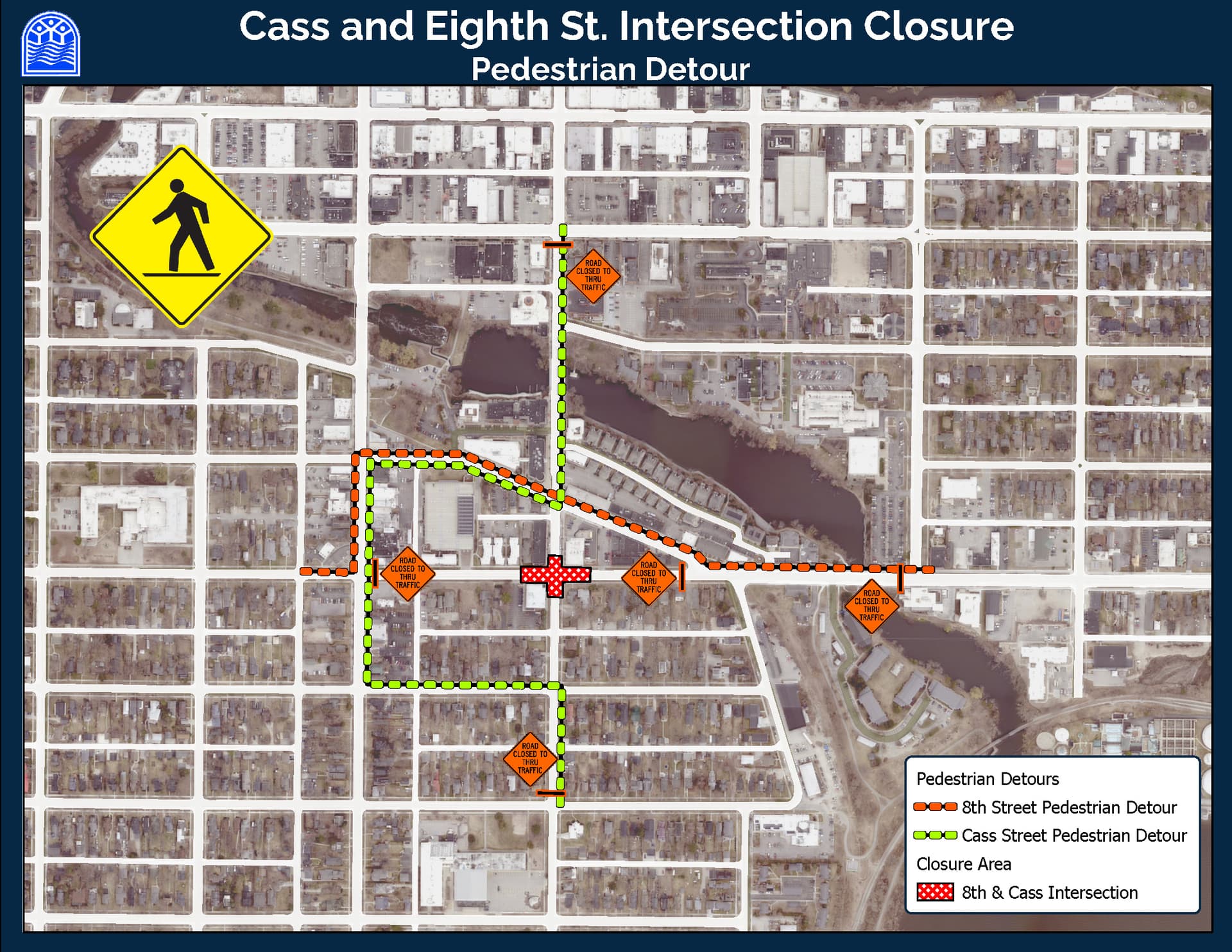
Construction near Hull Park is already changing how people get through one of Traverse City’s busiest summer corridors, and the disruption is set to continue through June 30. The immediate pinch point came at about 4 p.m. June 18, when the TART trail access point between Hull Park and Franklin Street closed for an estimated four to six hours so contractors could move equipment and materials into place. During that window, walkers and bicyclists were directed to Railroad Place and Woodmere Avenue.
More work is lined up on Hannah Avenue from June 22 through June 24, where crews are opening excavation near the boat launch and the water treatment plant. During that phase, Hannah Avenue and the east driveway to the boat launch will be closed to all traffic. The city says access to the parking lot and the wastewater treatment plant will remain available through a grassy detour along the north edge of Hannah Avenue, while the TART connection between Franklin Street and Hull Park will stay open. A June 2026 TART Trails detour map also shows trail users on Woodmere Avenue between Hannah Avenue and Centre Street, a route that will matter to anyone trying to stay on the Boardman Lake corridor without backtracking.

The work is centered on a new force main pipe, but its effects reach far beyond a single construction zone. Hull Park sits on the north end of Boardman Lake and includes a boat launch used by small boats, kayaks and sailboats, which makes the area a shared space for trail users, park visitors and people trying to reach the lake. The Boardman Lake Loop Trail itself is about 4 miles long and has become one of Traverse City’s most visible recreation routes since it officially opened on July 1, 2022.
The city’s reminder to avoid the area when possible reflects how tightly packed this corridor is, with recreation access and utility infrastructure running side by side. Traverse City’s Regional Wastewater Treatment Plant serves roughly 15,000 city residents and roughly 30,000 township residents, can treat up to 8.5 million gallons per day and was originally built in 1932. City water and sewer work also ties back to a June 2021 commission-approved drinking water project plan, showing that the Hull Park closure is part of a larger effort to keep aging systems working while summer traffic and trail use remain heavy.
This article was produced by Prism’s automated news system from verified source data, official records, and press releases, then run through automated quality and moderation checks before publishing. The system is built and supervised by the people who set the standards it runs under. Read our full AI policy.
Did this article answer your question?