BookLove brings a slower, local reading space to Jamestown
BookLove turns 702-D West Main Street into Jamestown’s only dedicated bookstore, pairing local roots with a business model built on books, clubs, and conversation.

A bookstore built from local roots
BookLove has taken shape as more than a place to buy a novel. At 702-D West Main Street in Jamestown, the shop fills a real gap in the immediate High Point and Jamestown area as the only dedicated bookstore serving that market, giving the corridor a literary stop that did not exist before. The store opened with a soft launch on April 13 and planned a grand opening for Saturday, May 2, signaling a deliberate bet on neighborhood traffic, repeat visits, and a slower kind of retail.
Owner Deena Clarkson is central to that identity. A retired English teacher, she spent years teaching in the area and raised her children here, so the bookstore grew out of a life already tied to the community rather than a distant investment idea. That local background matters in a town like Jamestown, where small businesses often succeed by fitting into the rhythm of daily life instead of trying to dominate it.
Why the store feels different from a standard retail stop
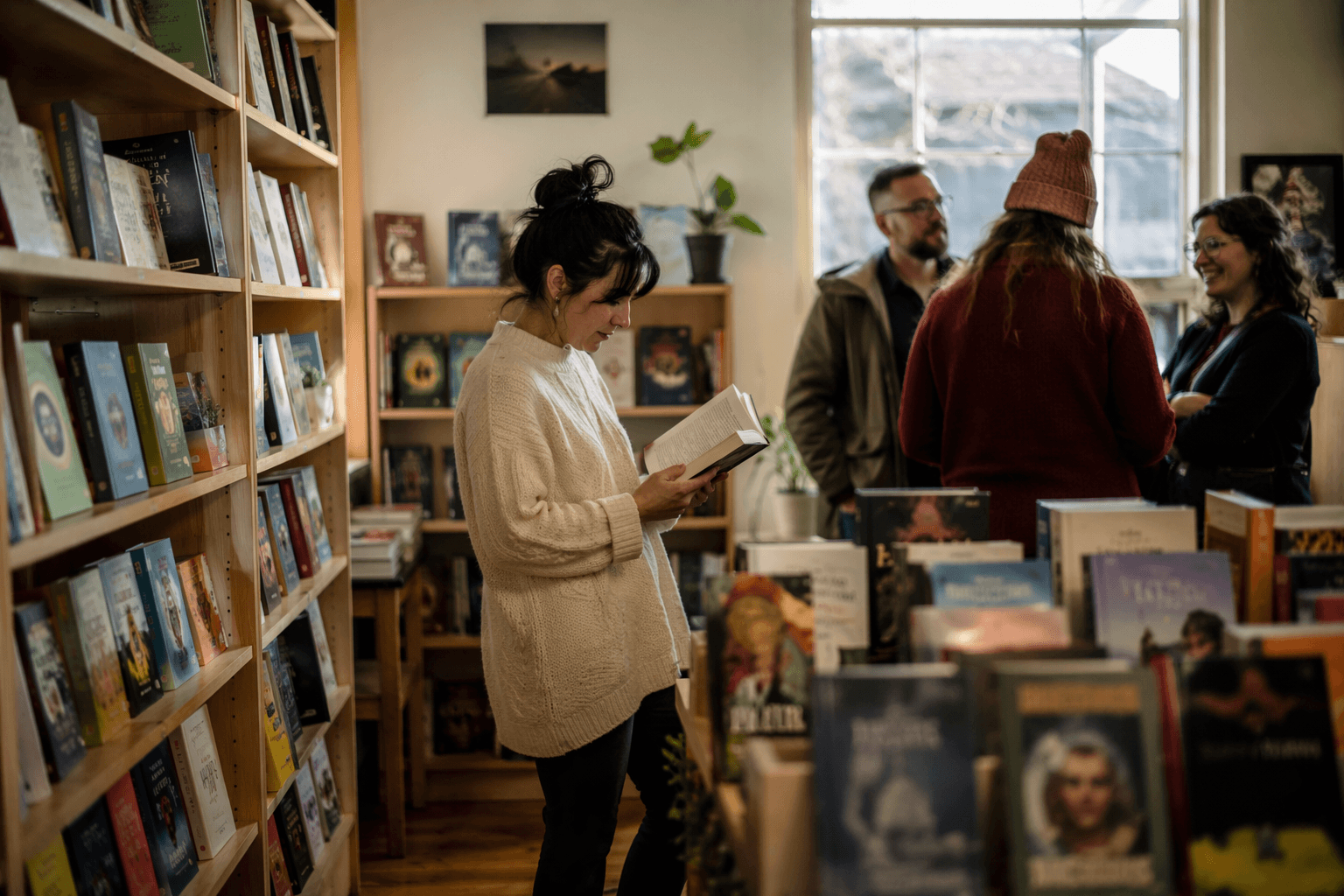
Inside BookLove, the shelves are built to encourage browsing and lingering. The mix includes fiction, nonfiction, children’s books, and local authors, along with new and used books and a children’s book room. That combination gives the store a neighborhood feel while also widening its appeal to families, casual readers, and people looking for something specific without the churn of a big-box chain.
Clarkson has framed the store as a place where time can slow down. That is not just a branding choice, it is the economic logic of the business. BookLove is not trying to compete on scale or volume alone; it is trying to create an experience that makes people come back, stay longer, and treat the shop as part of their routine. In a small retail market, that kind of repeat traffic can matter as much as a one-time sale.
The shop also offers something increasingly rare in everyday life: a place to look up from screens and algorithm-driven feeds. Book browsing is tactile, deliberate, and social in a way online retail cannot fully replace. For Jamestown, that makes BookLove not just a store but a reason to spend time on West Main Street.
What the reading data says about the moment
BookLove arrives at a time when printed books still have clear cultural staying power. Pew Research Center reported in April 2026 that 75% of U.S. adults said they had read all or part of at least one book in the previous 12 months. Pew also found that more Americans still read books in print than in digital formats, a reminder that the physical book remains the dominant form for many readers.
That trend helps explain why an independent bookstore can still work as a local business. Demand for books is not disappearing; it is changing shape. Some readers want convenience, while others want the tactile experience of holding a book in their hands, and BookLove is positioned squarely for the second group without excluding the first.
Clarkson is also tapping into a practical concern for families: the summer slide. Education groups continue to warn that children can lose academic ground when they stop reading over the summer, and that risk is especially acute for children who read less when school is out. A bookstore that keeps kids engaged with books during the break is not just selling entertainment; it is supporting a basic educational habit that can affect achievement.
How events turn books into a business model
BookLove’s event strategy makes the shop more than a place to browse. The store already advertises a book club program, and a Book Love Book Club event is scheduled for Monday, June 8 at 5:30 p.m. Seating is limited to the first 20 registrants, which suggests a small-format gathering designed for discussion rather than crowd size. That approach aligns with the broader business model: smaller groups, stronger relationships, and more chances to turn first-time visitors into regulars.
Clarkson has said she wants book clubs for middle-schoolers, high-schoolers, and adults, building the store into a social and educational hub. That is a smart fit for a shop in a market like Jamestown, where community life often revolves around local institutions and familiar faces. Book clubs also deepen the store’s economics because they create a reason to return, not just a reason to buy once.
For a small independent bookstore, events can do the work that advertising and scale do for larger chains. They create foot traffic, spark conversation, and make the business part of a calendar instead of just a transaction. In that sense, BookLove is selling books, but it is also selling a reason to gather.
What BookLove says about Jamestown’s retail landscape
Jamestown’s town website describes the community as one that values local shops, vibrant events, and a small-town feel, and BookLove fits that picture closely. A bookstore that doubles as a meeting place helps define a downtown or commercial strip in ways that a purely transactional retailer cannot. It gives residents and visitors another reason to stop, look around, and connect with the town’s identity.
The broader independent bookstore picture is also supportive. The American Booksellers Association reported in 2024 that it had 2,433 bookstore companies and 2,844 store locations, underscoring that independent bookstores are not a relic of the past but part of a continuing national resurgence. BookLove belongs to that movement, but its real significance is local: it shows how a small shop can survive by being useful to a town’s social and cultural life, not just its shopping list.
For Jamestown and the surrounding High Point corridor, that is the deeper economic story. BookLove is not trying to outgrow the market it serves. It is trying to make itself indispensable to it, one reader, one club, and one conversation at a time.
This article was produced by Prism’s automated news system from verified source data, official records, and press releases, then run through automated quality and moderation checks before publishing. The system is built and supervised by the people who set the standards it runs under. Read our full AI policy.
Did this article answer your question?