Cone Health telehealth program keeps Guilford County students in class
A school telehealth visit can send Guilford County students back to class the same day, while sparing parents hours of missed work.
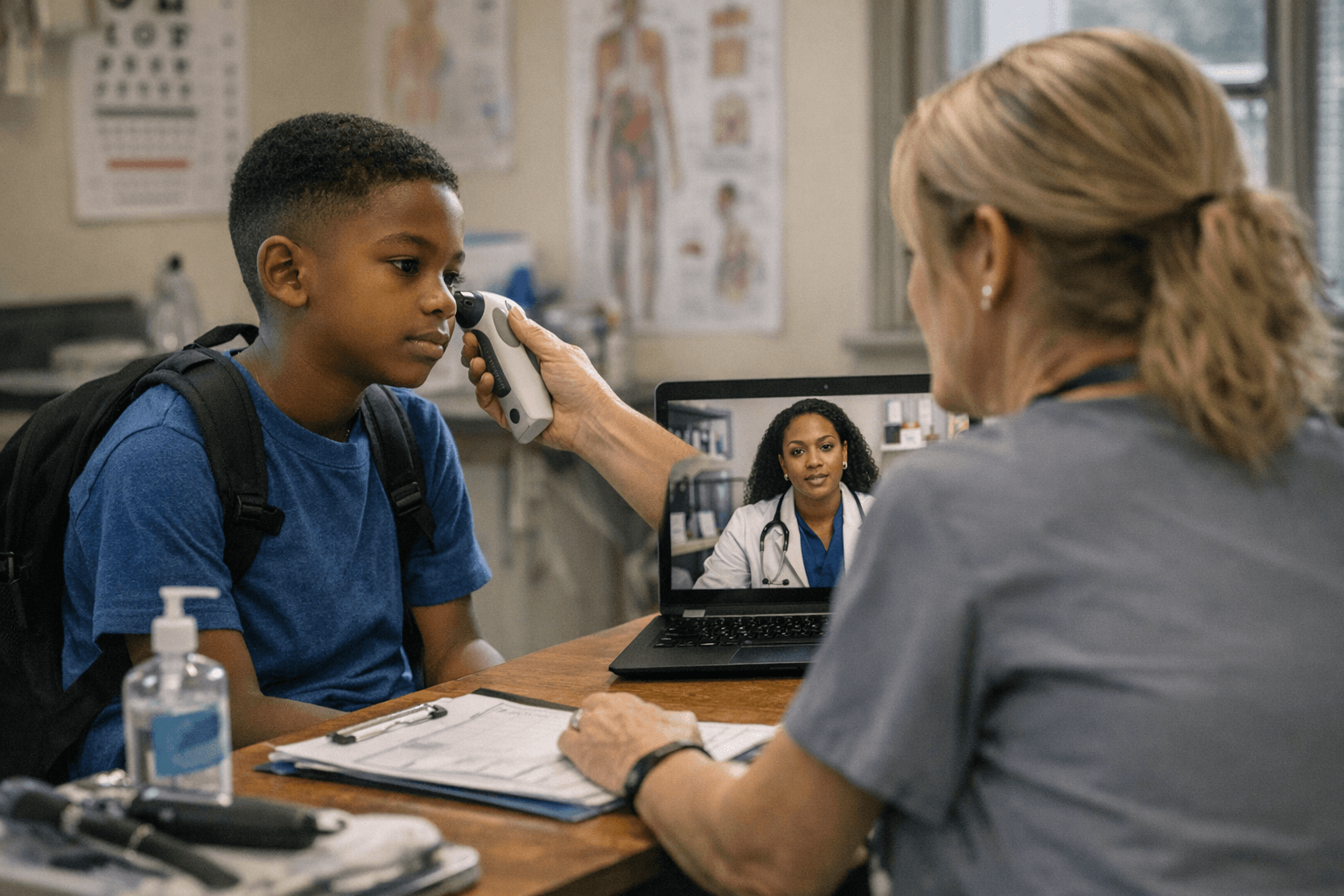
A child with a fever, sore throat or pink eye can now be sent from class to the office, checked with help from a Cone Health tele-presenter and, in many cases, back to school before the day is over. In Guilford County, that small shift in how care is delivered is aimed at something bigger than convenience: keeping students learning and parents on the job.
Cone Health says its school-based telehealth clinics are designed for minor illnesses and can handle allergies, asthma, coughs and colds, ear pain, fevers, head lice, itchy eyes, mouth pain, pink eye, poison ivy, rashes and sore throats. Any student can use the clinic if a parent or guardian has filled out a consent form, and notes from the virtual visit can be shared with a child’s primary care doctor or with the family. That matters in a county where a same-day doctor visit can mean a parent loses wages, a child misses class and a teacher loses instructional time.
Cone Health has said half of parents report missing at least two hours of work when picking up a sick child. The program is meant to blunt that cost. At Bessemer Elementary School, where the effort began as a pilot in April 2021 with Guilford County Schools and The Duke Endowment, Cone Health said 240 of the first 300 patients seen at the clinic returned to the classroom the same day. The model gives schools a way to address common illnesses without turning every sniffle into a half-day absence.
The program has steadily widened. Cone Health expanded the service in April 2022 to Cone Elementary School and Washington Montessori School. Later that year, Guilford County Commissioners approved $2.2 million in American Rescue Plan Act funding to expand school telemedicine into 48 more Guilford County schools. In 2025, Cone Health said it would add 12 more Title I elementary schools in the fall, bringing the total to 40 schools across Guilford, Rockingham and Alamance counties. It also said the program had grown from 1,440 visits in its first two years to a projected 3,206 visits in 2024-25.
Guilford County Schools has tied the telehealth effort to attendance and achievement, saying its vision is to provide healthcare access, return students to class, decrease absenteeism, increase instructional time and reduce the impact of illness on students, schools and families. The district also reviews data on chronic absenteeism, reading and math proficiency, and discipline referrals for students with and without telehealth consent. The school system’s legislative agenda calls for recurring state funding and Medicaid reimbursement for virtual healthcare visits in schools, underscoring how a clinic in an elementary school office has become part of a larger strategy to keep Guilford County children healthy, present and ready to learn.
This article was produced by Prism’s automated news system from verified source data, official records, and press releases, then run through automated quality and moderation checks before publishing. The system is built and supervised by the people who set the standards it runs under. Read our full AI policy.
Did this article answer your question?