Gillespie Golf Marks 70 Years Since Greensboro Six Action
The Greensboro Parks and Recreation Department held a kickoff celebration at Gillespie Golf Course on Tuesday, December 2, 2025, launching a yearlong program honoring the Greensboro Six, whose 1955 protest helped end segregation at the city course. The commemoration underscores a pivotal civil rights victory that reshaped access to public recreation and carries ongoing implications for community equity and local civic life.
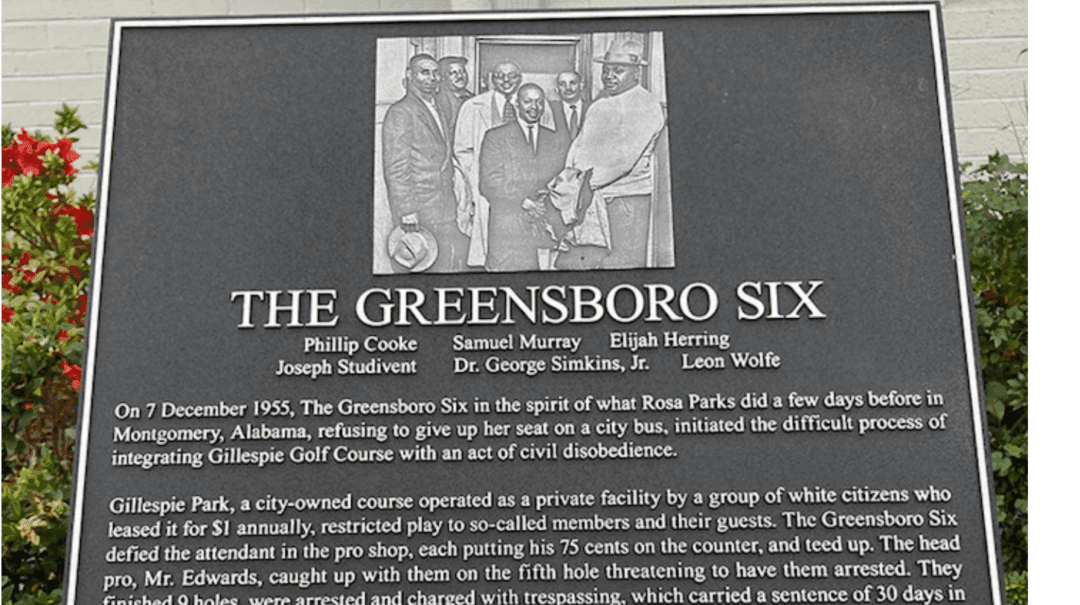
City officials and residents gathered at Gillespie Golf Course to begin a yearlong commemoration of the Greensboro Six, the six Black golfers whose 1955 challenge to segregation led to a federal court victory and wider desegregation of public facilities in Greensboro. The event, timed to mark the 70th anniversary of the incident, opened with a ceremonial tee shot at 1:30 p.m. and included a screening of a short film about the Six and a 2024 mural honoring them.
The Six are Dr. George Simkins Jr., Phillip Cook, Elijah Herring, Samuel Murray, Joseph Sturdivant and Leon Wolfe. In 1955 they paid a 75 cent greens fee to play at Gillespie while being refused sign in privileges. They were arrested and later prevailed in federal court in Simkins v. City of Greensboro, a decision that contributed to the end of segregation in public recreation facilities here. To echo that historical payment, the course offered 75 cent green fees during the kickoff, a symbolic gesture that connected present day access to the legal and civic struggle seven decades earlier.
Beyond remembrance, the series of events planned over the next year aims to deepen local understanding of how access to parks, pools and other public amenities has shaped community health and opportunity. For Guilford County residents, the commemoration is a reminder that municipal policies on public spaces carry economic as well as moral weight. Expanded access to recreation can affect patterns of neighborhood investment, public health outcomes and recreational spending that supports local businesses.

Municipal leaders noted the commemorations will be accompanied by programming that traces legal and social change from the 1950s to today. The initiative places the Six within the broader arc of civil rights in Greensboro, linking their legal victory to later desegregation efforts and contemporary debates over equity in public services. As the year unfolds, the events at Gillespie and around the county will serve both as history and as prompt for policy conversations about how Greensboro manages and funds inclusive public amenities for all residents.
This article was produced by Prism’s automated news system from verified source data, official records, and press releases, then run through automated quality and moderation checks before publishing. The system is built and supervised by the people who set the standards it runs under. Read our full AI policy.
Did this article answer your question?